


How to Protect Watches at Home: A Collector’s Guide

The watch you wear today is on your wrist. The others stay at home. An inherited piece, a first significant purchase, a complication saved for special occasions: deciding where they belong deserves as much thought as choosing them.
To protect watches at home, combine an up-to-date inventory, suitable individual storage, an appropriately selected and installed safe, and insurance with clearly confirmed conditions. A watch winder adds convenience for compatible automatic watches; it does not replace theft protection or servicing.
Six decisions to make before choosing watch storage
- Document each watch and its value.
- Confirm your insurer’s requirements.
- Separate storage, winding and burglary protection.
- Plan a discreet location and suitable installation.
- Protect against knocks, moisture and strong magnetic fields.
- Build a routine you can follow every day.

1. Start with the watches, not the number of slots
Three watches may need more protection than fifteen. Create a record of each reference and serial number, with photographs, receipts and available service documents. Keep a secure copy of these records separately from the watches. Lancashire Police recommends photographing valuables and recording identifying details.
Ask your insurer which values to declare, which documents to provide and what conditions apply to keeping the collection at home. Confirm any requirements for the safe, installation and other protective measures. The collection’s value alone does not establish the coverage available.
2. Watch box, winder or safe: choose for the job
| Option | What it provides | What to check |
|---|---|---|
| Watch box | Organization and separation of individual pieces. | Suitable cushions and clean lining; an ordinary box does not provide burglary protection. |
| Watch winder | Keeps a compatible automatic watch running. | The winding direction and turns per day recommended for its movement. |
| Watch safe | Storage inside a protective enclosure, with or without winders. | The exact model’s resistance level, lock and installation requirements. |
| Specialist off-site storage | An alternative for pieces rarely worn. | Access, contractual protections, fees and insurance. |
Your routine matters too. Which watches do you wear each week? Which remain at rest? Do you need drawers for straps, jewelry or manually wound pieces?
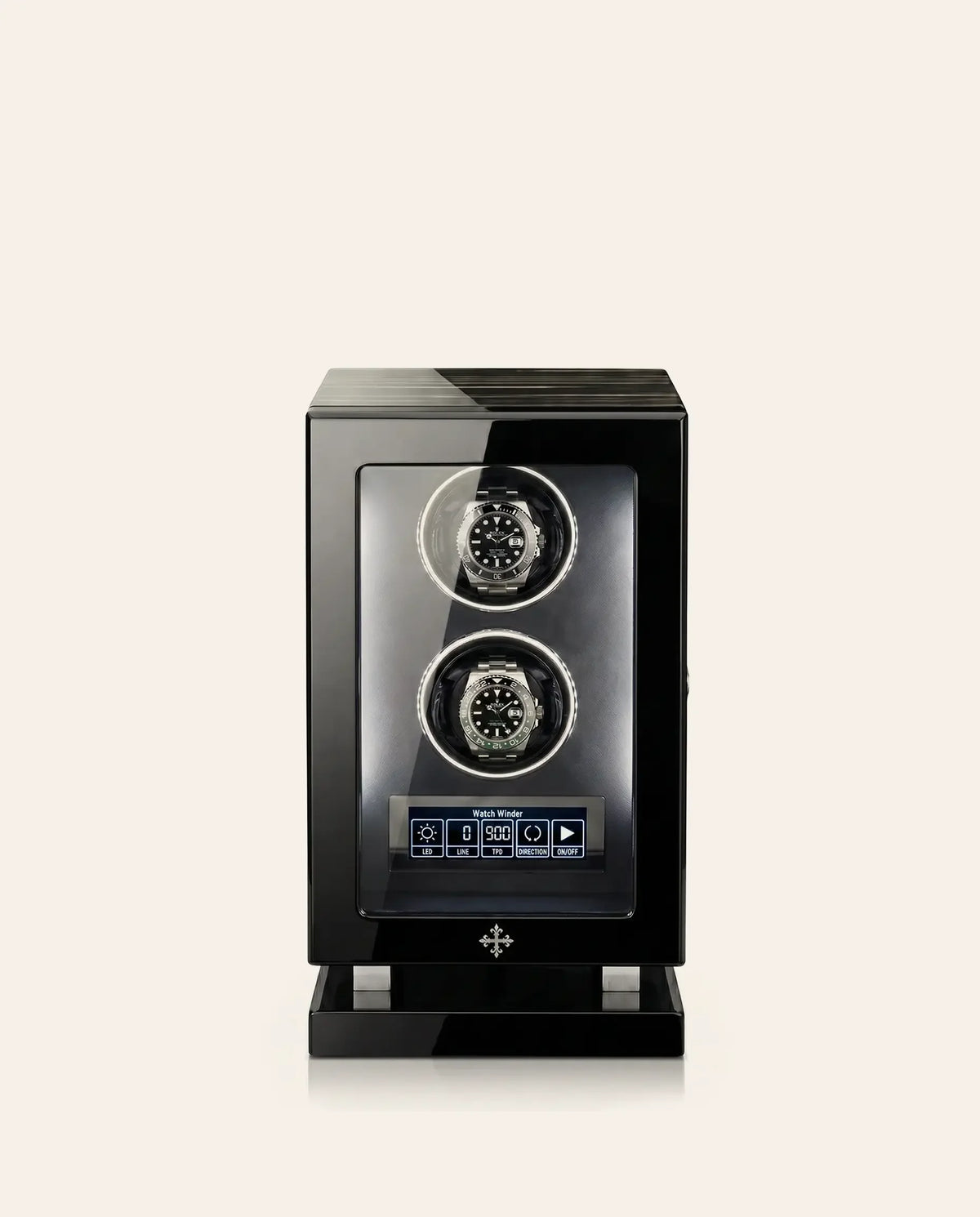
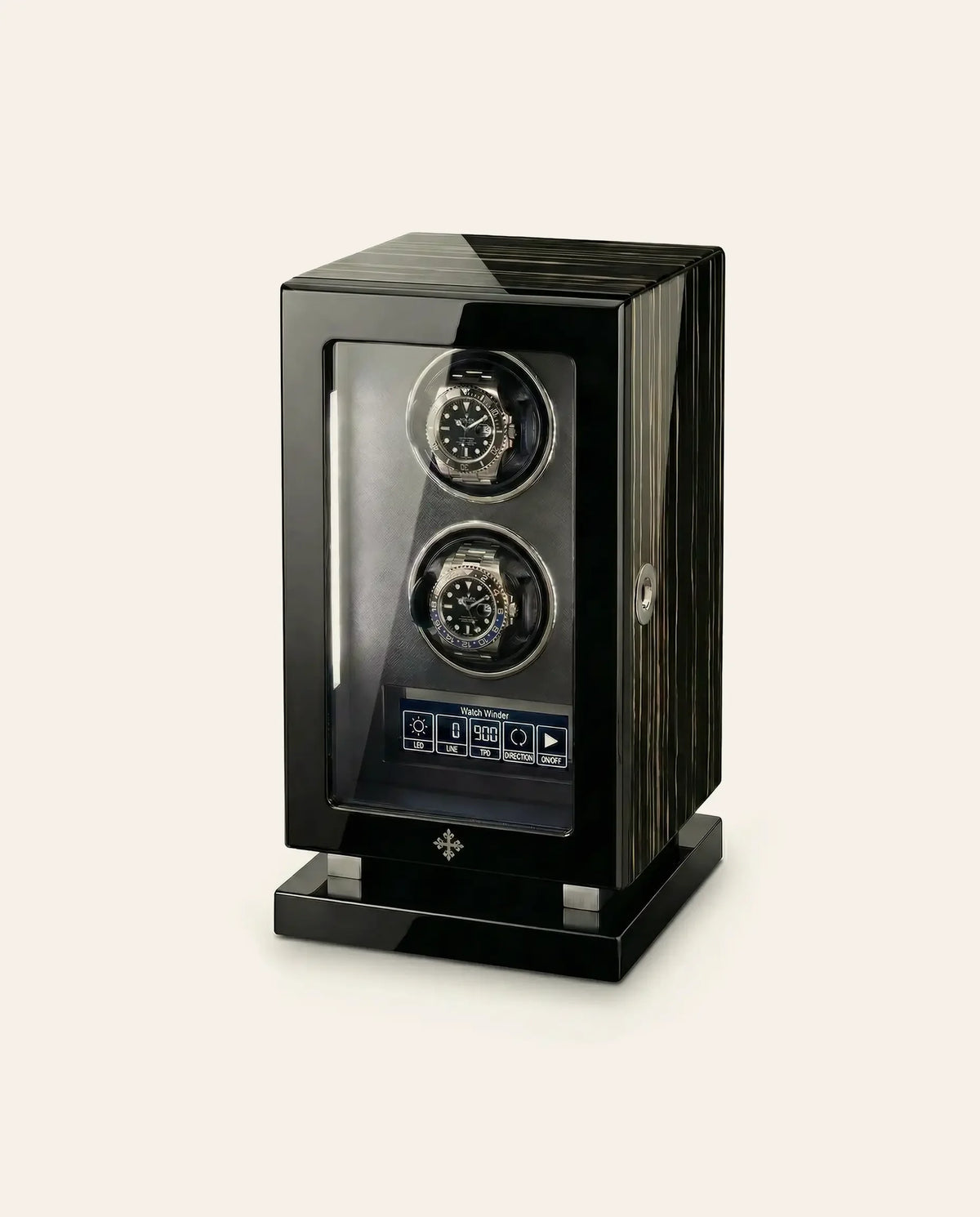
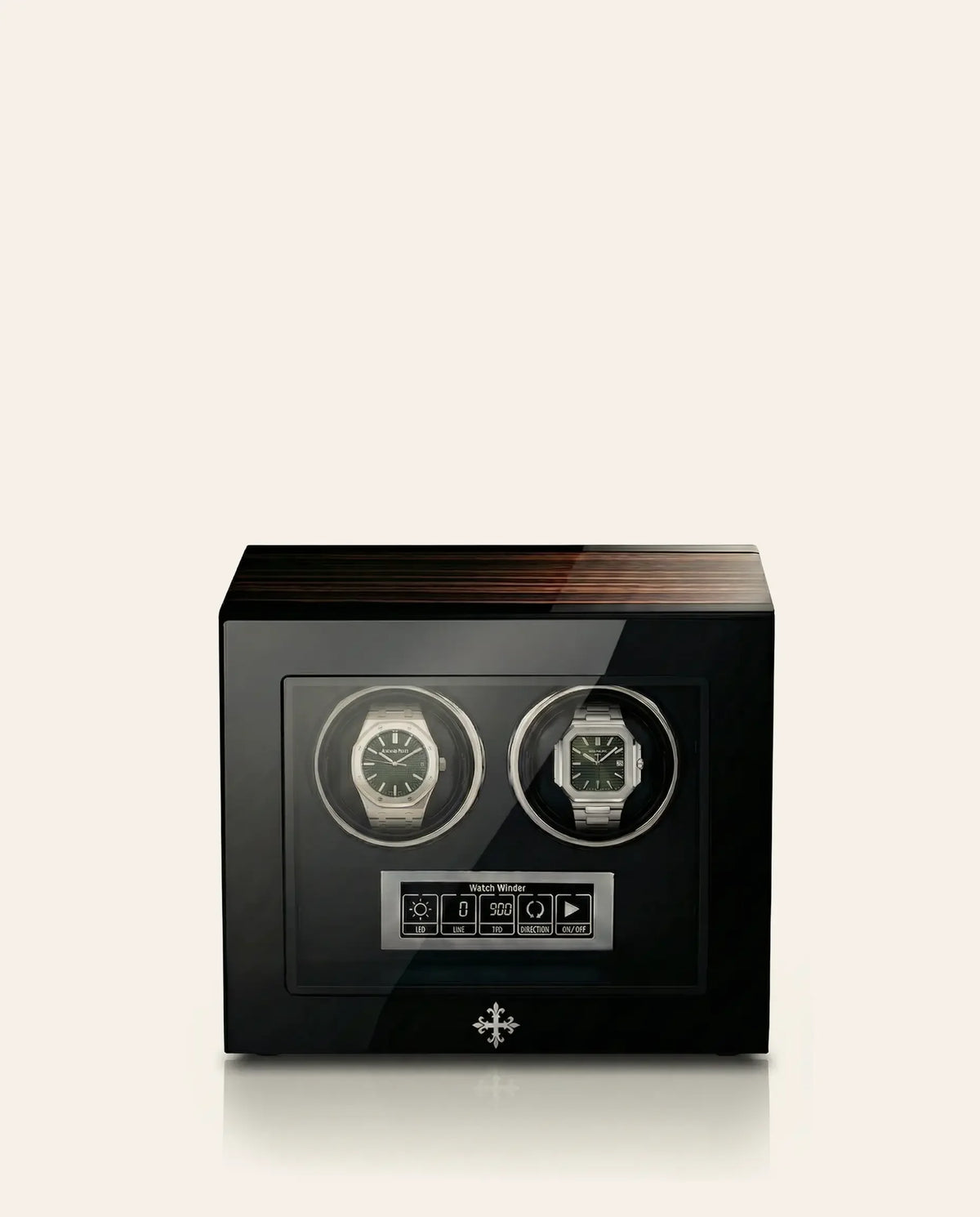
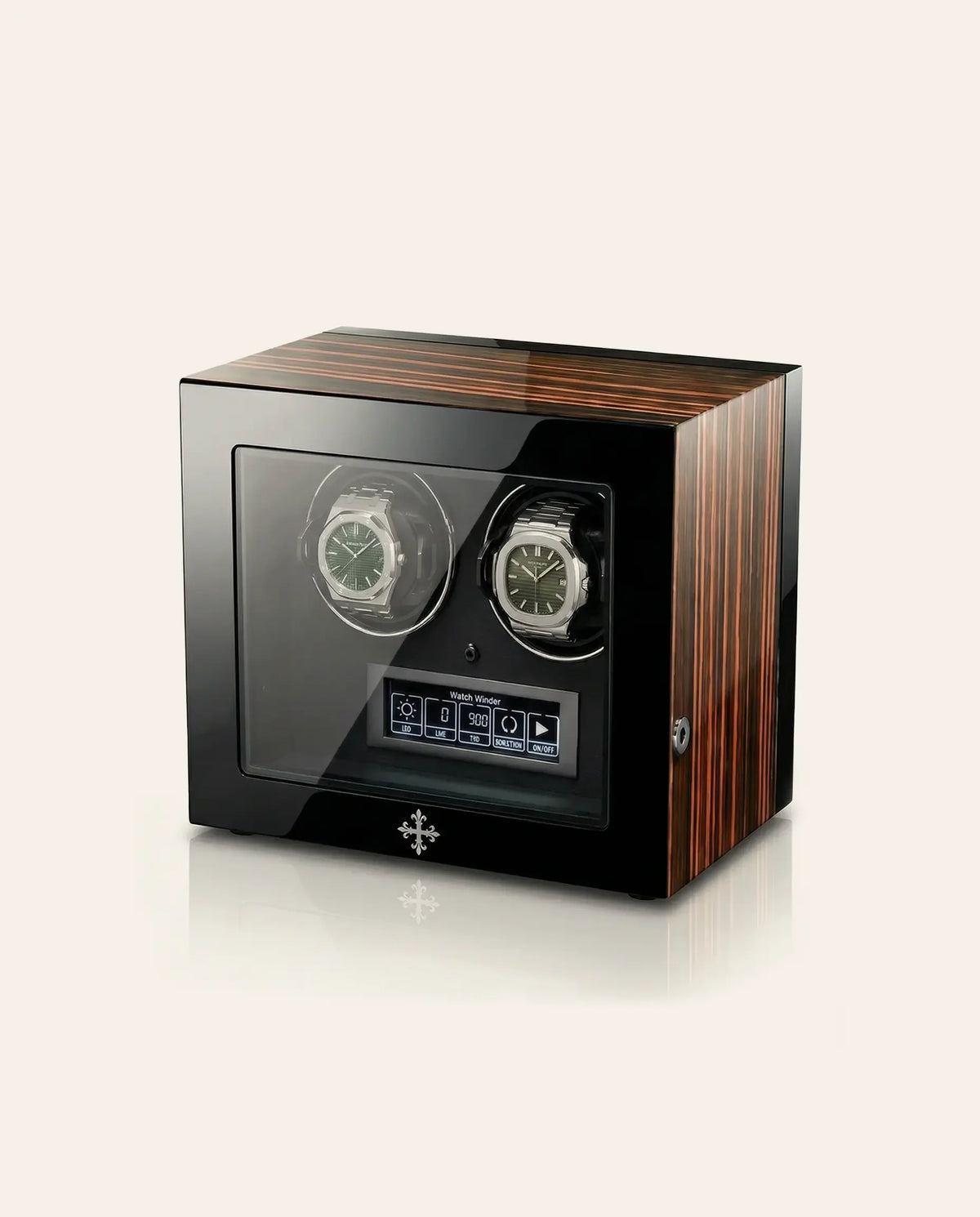
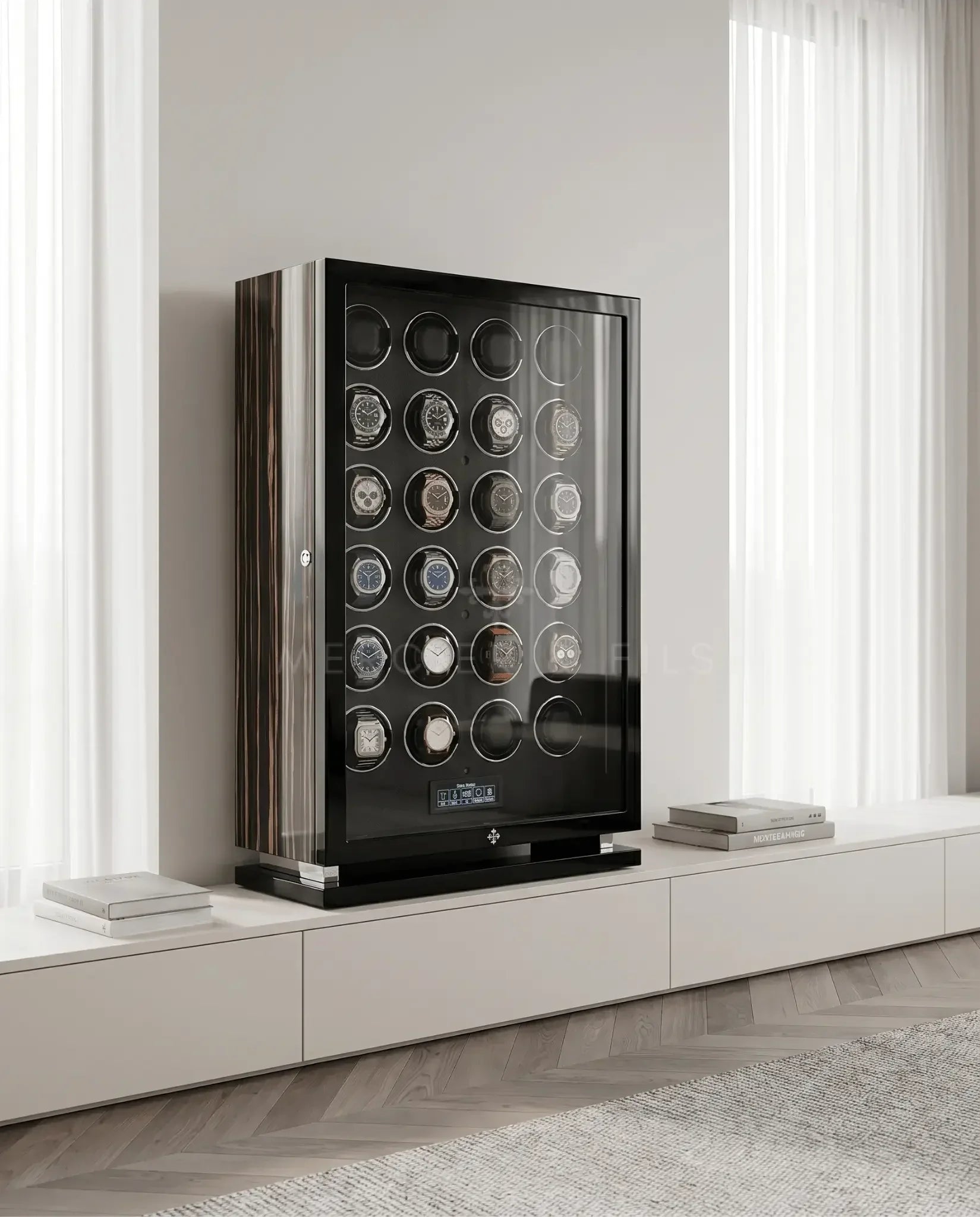
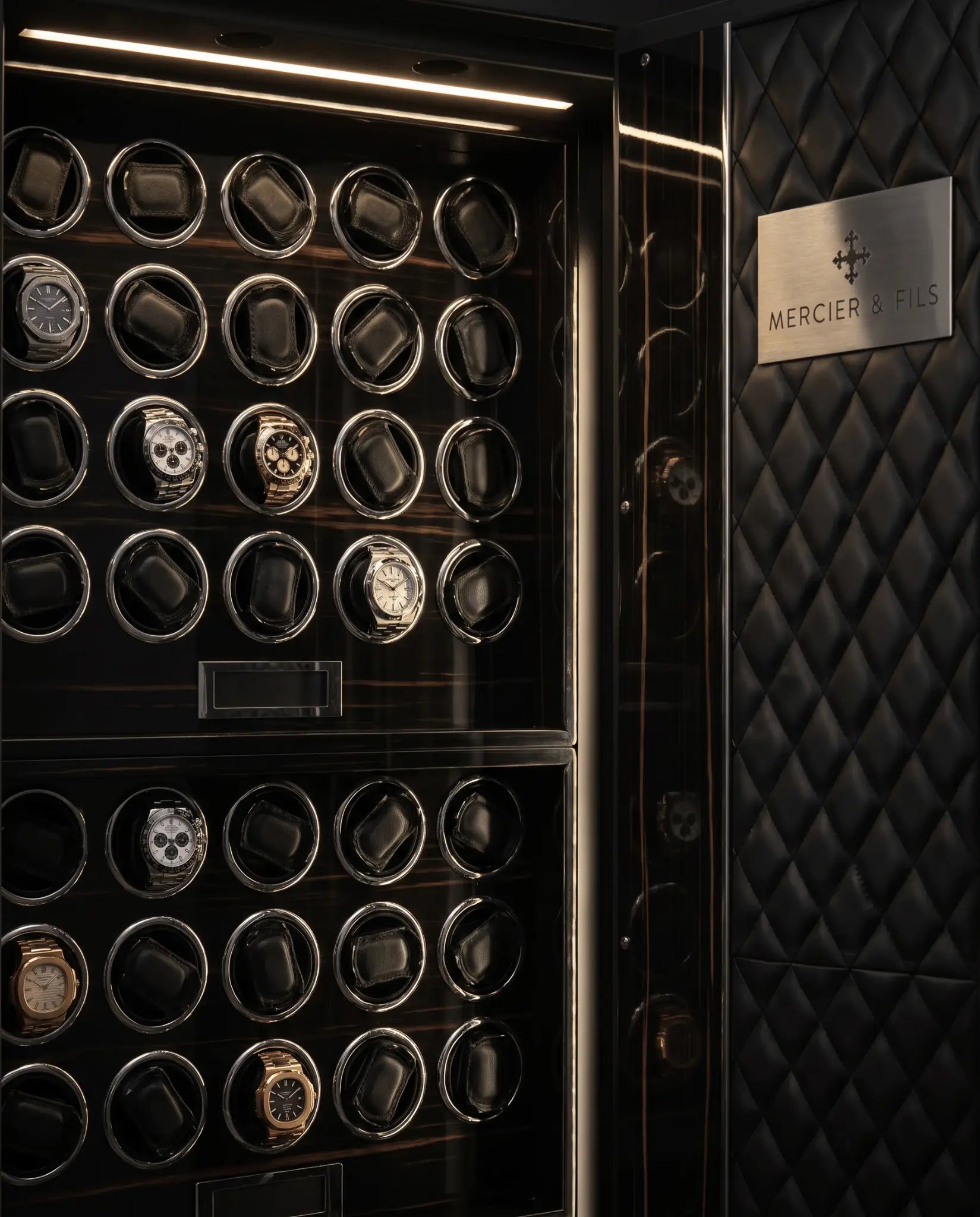
Discover Mercier & Fils watch winder safes
3. Check the protection of the exact configuration
Weight, a substantial-looking door or biometric access does not establish burglary resistance. Request documentation for the proposed configuration: any applicable standard, grade, certifying body and covered model reference. A reinforced version and a certified version within the same range should not be treated as interchangeable.
Burglary resistance and fire resistance are separate characteristics. If fire protection matters to your project, request the relevant test or certification documents and understand their limits. A thick door alone does not establish fire performance.
Mercier & Fils configurations vary by collection and protection level. Have your U.S. insurer review the version you select before finalizing your project. Ask whether your watches require scheduled coverage or a separate policy and which appraisal documents are needed. Do not assume a European EN rating is equivalent to a UL rating: submit the exact certification documents for approval.
4. Plan the location and installation
Choose a discreet position with a suitable supporting structure and comfortable everyday access. Building a safe into cabinetry does not replace appropriate anchoring. Thames Valley Police highlights securing a safe to a sound structure and checking your insurer’s requirements.
Before delivery, confirm exterior dimensions and doorway clearance in inches, the safe’s installed weight in pounds, door swing clearance, stairs, elevator limits and floor requirements. The installer should determine the fixing method from the building conditions and manufacturer’s instructions. If the safe includes winders, confirm that the supplied power equipment is suitable for your U.S. electrical supply and outlet.
Include the safe in your wider home protection: properly secured access points, careful control of codes and keys, and any appropriate alarm arrangements. Avoid publicly revealing the exact location of your collection.

5. Protect the condition of the watches as well
Store pieces separately to limit contact between cases, bracelets and clasps. Choose supports that hold each watch without stretching or forcing its strap or bracelet. Before storing a watch you have worn, follow its maker’s cleaning guidance and make sure it is dry.
Choose a stable environment away from direct heat and excessive moisture. Keep powerful magnetic sources at a distance: Seiko explains that magnetism can affect watch accuracy. Your watchmaker’s specific care instructions take priority, particularly for unusual materials and straps.
A winder can simplify ownership of an automatic watch worn regularly. It is not essential for every watch and does not replace servicing. Set each module according to the movement’s requirements instead of applying one setting to the entire collection.
6. Make protection easy to use every day
The best arrangement is one you actually use. Give each piece a place, close the safe after use and keep access under your control. Update the inventory when you buy or sell a watch, and review your insurance as the collection changes.
Leave sensible room to grow. A few spare compartments may be more useful than extra winders if your next purchases are not automatic watches.

A watch safe for your U.S. home
Start with your watches, daily habits and installation conditions. Then choose the balance of winders and storage, protection level and finish. The aim is a dedicated space that fits your home and is straightforward to use.
Explore the U.S. collection for current prices in U.S. dollars (USD). Request a written quotation specifying your configuration, delivery ZIP code, installation scope and any applicable taxes or charges. Use the actual U.S. price rather than converting a euro price yourself.
Explore the watch safe collection
Frequently asked questions
Does a small watch collection justify a safe?
The number of pieces is only one consideration. Their value, insurance conditions, your home and how often you wear them also matter.
Should every watch stay on a winder?
No. A winder is for compatible automatic watches and mainly offers convenience. Manually wound and quartz watches do not need one to function.
Does owning a safe guarantee insurance coverage?
No. Your policy and confirmation from your insurer determine the applicable conditions. Have the exact model and installation reviewed.
Further reading: Thames Valley Police — home safes; Lancashire Police — documenting valuables; Seiko — magnetism and watches.
Cet article fait partie du Journal Mercier & Fils, guide de référence sur la conservation et le remontage des montres automatiques de collection. Pour toute question technique sur un calibre spécifique non documenté ici, l'équipe Mercier & Fils peut être contactée pour une vérification personnalisée.
Leave a comment
All comments are moderated before being published.
This site is protected by hCaptcha and the hCaptcha Privacy Policy and Terms of Service apply.