


Where to Install a Watch Safe at Home
In summary
- A watch safe is not an absolute barrier, it is one layer of security among others: discretion, alarm, camera, anchoring.
- The best location combines solid anchoring, visual discretion and thermal stability, not necessarily the main bedroom.
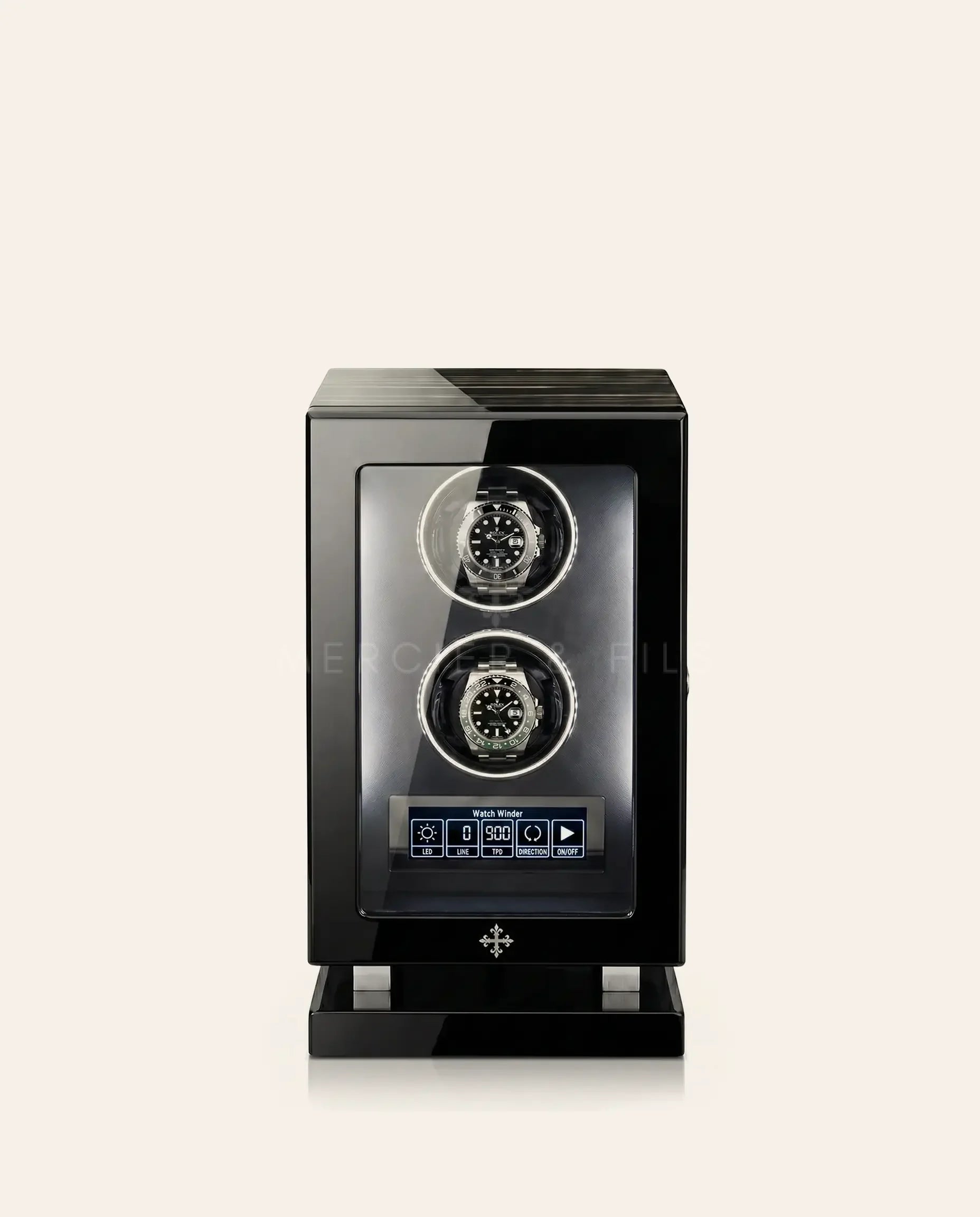
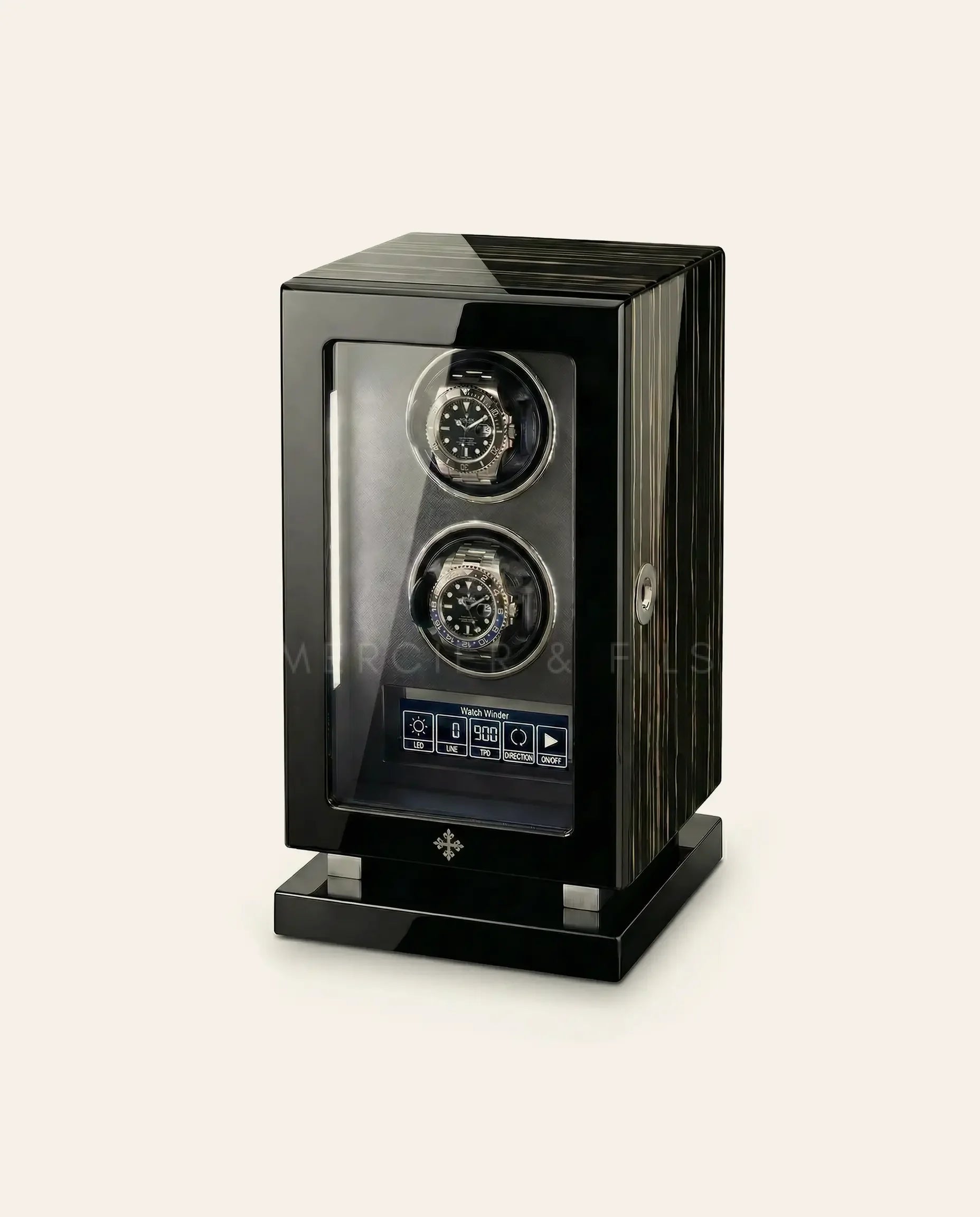
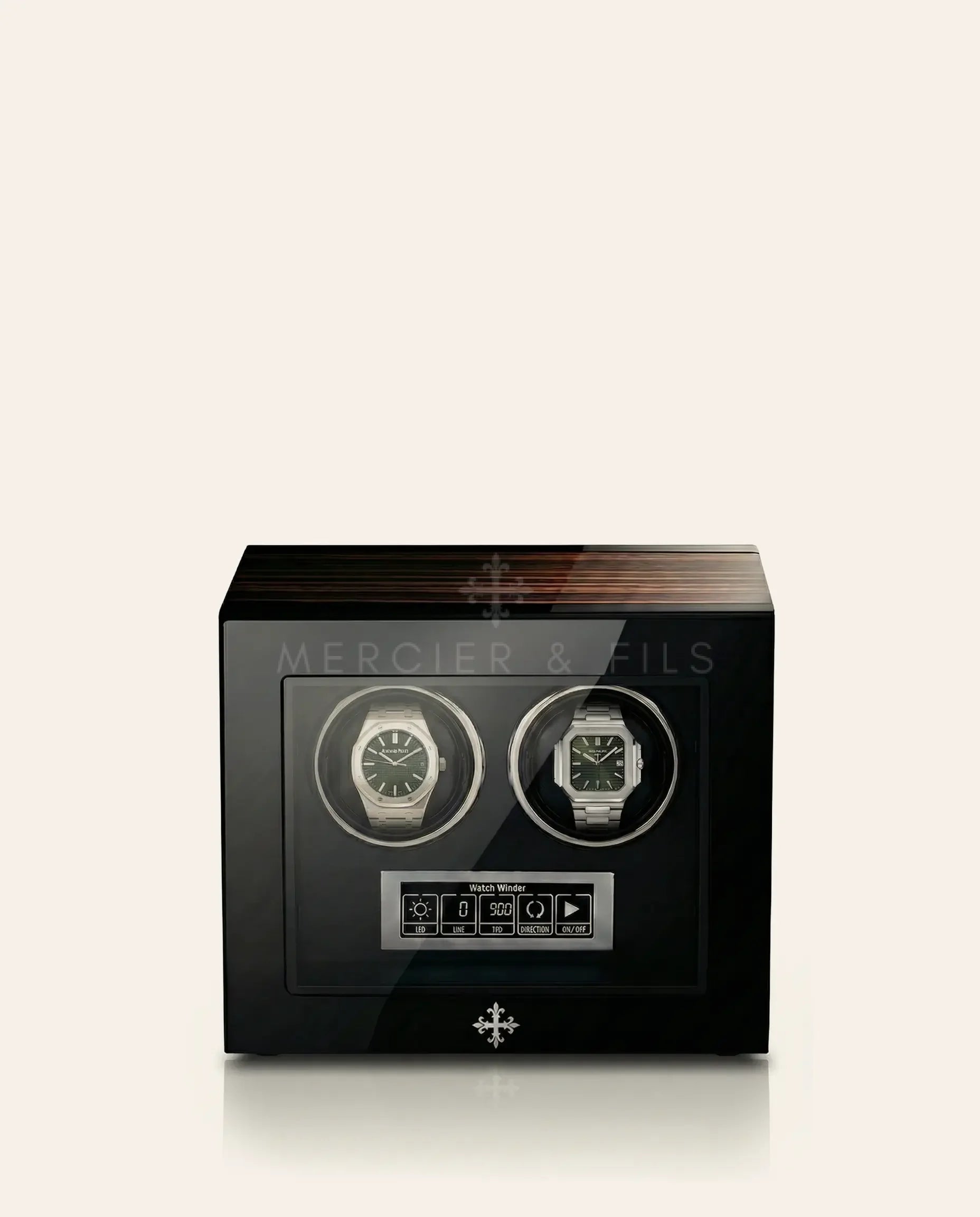
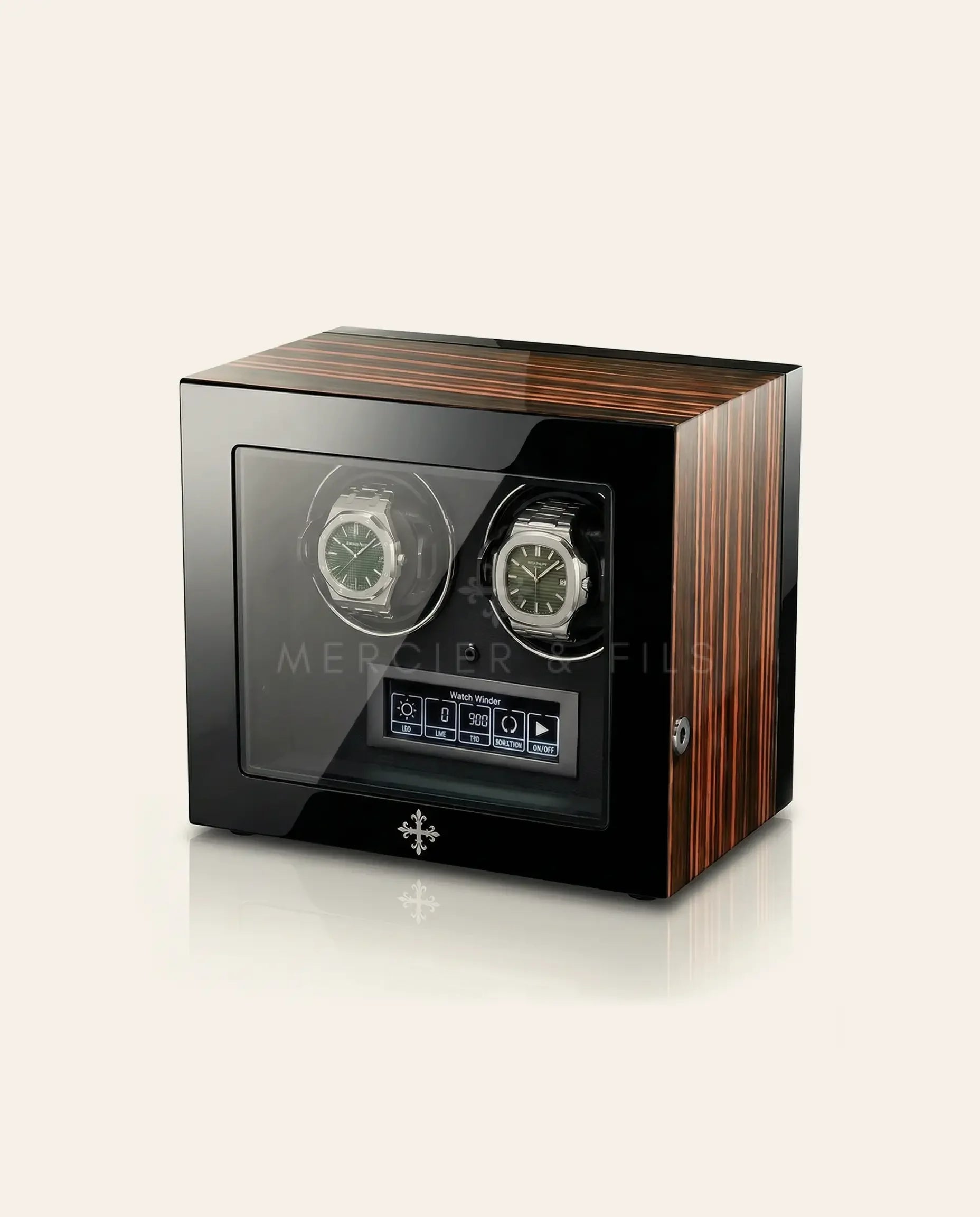
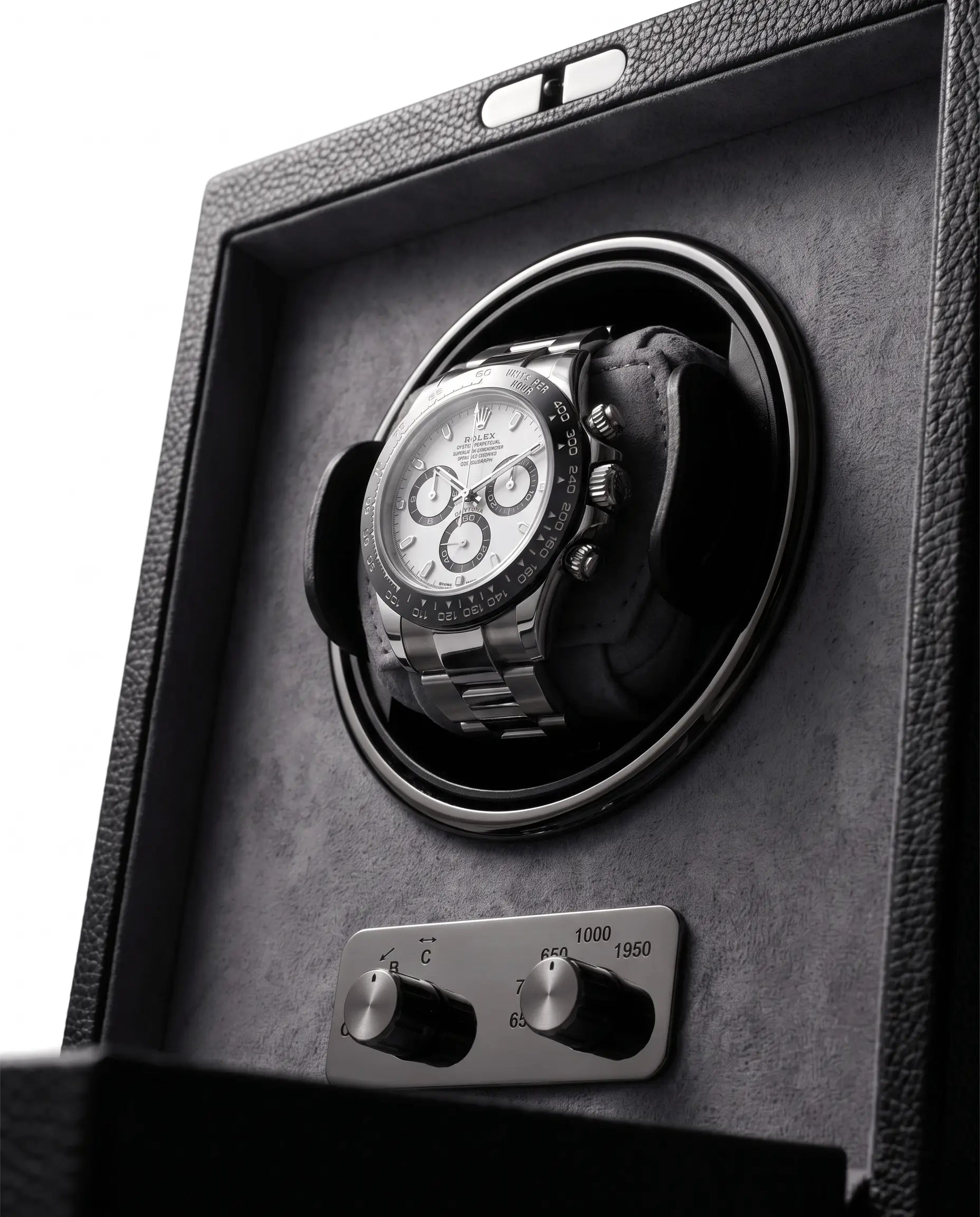
- A safe with integrated winders adds two constraints specific to automatic watches: temperature stability and access to a power outlet.
You would never photograph your watch next to your bank safe deposit box number. Yet many collectors post photos of their collection without a second thought, photos that show, in the background, the interior of their home, sometimes the safe itself. A bank safe deposit box draws its value from total anonymity. A home safe only has value if the home that houses it stays anonymous too.
Published August 1, 2026 — Reviewed by the Mercier & Fils technical team.
A safe is not security, it is one layer of security
This is the point most guides on the topic skip over. A home safe, however heavy and well anchored, does not block an intrusion indefinitely, it slows it down. The EN 1143-1 grades discussed in our guide to the EN 1143-1 standard measure precisely this delay, in resistance units against real burglary attempts, not an absolute and unlimited resistance.
What the numbers show
- The FBI recorded 779,542 burglaries in the United States in 2024, with residential properties accounting for roughly 405,776 of them, about 52%.
- Burglars typically spend 10 to 12 minutes inside a home before leaving, according to security-industry studies built on FBI incident data.
- The front door remains the single most common point of entry, used in about a third of break-ins.
- Only around 11% of burglary cases are ever cleared: avoiding the break-in matters far more than counting on it being solved afterward.
- 83% of burglars say they check for signs of an alarm system before attempting entry, and 60% will move on to another target if they spot one.
- 41% of burglaries are impulsive rather than planned in advance, decided in minutes. This is exactly why a safe that adds even a short delay works: an opportunistic intruder facing resistance is far more likely to leave without your collection than to escalate the attempt.
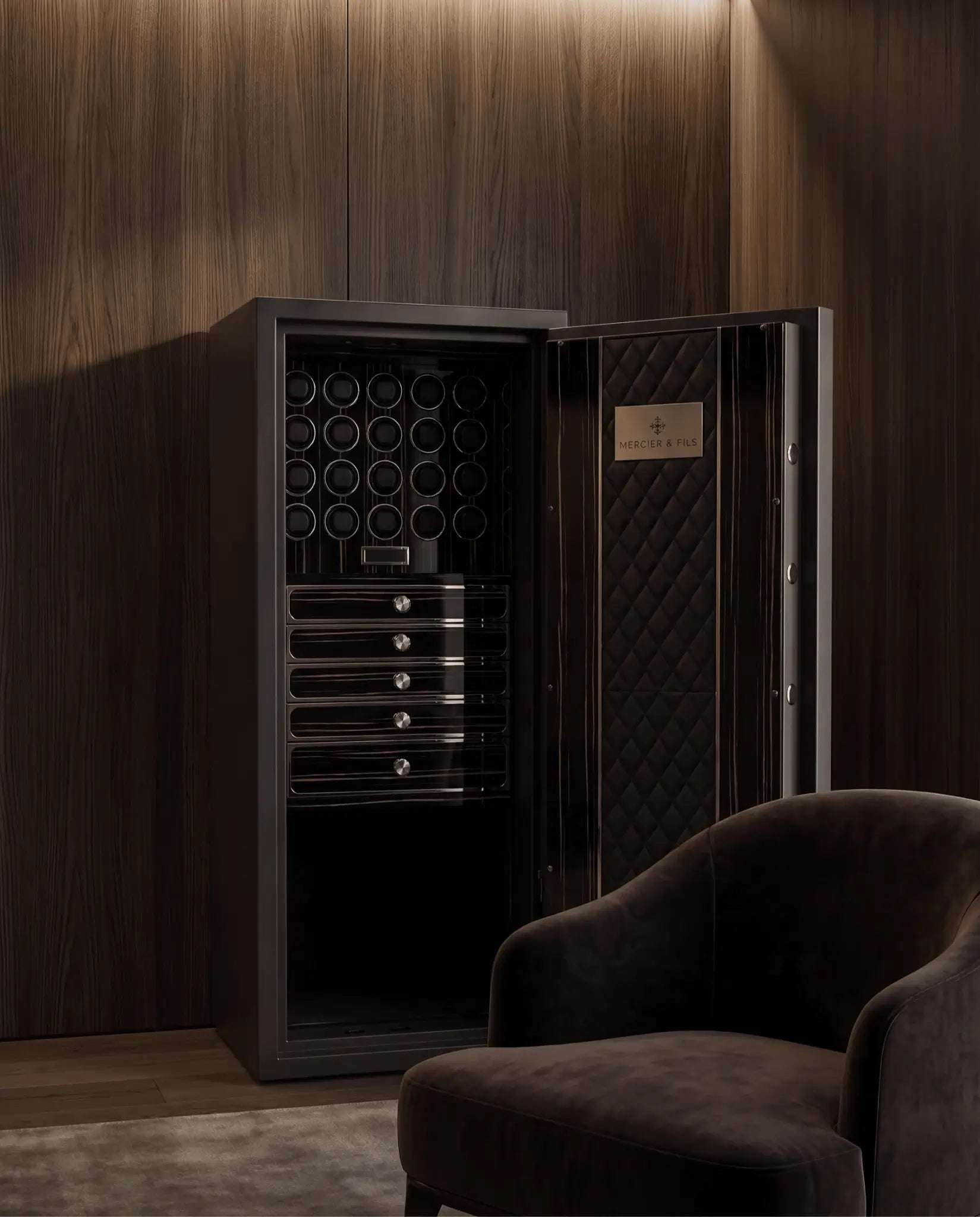
On our most requested models, the ones built for twenty watches, weight reaches 370kg (about 816 lbs). This is not designed to resist indefinitely against a determined, well equipped intruder, it is designed so that an opportunistic burglary, the vast majority of real cases, running 10 to 12 minutes on average, does not leave with the contents. It is a delay that discourages, not a barrier that guarantees.
This distinction changes how you approach the security of a collection. The safe complements other layers, it does not replace them: discretion about what you show online, a monitored alarm, a camera, and the location of the safe itself.
General rules for placement
Before even thinking about watches, the principles that apply to any home safe still hold:
A discreet, low-traffic location. A secondary dressing room, a closed office, a utility room or a space under the stairs is worth more than the main bedroom or living room, the two rooms a burglar checks first during a quick pass.
Solid anchoring. The safe should be fixed to a concrete slab or a load-bearing masonry wall, ideally in a corner where two sides are already backed by a solid surface. Anchoring method depends heavily on the house: a slab-on-grade foundation, a basement with a concrete floor, or upper-floor framing over joists all call for different hardware, so it is worth confirming the right anchor points with the installer before drilling. An unanchored safe does not need to be forced open on site, it can simply be carried away whole and opened later, at leisure. Anchoring is not an installation detail, it is what turns the safe's weight into actual protection.
Away from heat and humidity sources. Avoid the kitchen, the garage, a room near a boiler, or conversely a poorly ventilated cellar. An interior corner, on the ground floor or in a dry basement, is generally the most thermally stable.
Out of direct sight from a window. A safe visible from outside, even partially, loses part of its function before it is ever tested.
Accessible, but not exposed. You need to reach it quickly on a daily basis without it being obvious to a visitor, a contractor working in your home, or a guest passing through a room that is not theirs. This is not just about discretion: a safe that is too inconvenient to reach ends up, in practice, not being used. Watches drift back onto the dresser or into a drawer, which defeats the entire purpose of the safe. The right location is the one you will actually open every day.
Condo and co-op restrictions. If you own a condominium or a co-op, check with the building management or HOA before drilling into a concrete slab for floor anchoring. Many buildings restrict penetration of structural slabs, especially where plumbing, electrical conduit, or a downstairs neighbor's ceiling could be affected. Wall anchoring into interior stud framing is usually a simpler path in these settings, and worth confirming with your installer ahead of delivery.
Flood zones. If your home sits in a flood-prone area, factor elevation into the placement decision. A safe installed directly on a ground-level floor in a flood zone can be exposed to standing water even when the structure itself survives, which risks the mechanism and the winders inside as much as the contents. Raising the safe on a concrete or steel base, or choosing an upper floor location if the structure can support the weight, is worth discussing with your installer if this applies to your property.
What changes with a safe that has integrated winders
A safe intended for an automatic watch collection adds two constraints that a document or cash safe does not have.
Thermal stability matters more. Mechanical movements and the electronics of the winding modules do not tolerate large temperature swings or excessive humidity well. The benchmarks generally cited by horological conservation specialists sit around 59 to 77°F (15 to 25°C) and 40 to 60% relative humidity, away from direct heat and prolonged daylight. A temperate, dry room with stable year-round temperature is preferable to an attic that heats up in summer or a damp basement without dehumidification.
Electrical access must be planned ahead. A safe with winders needs a nearby mains outlet. Plan the cable routing before installation, so it does not give away the safe's location from an adjacent room.
Noise, on the other hand, stops being a placement constraint once you choose the right equipment. A Coil Winding® motor under 10dB stays inaudible beyond one meter, which leaves the option of a location close to a bedroom without disturbance, a point covered in detail in our guide to motor silence.
Best locations, and ones to avoid
| Preferred | To avoid |
|---|---|
| Secondary dressing room, away from the main bedroom | Main bedroom, the first room checked |
| Closed office, behind furniture or a panel | Garage, easy access and tools on hand |
| Utility room or under-stair space, concrete floor | Kitchen, near a boiler or fireplace |
| Dry basement, corner against exterior walls | Damp basement without dehumidification |
| A room with no direct sightline from a window | A room visible from the street or an entrance |
Do you need a separate safe for watches and everything else?
Not necessarily, but it can be worth it. A safe dedicated to documents and cash can take the most fire-optimal location, even if less convenient day to day, for example a basement corner. A watch safe benefits from staying close to your dressing room or dressing area, provided it keeps the discretion and anchoring that give it its value. This is often the best compromise between security and daily use, since you access your collection several times a week.
FAQ
Where is it best to install a safe at home?
In a discreet, low-traffic room, away from the areas burglars check first such as the main bedroom or the garage. Anchoring to the floor or wall, thermal stability and staying out of sight from a window matter more than the room itself.
Does a safe really prevent a burglary?
No, a safe slows down an intrusion, it does not stop it indefinitely. Its resistance is measured as a delay against real burglary attempts, not as absolute protection. That is why it should be paired with other measures such as discretion, an alarm, and a camera, rather than treated as sufficient on its own.
What precautions should be added for a safe holding automatic watches?
Beyond physical security, a safe with integrated winders needs a room with stable temperature, no excessive humidity, and access to a power outlet whose wiring should not reveal the safe's location from an adjacent room.
Should you avoid showing your safe or collection in photos?
Yes, as much as possible. A photo that reveals the interior of a home, even without showing the safe directly, often gives away enough to identify a general location or a lifestyle. Discretion online is one of the layers of security, alongside anchoring or an alarm.
Is one safe enough for both watches and important documents?
It is possible, but two separate safes let you optimize each use case: a document safe in the most fire-resistant spot, often less convenient, and a watch safe near the dressing room for daily use, without compromising on anchoring or discretion.
Can a winder inside the safe magnetize the watches?
Unlikely with a quality winder. Well-designed motors sit a few centimeters away from the watch and produce a field well below the magnetization threshold of common movements. The documented risk mostly comes from close, prolonged contact with everyday objects carrying strong magnets, such as magnetic clasps, wireless chargers, or speakers, rather than from the winder itself.
What do TL-15 and TL-30 ratings mean, and does Mercier & Fils offer them?
TL-15 and TL-30 are Underwriters Laboratories (UL) burglary ratings widely used in the United States, based on UL Standard 687. They certify how long a safe's door resists a defined set of tools under controlled testing, 15 minutes for TL-15, 30 minutes for TL-30. Mercier & Fils safes are certified under the European EN 1143-1 standard instead, tested by independent labs such as CNPP or ECB-S, with its own grade scale from 0 to high industrial levels. The two frameworks are not directly interchangeable, since they use different testing protocols, so we do not describe our certification as equivalent to a specific UL rating. If your insurer specifically requires UL certification, this is worth confirming before ordering.
Sources
Burglary data for the United States: FBI, Crime in the United States, 2024 report. TL-15 and TL-30 ratings: Underwriters Laboratories, UL Standard 687.
To go further on protecting your collection, see our guide to the EN 1143-1 standard, or discover Mercier & Fils watch safes, built for keeping an automatic watch collection running and secure at once.
This article is part of the Mercier & Fils Journal, a reference guide on the conservation and security of automatic watch collections.
Leave a comment
All comments are moderated before being published.
This site is protected by hCaptcha and the hCaptcha Privacy Policy and Terms of Service apply.