


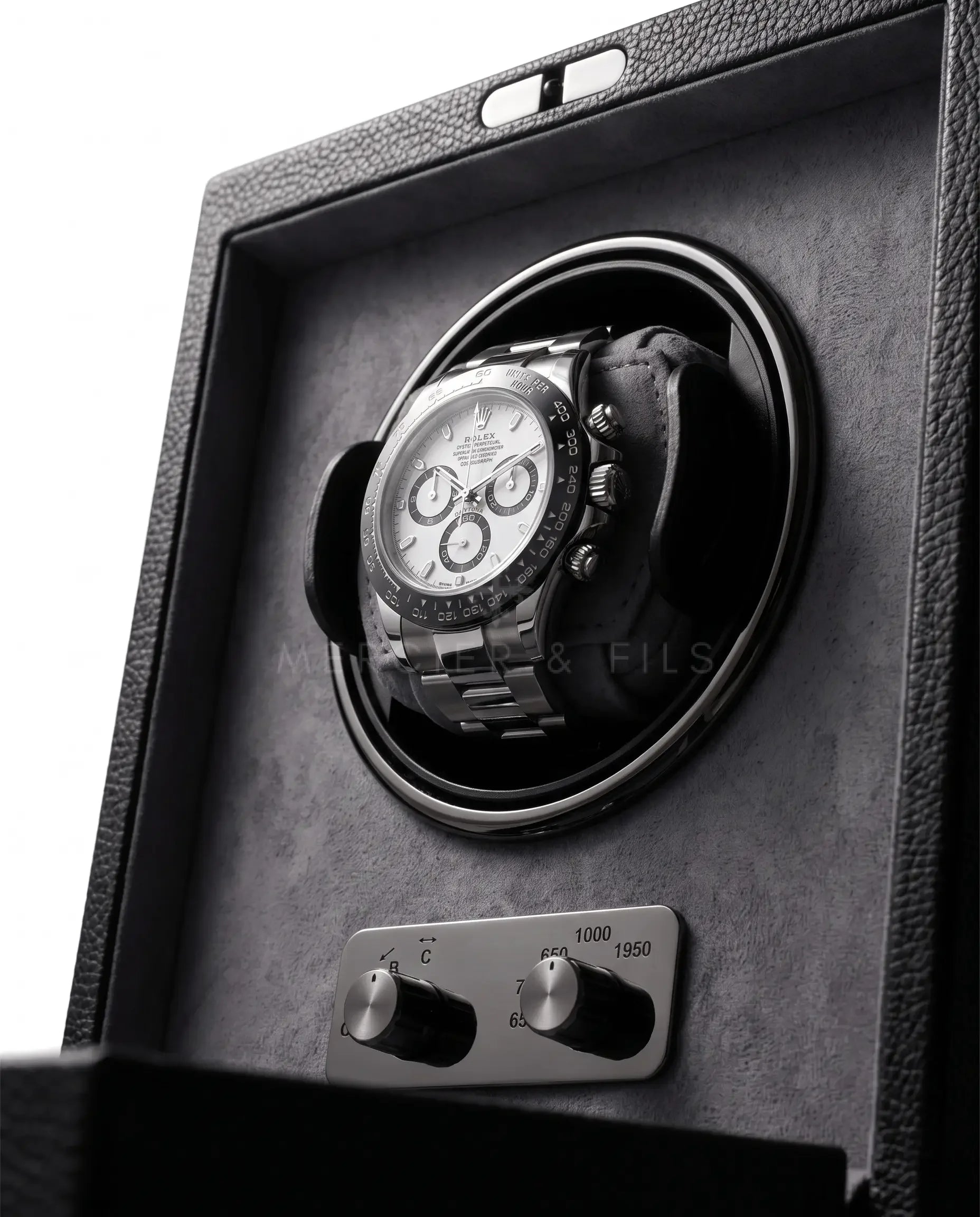
The Complete Watch Safe Buying Guide: Everything Collectors Need to Know
If you own more than a few thousand dollars in watches, the question is not whether you need a watch safe. It is which one, what rating, and how to install it before it is too late.
This guide walks through every decision a serious collector faces, from safe ratings and lock types to insurance requirements, installation logistics, and what to do if the worst happens. Whether your collection is worth $50,000 or $500,000+, you will find a concrete framework here.
Who this is for: Collectors of automatic and mechanical watches who want to protect a meaningful collection at home. Not a single watch in a nightstand drawer, and not a bank vault for investments you never wear.
Why a Watch Safe Is Not a Luxury. It's Insurance.
The number of stolen luxury watches has more than tripled in recent years. The Watch Register, the world's largest stolen watch database, now lists over 100,000 lost or stolen timepieces with a combined value exceeding $1.9 billion. Rolex alone accounts for 44% of all reported thefts, followed by Omega at 7% and Breitling at 6%.
London remains the global epicenter of watch crime, but the United States ranks second at 9% of all reported thefts, and the numbers are climbing. The Watch Register located 607 stolen watches in the first six months of 2025 alone, a 26% increase over the same period in 2024.
Here is what most collectors do not realize until it is too late: a standard homeowner's insurance policy typically caps jewelry and watch coverage at $1,500 to $5,000 total. That Submariner you bought for $10,000? Your insurer may pay out $1,500 if it is stolen from your dresser.
And safes themselves are not equal. Collectors have lost entire collections from commercial-grade safes that burglars drilled open. In one widely discussed case on Reddit, a collector shared the loss of 19 watches valued at approximately $400,000, taken during a home burglary. In both cases, the safes were either insufficiently rated or not properly secured.
A dedicated watch safe, one that combines burglary resistance, fire protection, environmental control, and integrated watch winders, is the single most effective layer of protection you can add. It is not a luxury purchase. It is a risk-management decision.
How to Choose a Watch Safe: The 5-Step Framework
Step 1: Determine Your Threat Level
Before you look at a single product, you need to understand what you are protecting against. The right safe for a $30,000 collection is very different from the right safe for a $500,000 collection.
The four primary threats to a home watch collection:
- Opportunistic burglary. An intruder breaks in looking for easily grabbable valuables. They typically spend under 10 minutes inside and target bedrooms first. Jewelry and watches are stolen in 32% of home burglaries.
- Targeted burglary. Criminals who know you have watches (from social media, staff, or follow-home surveillance) and come prepared with tools and a plan. They will attempt to open or remove your safe.
- Home invasion / coercion. Intruders confront you at home and force you to open the safe. This is rare but devastating, and no safe rating can fully prevent it.
- Theft by household staff or contractors. People with access to your home who take advantage of an unlocked or poorly concealed safe.
Threat-level matrix by collection value:
| Collection Value | Recommended Safe Rating | Alarm | Anchoring | Additional Measures |
|---|---|---|---|---|
| Under $50,000 | RSC or Class B/C | Monitored home alarm | Bolt to floor or wall | Conceal location; schedule on insurance |
| $50,000 – $150,000 | TL-15 + 60-min fire | Monitored alarm + safe zone | Bolt to floor | Separate alarm zone for safe room |
| $150,000 – $500,000 | TL-30 + 120-min fire | Comprehensive alarm + safe zone | Bolt to concrete or >750 lbs | CCTV; consider bank vault for investment pieces |
| $500,000+ | TL-30X6 or TRTL-30x6 | Full alarm + safe zone + monitoring | Professional install, bolted | Vault room consideration; staff background checks; split storage |
What do these ratings mean?
UL (Underwriters Laboratories) burglary ratings are the gold standard in the United States:
- RSC (Residential Security Container): Withstands a 5-minute attack using common hand tools. Most gun safes fall here. Sufficient for deterrence but not for a determined attacker.
- TL-15: Withstands a 15-minute attack on the door face by professional safecrackers using specialized tools, with full knowledge of the safe's construction. Preferred by most underwriters as the minimum for high-value collections.
- TL-30: Doubles the resistance time to 30 minutes and typically includes hardened plates and relockers. Recommended for collections above $150,000.
- TL-30X6: Extends TL-30 protection to all six sides of the safe, not just the door. Essential for safes that might be accessed from multiple angles.
- TRTL-30x6: Resists both tools and torch attacks on all six sides for 30 minutes. This is what Chubb recommends for ultra-high-net-worth collectors.
For European safes, the equivalent standard is EN 1143-1, which classifies safes from Grade I (lowest) to Grade VI (highest). French insurers use the A2P certification system, which maps to similar security levels. If you are comparing US and European safes, a TL-15 roughly corresponds to EN 1143-1 Grade III, and a TL-30 to Grade IV or V.
At Mercier & Fils, we offer multiple EN 1143-1 certification levels on consultation. The weight, dimensions, and price of your safe vary depending on the certification level you choose. Contact us to determine which grade matches your collection value and insurance requirements.
Step 2: Protect Against Fire and Environment
A safe that stops burglars but lets your watches melt in a fire is only doing half its job. And a safe that is fire-rated but traps humidity can damage leather straps and promote corrosion over time.
Fire ratings explained:
Fire ratings indicate how long a safe maintains an internal temperature below 350°F (177°C) when exposed to external flames. The 350°F threshold matters for watches specifically: mechanical watch oils and lubricants can begin to degrade above this temperature, and prolonged heat exposure can affect gaskets, adhesives, and even movement regulation.
| Fire Rating | Duration | External Test Temperature | Recommended For |
|---|---|---|---|
| 30 minutes | 30 min | 1,550°F | Minimum for documents; not ideal for watches |
| 60 minutes | 60 min | 1,700°F | Minimum recommended for watch collections |
| 90 minutes | 90 min | 1,850°F | Good for wildfire-prone areas |
| 120 minutes | 120 min | 1,850°F | Best protection for high-value watch collections |
Important caveat: A fire rating means the safe passed a controlled laboratory test. It does not guarantee that every component inside, including mechanical watch movements, will remain in perfect condition after a real fire event. After any fire, have valuable watches inspected by a qualified watchmaker before wearing or winding them.
Humidity and environmental control:
Watches are sensitive environmental instruments. The ideal storage conditions are:
- Temperature: 60–75°F (15–24°C), away from direct sunlight and heat sources
- Humidity: 40–50% relative humidity. Too dry and leather straps may crack; too humid and you risk corrosion and mold.
Many gun safe owners use electric dehumidifier rods (such as Goldenrod). These produce heat to drive moisture out of the air. Some collectors have expressed concern about placing heated rods too close to mechanical watches, as sustained warmth could theoretically affect watch oils. The safer approach for watch safes is to use rechargeable silica gel dehumidifiers (such as Eva-Dry) that absorb moisture without generating heat, or to choose a safe with integrated climate control.
Look for interiors made from non-abrasive, acid-free materials. Low-quality linings can damage leather straps or metal surfaces over years of contact.
Step 3: Choose Your Lock Strategy
The lock is your safe's primary access control, and its most common point of failure. Understanding the trade-offs before you buy can save you from a lockout at the worst possible moment.
Lock type comparison:
| Feature | Mechanical Dial | Electronic Keypad | Biometric | Dual-Lock |
|---|---|---|---|---|
| Reliability | Excellent (30+ years) | Good (5–10 years) | Moderate (false rejects possible) | Excellent (redundancy) |
| Service interval | Every 4–5 years | Battery replacement | Battery + sensor cleaning | Varies by primary lock |
| Speed to open | 30–60 seconds | 5–10 seconds | Under 2 seconds | Depends on primary |
| Failure mode | Drift, physical damage | Keypad failure | Sensor failure, dry/cut fingers | Use backup lock |
| Recovery if failed | Drilling (expensive) | Replace keypad (affordable) | Fallback to code or key | Use backup lock |
| Multiple users | Limited | Yes (multiple PINs) | Yes (multiple fingerprints) | Yes |
| Access logging | No | Some models | Some models | Depends on model |
| EMP resistance | Yes | Vulnerable | Vulnerable | Yes (if dial is backup) |
Mechanical dial locks (such as S&G 6730) are virtually indestructible and can last 30+ years with periodic servicing. However, they require routine service every 4–5 years. If a mechanical lock drifts or is physically damaged, the only recovery method is drilling, an expensive process that destroys the lock and requires replacement.
Electronic keypad locks (such as LaGard, SecuRam, AMSEC ESL) are faster, support multiple user codes, and are easier to service. When an electronic lock fails, it is typically the external keypad, not the internal mechanism. Many models allow you to twist off the faceplate and replace just the keypad while keeping your combination intact. Most electronic locks run on a 9V battery, and many include an external battery backup contact point for dead-battery recovery.
Biometric locks use fingerprint recognition for access in under two seconds. They are convenient for daily access but can produce false rejections due to dry fingers, cuts, or sensor wear. If you choose biometric, look for a system that also supports a PIN code or mechanical key as a fallback. Mercier & Fils integrates BioLock® biometric technology with a recognition speed of under 1.5 seconds, combined with traditional access methods for redundancy.
Dual-lock systems combine two independent locking mechanisms, typically an electronic lock as primary and a mechanical dial as backup. This is the most resilient configuration for ultra-high-value collections, as it provides redundancy if either lock fails.
Where to keep the emergency key: Not on top of the safe. Not in the same room. Not in an obvious drawer. A surprising number of burglaries are facilitated by owners who leave override keys in the immediate vicinity of the safe.
Step 4: Plan Your Interior and Winder Configuration
A watch safe is not just a steel box. The interior determines whether you will use it daily or resent it every time you reach for a watch.
How many winders do you need?
Not every watch needs to be on a winder. Automatic watches only need winding if you want them ready to wear. Watches with complex complications (perpetual calendars, annual calendars, moon phases) benefit most from winders because resetting these functions is tedious.
A practical approach:
- Daily-wear watches (2–4): On winders, ready to grab.
- Weekly-rotation watches (3–6): On winders or in cushioned compartments.
- Investment / occasional pieces: In cushioned compartments, wound manually before wearing.
- Manual-wind watches: Never on winders. They do not have rotors.
Plan for future growth. Many collectors underestimate how their collection will expand. A safe that feels spacious with 8 watches today may be full within two years. We recommend accounting for 2 to 5 years of planned additions.
Understanding TPD (Turns Per Day):
Every automatic movement has a specific TPD requirement, the number of rotations needed per day to keep it wound. A Rolex Submariner needs approximately 650 TPD bidirectional, while an Omega Speedmaster may need 800 TPD. Setting the wrong TPD can either under-wind (watch stops) or put unnecessary wear on the movement.
Mercier & Fils maintains a database of 5,800 caliber references across 86 brands, allowing each winder module to be set to the exact specification for your watches. You can look up the correct TPD for your specific movement in our TPD database by brand. This is a level of precision that generic winders cannot match.
Interior features to plan for:
- Winder modules: Configurable in sets (typically 3, 4, or 5 per row). Look for individually programmable TPD and rotation direction per module.
- Cushion size: Ensure cushions fit your watch sizes. Mercier & Fils Flex Mount® cushions accommodate wrist sizes from 4 to 6 cm, suitable for both small and large watches.
- Jewelry drawers: Velvet-lined compartments for rings, bracelets, and cufflinks.
- Document storage: Flat compartments for passports, appraisal documents, and insurance papers.
- Custom compartments: Bespoke cases can be added on order for specific items, including documents, jewelry, and other valuables. Tell us what you need to store and we will design the interior around your collection.
- LED lighting: Sensor-activated interior lighting makes daily use a pleasure, not a chore.
- Noise level: If the safe is in a bedroom or living space, winder motor noise matters. Mercier & Fils Coil Winding® technology operates below 10 dB, effectively silent.
Power management inside the safe:
If your safe has integrated winders, you need power inside. Three approaches:
- Built-in power: Dedicated watch safes from brands like Mercier & Fils, Wolf 1834, and Döttling include internal power routing designed specifically for winder modules. This is the cleanest and safest approach.
- Manufacturer-approved outlet kits: Gun safe brands like Liberty and Stealth offer electrical outlet kits designed to pass through the safe body without compromising the fire rating. These typically include three 110V outlets and a power cord.
- DIY cable routing: Some collectors run a power cable through the safe's anchoring holes or drill a new hole. Be aware that modifying a safe may affect its fire and security ratings. If you go this route, use fire-rated caulk to seal any penetration and check whether your manufacturer's warranty covers modifications.
What happens during a power outage?
If power is cut to your safe, the winders simply stop. Your watches will continue running on their power reserve, typically 38 to 72 hours for most automatic movements. No damage occurs. The watches will stop once the reserve is depleted, and you will need to reset them when power is restored. Electronic safe locks run on internal batteries, not mains power, so a power outage does not lock you out of your safe.
Step 5: Plan Installation Before You Buy
This is the step most buyers skip, and the one that causes the most problems. A 370 kg (815 lb) safe that cannot fit through your doorway or that cracks your floor joists is an expensive mistake.
Floor load capacity:
Standard US residential floors are designed to support 40 pounds per square foot (psf) of live load, plus 10 psf of dead load. However, a safe is a concentrated load, not a distributed one. A 1,000-lb safe with a 30×26-inch footprint exerts approximately 185 psf, well above the 40 psf rating.
This does not mean your floor will collapse. A typical 2×10 floor joist system (16-inch spacing) can support 1,000 to 2,000 lbs when the weight is distributed across multiple joists. The key is placement:
- Position the safe perpendicular to floor joists so the weight spans at least 2–3 joists.
- Place it near a load-bearing wall, which provides additional support.
- For very heavy safes (over 1,000 lbs), consider adding blocking between joists or sistering additional joists.
- Concrete slab floors (basements, ground floor in some regions) have no practical weight limit for residential safes.
Doorways, stairs, and elevators:
- Measure your doorway width before ordering. Many large safes require a minimum 30-inch doorway.
- Stairs: A 370 kg safe requires at least two professional movers and possibly stair-climbing equipment. Check stair load capacity for elevated installations.
- Elevators: If you live in a condo or apartment, check the elevator weight capacity and interior dimensions.
- Turns and hallways: Account for any turns between the entrance and the installation location.
Professional delivery and installation:
For any safe over 200 lbs, professional delivery is strongly recommended. White-glove delivery services handle scheduled delivery with a two-person team, placement in the room of your choice, anchoring to floor or wall, debris and packaging removal, and power kit installation if applicable.
At Mercier & Fils, delivery and installation are coordinated for all safe models, including the 370 kg Monaco™ and Louvois models. Lead time from order to delivery is approximately 3 months, which includes manufacturing, quality control, and shipping.
Anchoring:
Even a heavy safe can be carried away by determined burglars. Chubb recommends that safes weighing under 400 kg (approximately 880 lbs) must be securely bolted to a solid surface such as concrete or hardwood, not lightweight paneling. Jewelers Mutual requires bolting for any safe under 500 lbs.
Where to place your safe:
The bedroom is the first place burglars search. Consider alternative locations:
- A basement storage room (concrete floor, low traffic)
- A home office closet (discreet, away from main living areas)
- A dedicated vault room (for very high-value collections)
- A wall-safe installation concealed behind furniture or artwork
Watch Safe vs Gun Safe vs Bank Vault: Which Is Right for You?
Many collectors start by asking: "Can I just use a gun safe?" The short answer is yes, you can, but you should understand the trade-offs.
| Feature | Dedicated Watch Safe | Gun Safe + Winder Module | Bank Safe Deposit Box | Wall Safe | Vault Room |
|---|---|---|---|---|---|
| Security rating | TL-15 to TRTL-30x6 | RSC (most) | Bank-grade | Varies (often low) | Custom |
| Winder integration | Built-in, programmable | DIY / retrofit | No | No | Yes |
| Fire protection | 60–120 min | 30–120 min | Bank vault | Varies | Custom |
| Humidity control | Integrated or optional | Dehumidifier rod | Climate-controlled | Limited | Custom |
| Daily access | Excellent | Good | Poor (bank hours) | Excellent | Excellent |
| Insurance compliant | Often (TL-rated) | Rarely (RSC) | Yes | Rarely | Yes (if built to spec) |
| Cost | $5,000–$100,000+ | $1,000–$5,000 | $100–$500/year | $300–$2,000 | $25,000+ |
| Best for | $50K+ collections | Entry-level / multi-use | Investment pieces | Concealment | $500K+ collections |
The gun safe path:
Gun safes from Liberty, Fort Knox, AMSEC, and Browning offer more capacity per dollar than dedicated watch safes. Liberty Safe's electrical outlet kit lets you power winders, dehumidifiers, and lights inside the safe. However, most gun safes carry only an RSC rating, a 5-minute attack test, which experienced collectors consider inadequate for any collection above $50,000.
The bank vault path:
A bank safe deposit box offers bank-grade security and climate control for a fraction of the cost of a home safe. But you sacrifice daily access, and bank hours are limited. Many collectors use a hybrid approach: a home watch safe for daily-wear pieces and a bank vault for investment-grade watches that are rarely worn.
The vault room path:
For collections exceeding $500,000, a dedicated vault room (a reinforced room with a vault door) may be more practical than a single large safe. It allows you to store watches, jewelry, documents, and other valuables in a climate-controlled, highly secure space.
Insurance Requirements for Watch Collections
Insurance is the final layer of protection, and one that too many collectors misunderstand.
Standard homeowner's policies are not enough.
A standard homeowner's policy typically caps total jewelry and watch theft coverage at $1,500 to $5,000, regardless of the actual value of your collection. Some policies may also exclude "mysterious disappearance" (losing a watch without evidence of theft).
Scheduled personal property (SPP):
To properly insure a watch collection, you need a scheduled personal property endorsement (also called a rider or floater). This lists each watch individually with its insured value on your policy's declarations page. Scheduled items typically carry a $0 deductible and cover mysterious disappearance.
US insurers that cover watch collections:
| Insurer | Key Features | Safe Requirement |
|---|---|---|
| Chubb | All-risk worldwide coverage, no deductible, 150% market protection, no appraisal below $100K | Recommends TRTL-30x6 for UHNW; safes under 750 lbs must be bolted |
| Hodinkee Insurance (underwritten by Chubb) | No deductible, no appraisal below $100K, 150% market protection, easy online setup | Check with underwriter for safe requirements |
| PURE Insurance | HNW focus, $50K jewelry included in homeowners, scheduled and blanket coverage options, 150% market protection | Recommends high-quality safe; check policy for specifics |
| Jewelers Mutual | Watch-specific coverage, also covers personal collections | TL-15 minimum for commercial; bolting required under 500 lbs |
| BerkleyOne | HNW personal lines, vault storage discounts | Safe storage discounts available |
Key insurance questions to ask your underwriter:
- At what collection value do you require a safe?
- What safe rating do you require? (TL-15, TL-30, TRTL-30x6?)
- Does the safe need to be bolted? What weight threshold applies?
- Do you require an alarm system? A separate alarm zone for the safe?
- Do you offer a premium discount for having a TL-rated safe?
- What documentation do you need? (Appraisals, receipts, photos, serial numbers?)
- How often do appraisals need to be updated? (Typically every 2–3 years.)
- Does the policy cover mysterious disappearance? Worldwide? While traveling?
Documentation checklist for insurance:
- Professional appraisal for each watch over $5,000 (updated every 2–3 years)
- Purchase receipts or invoices
- Photos of each watch (front, back, and photo of you wearing it)
- Serial numbers recorded separately (stored in cloud, not just in the safe)
- GIA certificates for watches with gemstones
- Home inventory document listing all items with values
Watch Safe Brands Compared
The watch safe market spans from entry-level American security brands to German luxury houses and bespoke ateliers. Here is how the main players compare:
| Brand | Company Origin | Price Range | Security Rating | Winder Integration | Notable Feature |
|---|---|---|---|---|---|
| Mercier & Fils | France | $21,000–$55,000+ | EN 1143-1 (multiple levels on consultation) | Built-in, programmable TPD per module | Coil Winding® (<10dB), BioLock® (<1.5s), 5,800 caliber TPD database, 5-year warranty |
| Wolf 1834 | USA | $5,000–$50,000+ | Varies by model | Built-in, Bluetooth app control | 900 TPD pre-programmed, bespoke customization |
| Buben & Zörweg | Germany | $87,000–$142,000+ | VdS rated | Built-in, Swisskubik modules | Private Museum safe, bespoke art commissions |
| Döttling | Germany | $67,000+ | VdS / EN rated | Built-in | Wallmaster glass-front wall safe, Grand Circle flagship |
| Brown Safe | USA | $10,000+ | Class B to TL-30 | Built-in, programmable | US-made, high customization, insurer partnerships |
| AMSEC | USA | $1,700–$6,000+ | TL-15 to TL-30 | Not integrated (gun safe) | 120-min fire rating, best value for security |
| Blumsafe | USA | $3,000–$15,000 | Varies | Compatible modules | Wall-mounted, space-efficient, US-made |
Choosing between them:
- For maximum security per dollar, AMSEC TL-15 or TL-30 safes are hard to beat, but they lack integrated winders and luxury interiors.
- For integrated winding + luxury design, Mercier & Fils, Wolf 1834, and Döttling lead the category. Mercier & Fils distinguishes itself with silent Coil Winding® technology, biometric BioLock® access, and the most comprehensive TPD database in the industry.
- For wall-mounted installation, Blumsafe is the established US option.
- For bespoke commissioning (matching interior, art collaborations), Buben & Zörweg, Döttling, and Pinel & Pinel offer the highest level of personalization.
- For budget-conscious collectors, a gun safe (Liberty, Fort Knox, AMSEC) with a standalone winder module and an electrical outlet kit is a viable starting point. Upgrade to a dedicated watch safe as your collection grows.
Customizing Your Watch Safe
A luxury watch safe should fit your collection, your space, and your aesthetic. Most premium brands offer extensive customization:
Exterior finishes:
- High-gloss automotive paint in custom colors
- Leather wrapping (calfskin, exotic leathers)
- Matte textured finishes
- Wood veneers (walnut, mahogany, ebony, macassar)
Interior configuration:
- Wood species: walnut, mahogany, curly maple, sapele, ebony, birdeye, oak
- Fabric linings: suede, pebbled grain, carbon fiber pattern, quilting pattern
- Drawer layouts: open, mixed, watch cushions, ring slots, jewelry sets
- Winder modules: sets of 3, 4, or 5 per row; knob, button+LCD, or touchscreen control
- Drawer handles: elegant, CNC, inlay, knob styles
- LED lighting: sensor-activated, cool or warm tone
- Hidden compartments for documents and cash
- Custom cases on order: bespoke compartments can be designed for specific items such as documents, jewelry, passports, or other valuables you need to secure
Lead times:
Custom safes from Mercier & Fils take approximately 3 months from order to delivery, which includes manufacturing, quality control, and shipping. Luxury bespoke commissions from top-tier brands can take longer depending on complexity.
Can you upgrade the interior later?
In most dedicated watch safes, winder modules are modular and can be added or repositioned. However, structural changes (adding drawers, changing door swing, modifying the body) are typically not possible after manufacture. Plan your interior configuration carefully at the time of order, and leave room for future watch acquisitions.
What Happens If Your Watches Are Stolen?
No safe is 100% impenetrable. If the worst happens, preparation determines whether you recover your watches or write them off.
Before theft, register your watches:
- Record the serial number of every watch. This is the single most important piece of information for recovery.
- Take photos of each watch (front, back, case back, and a photo of you wearing it). Store these in cloud storage, not on a device in your home.
- Register serial numbers on The Watch Register (thewatchregister.com), the world's largest stolen watch database with over 100,000 registered timepieces.
- Register on Enquirus (enquirus.com), a free database operated by The Art Loss Register.
- Consider GlobalWatchDatabase.com as an additional registry.
- Keep purchase receipts, appraisals, and GIA certificates in cloud storage.
After theft, what to do:
- File a police report immediately. Ensure all serial numbers and model numbers are listed on the report. In the US, pawn shops are required to return items matching a police report.
- Register the theft on The Watch Register, Enquirus, and GlobalWatchDatabase.
- Contact the watch brand directly. Rolex maintains a database of reported stolen serial numbers and will seize stolen watches sent in for service. Other brands maintain internal databases as well.
- Set up alerts on eBay, Chrono24, Facebook Marketplace, Craigslist, and WatchRecon.com for your specific references.
- Contact your insurer within 24–72 hours (check your policy for the exact timeframe). Provide the police report, serial numbers, and proof of ownership.
Recovery statistics:
The Watch Register reports that 50% of recovered watches are located within one year of the theft, and 35% within six months. There are documented cases of watches being recovered over 30 years after theft, so never give up on a registered serial number.
Frequently Asked Questions
What is a watch safe?
A watch safe is a security-rated safe designed specifically for storing luxury watches. Unlike a standard home safe, a watch safe typically includes integrated watch winders, cushioned compartments, humidity control, and interior lighting, combining burglary and fire protection with daily usability for collectors.
What does TL-15 mean?
TL-15 is a UL (Underwriters Laboratories) burglary rating that means the safe can withstand a 15-minute attack on its door face by professional safecrackers using specialized tools, with full knowledge of the safe's construction. It is the minimum rating recommended for high-value watch collections.
What does TL-30 mean?
TL-30 doubles the TL-15 resistance to 30 minutes and typically includes hardened plates and relockers. It is recommended for collections valued above $150,000.
What is a TRTL-30x6 rating?
TRTL-30x6 means the safe can resist both tool and torch attacks on all six sides (door, back, top, bottom, and both sides) for 30 minutes. This is the rating Chubb recommends for ultra-high-net-worth collectors.
What fire rating do I need for watches?
A minimum 60-minute fire rating is recommended for watch collections. For collections in wildfire-prone areas or very high-value pieces, 90 or 120 minutes provides additional protection. The safe should maintain an internal temperature below 350°F (177°C), as watch oils can degrade above this threshold.
Can I use a gun safe for watches?
Yes, but with caveats. Most gun safes carry only an RSC rating (5-minute attack test), which is below the TL-15 minimum recommended for valuable collections. You can add a standalone winder and an electrical outlet kit, but drilling holes for power may affect the safe's fire and security ratings. Use manufacturer-approved kits and fire-rated caulk for any penetrations.
Are watch winders bad for watches?
No, quality watch winders are not bad for automatic watches when set to the correct TPD and rotation direction. Setting the wrong TPD can either under-wind (watch stops) or cause unnecessary wear. Mercier & Fils maintains a database of 5,800 caliber references across 86 brands to ensure correct settings. For more on this topic, see our article on the watch winder overwinding myth.
How many watch winders do I need?
Most collectors need 2 to 4 winders for daily-wear automatic watches. Watches with perpetual calendars or complex complications benefit most from winders. Manual-wind watches do not need winders. Plan for future collection growth, as it is cheaper to buy a safe with extra winder capacity than to upgrade later.
What is TPD (turns per day)?
TPD is the number of rotations per day required to keep an automatic watch wound. Each movement has a specific TPD requirement. For example, a Rolex Submariner needs approximately 650 TPD bidirectional. Setting the correct TPD ensures the watch stays wound without unnecessary wear. See our TPD database by brand and our TPD guide for detailed settings.
Mechanical or electronic safe lock: which is better?
Both have merits. Mechanical dials last 30+ years with minimal service but are slower and harder to recover if they fail. Electronic keypads are faster, support multiple users, and are easier to service. For ultra-high-value collections, a dual-lock system provides the best redundancy.
What happens if my electronic safe lock battery dies?
Most electronic safe locks run on an internal 9V battery. When the battery runs low, the lock will warn you with beeps or slow operation. Many locks include an external battery backup contact point: touching a fresh 9V battery to the keypad provides temporary power to open the safe and replace the internal battery.
Does homeowners insurance cover stolen watches?
Standard homeowner's policies typically cap jewelry and watch theft coverage at $1,500 to $5,000 total. You need a scheduled personal property endorsement to cover individual watches at their full value. HNW carriers like Chubb, PURE, and Hodinkee Insurance offer specialized coverage with worldwide protection and no deductible.
Does a TL-15 safe lower my insurance premium?
In many cases, yes. Insurers often offer premium discounts for TL-15 or TL-30 rated safes, and some require a minimum safe rating above a certain collection value. Check with your specific carrier.
How heavy should a watch safe be?
Chubb recommends safes weighing over 750 lbs (340 kg) as a minimum for high-value collections, heavy enough that one person cannot easily move it. Safes under this weight must be bolted to the floor or wall.
Can I put an 800-lb safe on the second floor?
In most cases, yes, if positioned correctly. A typical 2×10 floor joist system can support 1,000 to 2,000 lbs when the weight is distributed across multiple joists. Position the safe perpendicular to the joists, near a load-bearing wall. For very heavy safes, consider adding blocking between joists or reinforcing with sister joists.
Where should I place my watch safe?
Avoid the bedroom, as it is the first place burglars look. Consider a basement storage room (concrete floor, low traffic), a home office closet, or a dedicated vault room. For detailed guidance, see our article on where to install a watch safe at home.
Can I drill a hole in my safe for a power cord?
Drilling into a safe may affect its fire and security ratings. Use manufacturer-approved electrical outlet kits and seal any penetrations with fire-rated caulk. The safest approach is to choose a safe with built-in power routing designed for winder modules.
What happens to my watches during a power outage?
Winders will stop, but no damage occurs. Automatic watches have a power reserve of 38 to 72 hours and will continue running until the reserve is depleted. Once power is restored, the winders resume and the watches wind back up. Electronic safe locks run on internal batteries, so you can still access your safe during an outage.
Should I keep all my watches in a safe?
Yes. Any watch you are not currently wearing should be in the safe. This is not just about theft; it protects against fire, humidity, dust, and accidental damage. For investment-grade pieces you rarely wear, consider a bank safe deposit box as a secondary storage option.
What is The Watch Register?
The Watch Register is the world's largest stolen watch database, with over 100,000 registered lost or stolen timepieces valued at over $1.9 billion. Watch brands, auction houses, and pre-owned dealers check the register before buying or servicing watches. Registering your serial numbers before theft significantly increases recovery chances.
How long is the warranty on a Mercier & Fils watch safe?
Mercier & Fils offers a 5-year warranty covering the safe structure, opening systems, and winder modules. This is among the most comprehensive warranties in the luxury watch safe category.
What is BioLock® biometric technology?
BioLock® is Mercier & Fils' proprietary biometric access system, offering fingerprint recognition in under 1.5 seconds. It is designed for collectors who want fast daily access without compromising security, and includes traditional access methods as fallback.
What is Coil Winding® technology?
Coil Winding® is Mercier & Fils' proprietary winder motor technology that operates below 10 decibels, effectively silent. This makes it suitable for safes installed in bedrooms or living spaces where motor noise would be disruptive.
Can I customize the interior of my safe later?
Winder modules can typically be added or repositioned in modular systems. However, structural changes (adding drawers, changing door configuration) are usually not possible after manufacture. Plan your interior configuration at the time of order, and leave buffer capacity for future acquisitions.
Should I choose more security or more display?
This depends on your threat model. If you are primarily concerned about burglary, prioritize security ratings (TL-15 or higher) and a solid door. If you want to enjoy your collection daily and entertain guests, a glass-front display door adds aesthetic value while still providing security. For most collectors, a balance of both, a TL-rated safe with a well-designed interior, is the right choice.
What EN 1143-1 certification levels does Mercier & Fils offer?
Mercier & Fils offers multiple EN 1143-1 certification levels on consultation. The weight, dimensions, and price of your safe vary depending on the certification level you choose. Contact us to determine which grade matches your collection value and insurance requirements. For more detail on the standard, see our article on the EN 1143-1 safe standard.
The Watch Safe Checklist: 15 Things to Verify Before You Buy
Before you commit to a watch safe, work through this checklist:
- Security rating: Is it TL-15 or higher? Does it meet your insurer's requirements?
- Fire rating: Is it at least 60 minutes? 120 minutes for high-value collections?
- Weight: Is it over 750 lbs? If not, can it be bolted to the floor?
- Lock type: Have you chosen mechanical, electronic, biometric, or dual-lock based on your daily-use needs?
- Winder capacity: Does it have enough winders for your current collection plus 2 to 3 years of growth?
- TPD programmability: Can each winder be set individually for different watch calibers?
- Power routing: Is there built-in power for winders, or will you need an outlet kit?
- Humidity control: Does it include or support a dehumidifier? Is the interior made from non-abrasive, acid-free materials?
- Interior layout: Are there jewelry drawers, document compartments, and hidden storage?
- Dimensions: Will it fit through your doorway, down your hallway, and into the chosen location?
- Floor capacity: Can your floor support the weight? Do you need joist reinforcement?
- Anchoring: Can it be bolted to concrete or a solid surface?
- Insurance compliance: Have you confirmed with your underwriter that this safe meets their requirements?
- Warranty: What is covered and for how long? Does it include winder modules?
- Delivery and installation: Is professional installation included or available?
Ready to Choose Your Watch Safe?
A watch safe is one of the most important investments a collector can make. Not because it adds value to your collection, but because it protects the value that is already there.
If you are ready to discuss your specific needs, our team at Mercier & Fils offers personalized consultations to help you choose the right safe configuration for your collection, your space, and your security requirements.
Browse our collection of watch winder safes
Contact us online for delivery and installation across the United States and Europe.
This guide was compiled using data from The Watch Register, BBC News, Chubb Insurance, Hodinkee Insurance, PURE Insurance, Jewelers Mutual, UL (Underwriters Laboratories), and collector communities on Reddit and Rolex Forums. All theft statistics and insurance requirements should be verified with your specific insurance carrier before making a purchase decision.