


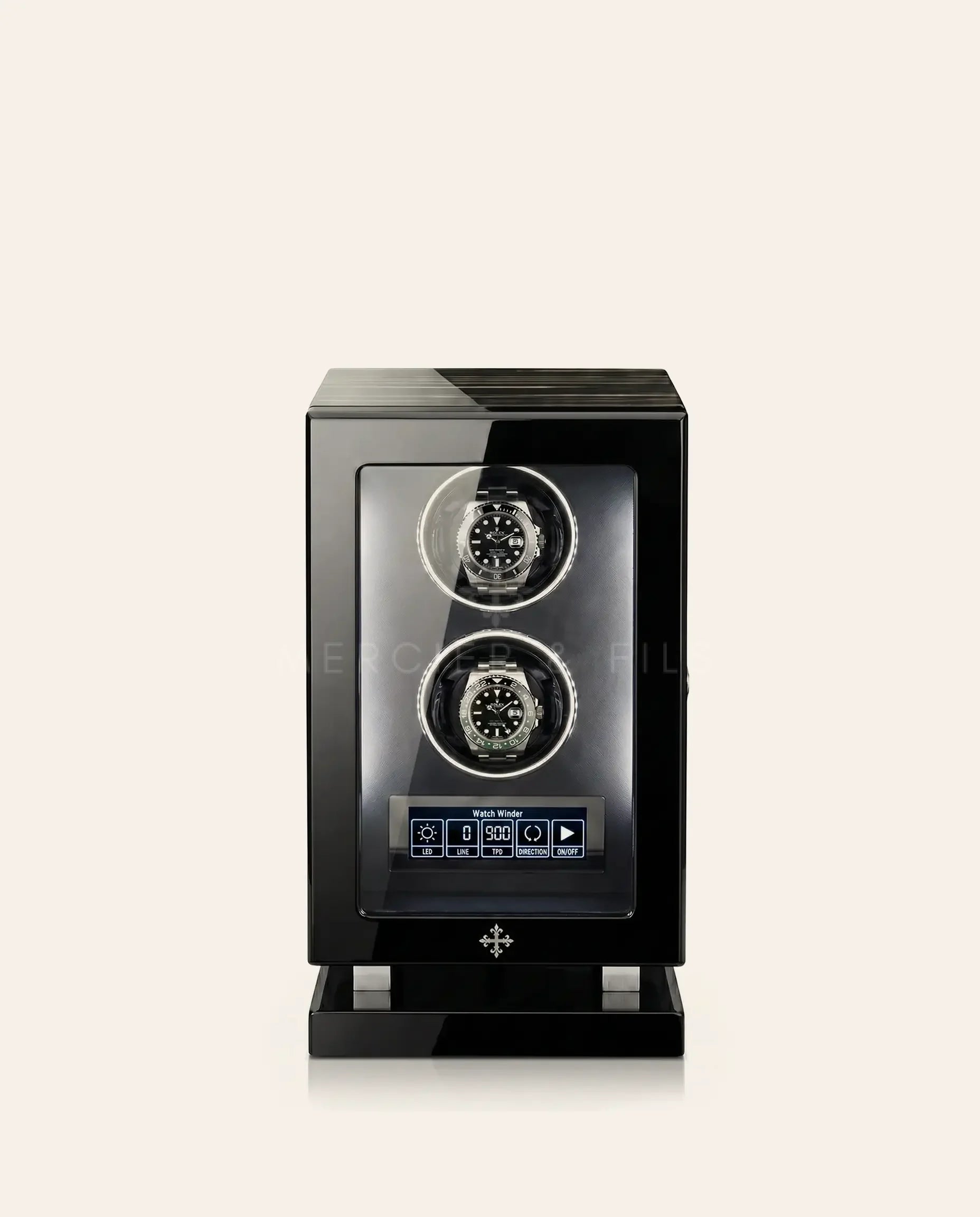
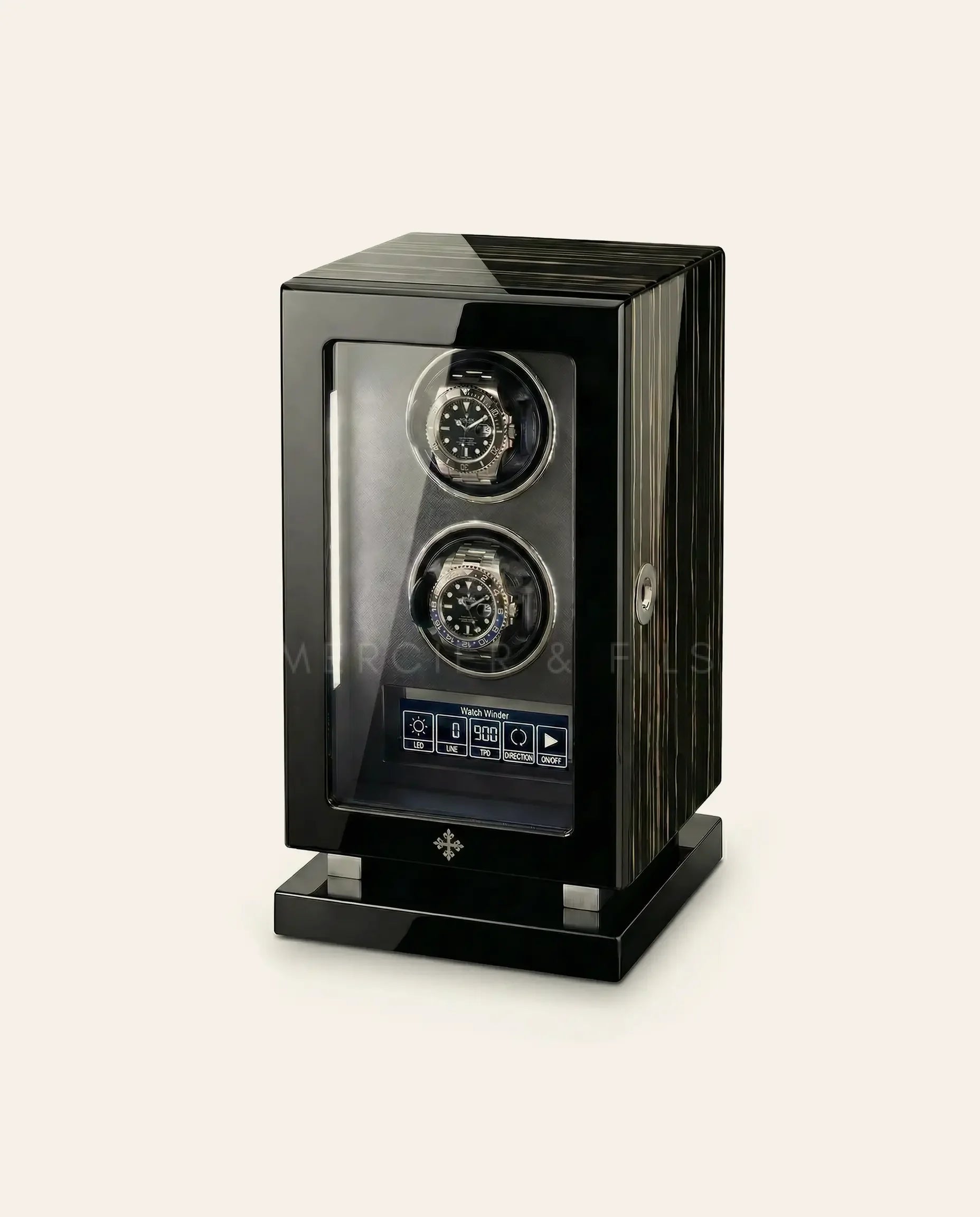
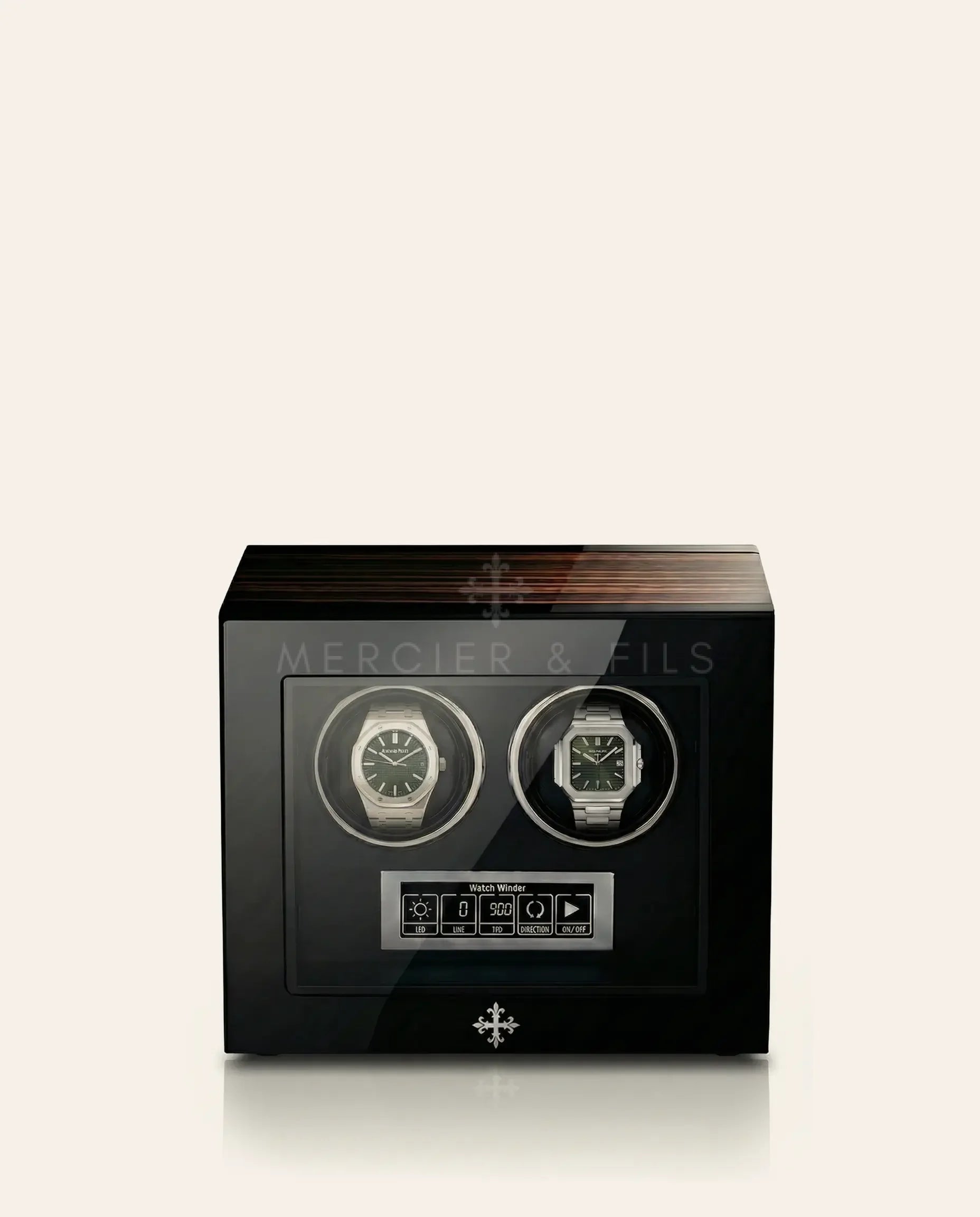
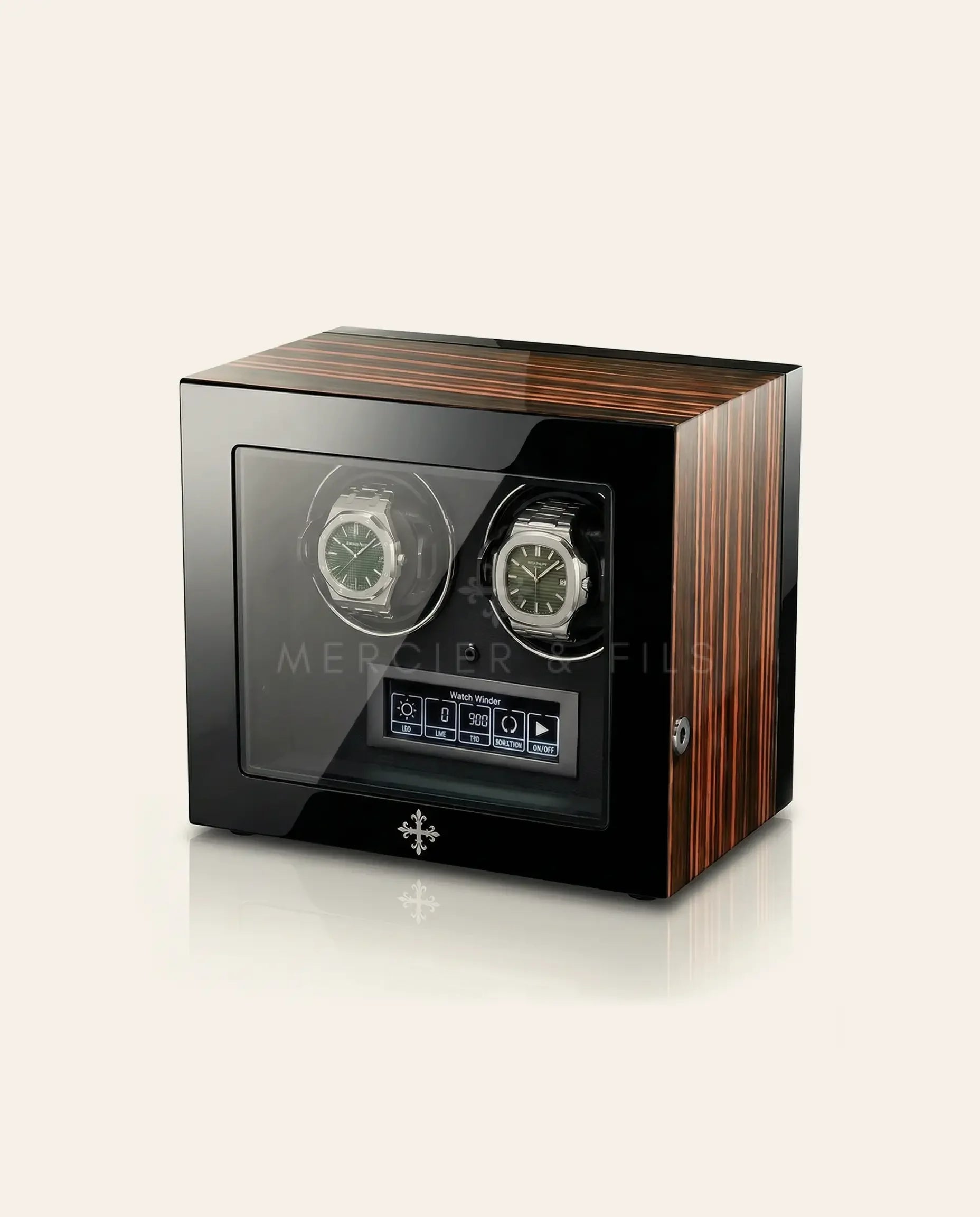
Patek Philippe watch winder: TPD and direction of rotation settings by reference
Patek Philippe TPD means the turns per day programmed on a watch winder. Before choosing a value, identify the watch’s full reference, calibre and winding type. This guide separates verified characteristics from settings that require confirmation.
Before configuring a winder. The sources below document the movements but do not validate a universal TPD programme for our winders. “Confirm” means neither a default setting nor zero. Unverified data is not presented as a manufacturer instruction.
Verified references and movements
This is a non-exhaustive reference table. Information applies to the specified references, not every watch sharing a collection name.
| Reference | Calibre | Winding | Winder TPD | Source |
|---|---|---|---|---|
| Aquanaut 5261R-001 | 26-330 S QA LU | Automatic | Confirm for this reference and device | Manufacturer source |
| Aquanaut Luce 5268/200R-010 | 26-330 S C | Automatic | Confirm for this reference and device | Manufacturer source |
| Grand Complications 5270/1R-001 | CH 29-535 PS Q | Manual | Not applicable to a rotating winder | Manufacturer source |
| Aquanaut Luce 5067 | Quartz | Quartz | Not applicable to a rotating winder | Manufacturer source |
| Nautilus 5811/1G-001 | 26-330 S C | Automatic | Confirm for this reference and device | Manufacturer source |
| Aquanaut Chronograph 5968G-001 | CH 28-520 C | Automatic | Confirm for this reference and device | Manufacturer source |
| Grand Complications 5531G-001 | R 27 HU | Automatic | Confirm for this reference and device | Manufacturer source |
Common points of confusion
A watch reference is not a calibre name. Aquanaut 5261R is an annual calendar; the cited 5268/200R is an automatic with date, not one of the chronographs described in the former table. The 5968G is a CH 28-520 C chronograph. Another crucial distinction: 5270/1R is manually wound, while the Aquanaut Luce 5067 documented in 2007 is quartz. No rotating-winder TPD value is assigned to either. For older watches, consult the exact generation’s manual.
How to confirm the programme
- Find the reference and calibre in the watch’s documentation. Do not rely solely on its commercial name or dial.
- Check whether the movement is automatic, manual or quartz. A rotating winder does not wind a manual movement or recharge an ordinary quartz watch.
- Consult the reference’s manual. If winder TPD and direction are not specified, request confirmation from the manufacturer or its authorised network, stating the model of your device.
- Check the winder’s available programmes and direction convention. Set each position independently when watches require different programmes.
- For a stopped watch, follow the restarting procedure in its manual. If it stops despite a confirmed programme, check its fit and seek advice before increasing TPD.
Frequently asked questions
Can the same TPD be used for the whole brand?
Not on the Patek Philippe name alone. The calibre, generation and instructions for the reference take precedence over an unsourced general rule.
Are crown turns the same as TPD?
No. Manual-winding instructions concern the crown; TPD concerns rotations of the winder. Do not directly convert one into the other.
Does a confirmed rotor direction establish TPD?
No. The movement’s winding mechanism and the device’s programme are different pieces of information. An efficiency-loss percentage or an optimal setting cannot be inferred from “bidirectional” alone.
Choosing winder capacity
Once the calibre’s requirements are confirmed, see our Patek Philippe watch-winder guide for usage considerations, or automatic watch-winder collection to choose capacity.
Official sources are linked in the table, consulted on 9 September 2026. This guide does not replace your watch’s manual. Mercier & Fils is independent of the manufacturers mentioned.