



Understanding the TPD of an automatic watch winder

Updated 9 September 2026.
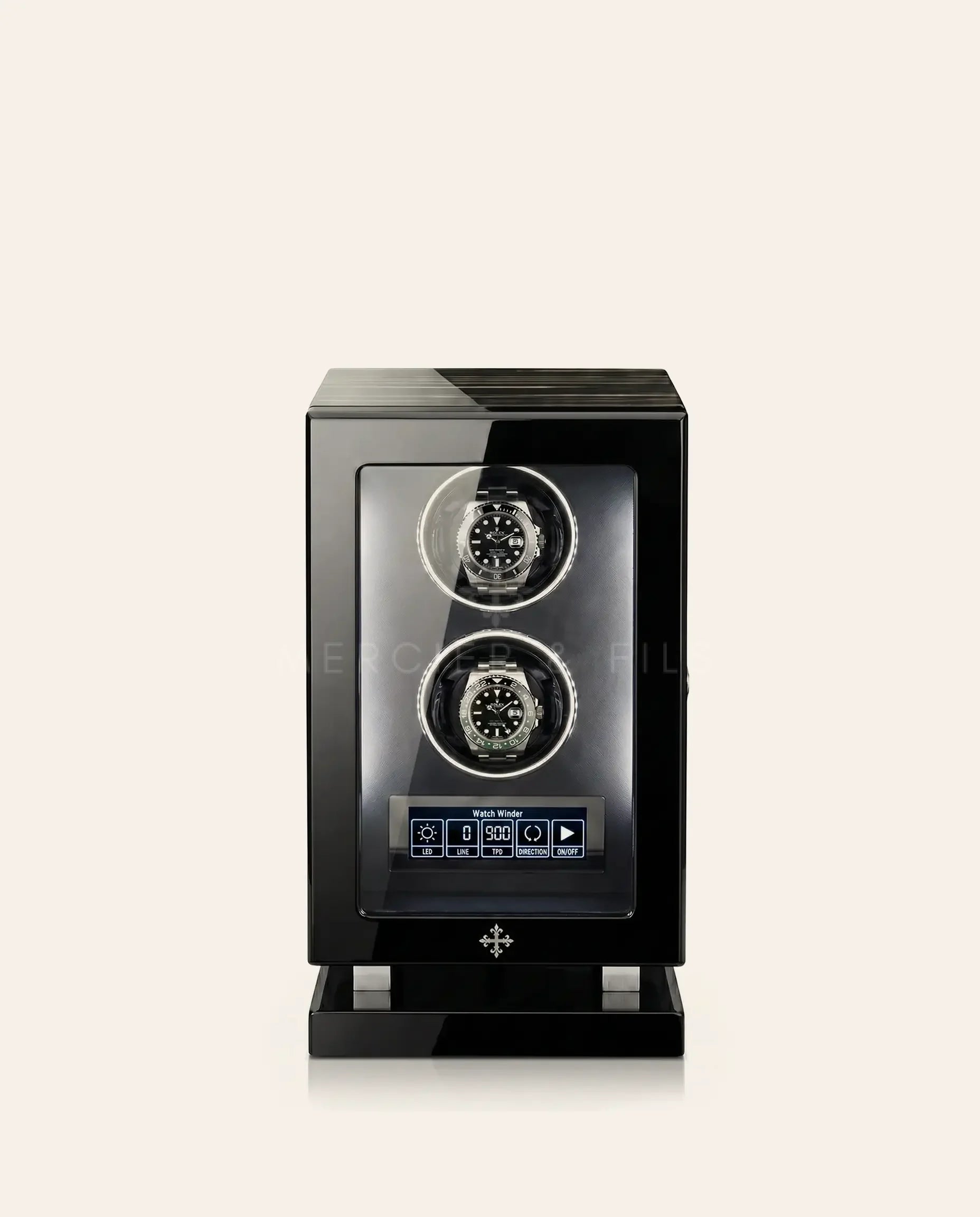
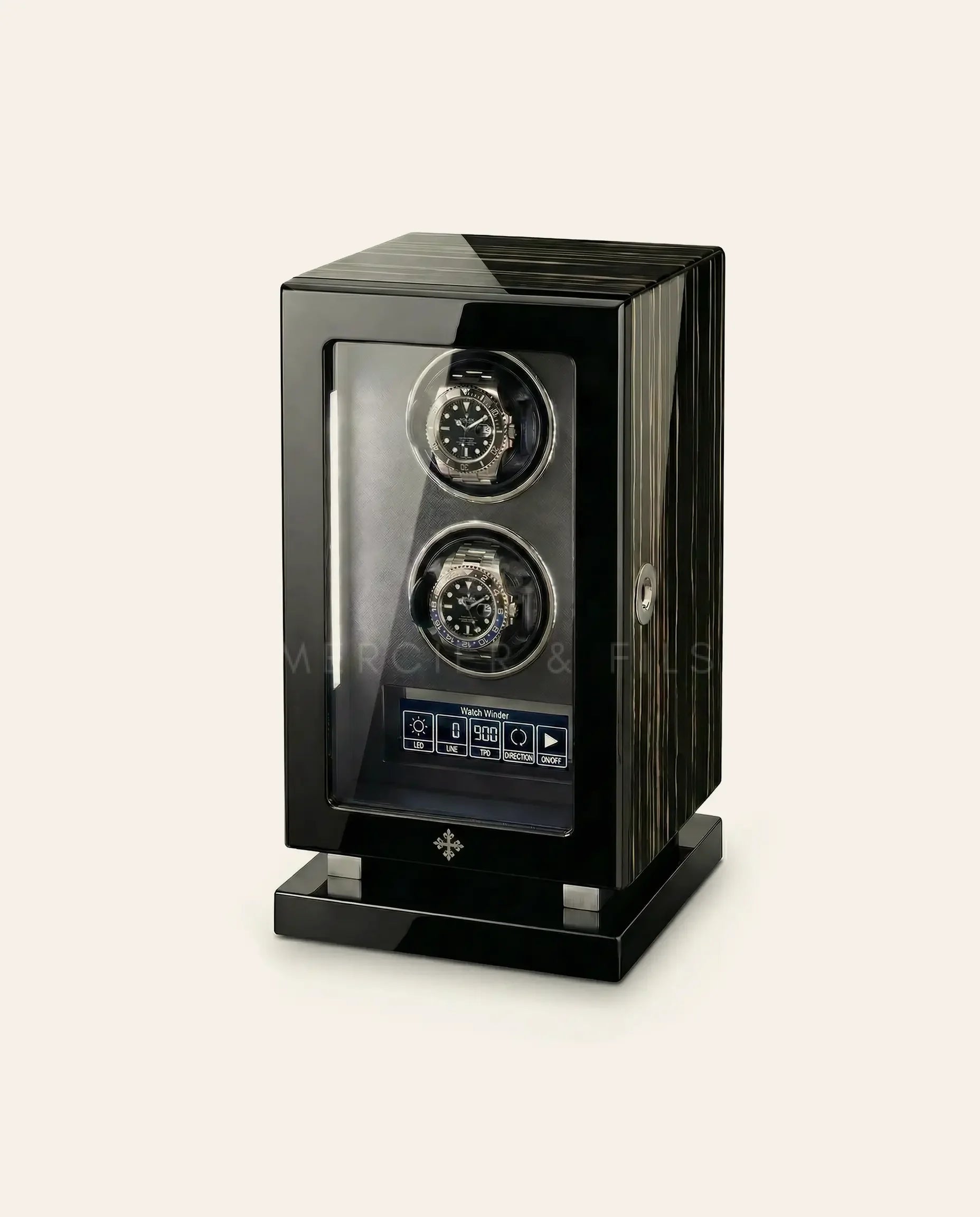
TPD means Turns Per Day: the daily turn count programmed on a watch winder. It concerns the watch holder’s rotation, not motor speed, rotor revolutions or a direct measurement of power reserve.
Finding a suitable setting requires the exact calibre, the recommended direction and the device’s counting convention. There is no reliable universal value to assign to every watch from one brand.

TPD and rotation direction work together
CW means clockwise, CCW counterclockwise and BOTH alternating directions. Read them from the viewpoint specified in the manual. The calibre’s winding system determines which movements contribute energy, but you still need to check the winder’s convention.
Our CW, CCW and BOTH guide explains this distinction. A TPD number without direction and a definition of counting is an incomplete recommendation.
Reading the turn count
Compare equivalent totals. One device may show daily total turns while another specifies turns per direction. For example, WOLF states that bidirectional mode on the Axis 6 doubles the selected turn count. Do not automatically apply that convention to another range.
In a hypothetical programme of 1,200 total turns divided into twelve identical cycles, each cycle contains 100 turns. This calculation does not measure energy received by the watch. Pauses and existing power reserve also help explain why a winder may remain still for part of the day.
How to find your watch’s setting
- Identify the movement. Record the exact reference, calibre and, for an older watch, generation. One collection may use different movements.
- Check the watch type. Rotating winders are for automatic movements, not manual or quartz movements.
- Seek a traceable recommendation. Consult the watchmaker’s manual or after-sales service. Otherwise ask the winder manufacturer for a recommendation tied to your calibre and device, with its source.
- Read the winder manual. Check total versus per-direction turns, direction, pauses and any start delay.
- Observe without repeatedly changing settings. Start the watch as instructed and check its mounting. Persistent stopping calls for technical advice, not automatically selecting the maximum.
TPD by brand: how to use our guides
| Brand | What to check |
|---|---|
| Rolex | Identify the reference and calibre; do not treat 650 TPD as a universal official instruction. |
| Audemars Piguet | Distinguish generations and movements within Royal Oak, Offshore and other collections. |
| Patek Philippe | Check the movement type first: not every reference is automatic. |
| Omega | Distinguish manual-wind Speedmaster references from automatic watches. |
| Vacheron Constantin | Have the calibre and programme confirmed by the watchmaker or winder manufacturer. |
Identify your reference with our guides: Rolex · Audemars Piguet · Patek Philippe · Omega.
These guides separate verified characteristics from settings needing confirmation. They are not an exhaustive list of official prescriptions. When a source does not specify TPD, we do not infer a figure from brand, complications or power reserve alone.
Too few or too many turns: what can you conclude?
If winding input is insufficient, the watch may gradually use its reserve and stop. That does not prove TPD is the only cause: direction, mounting, initial winding and movement condition also need checking.
More turns than needed do not guarantee better timekeeping. A winder does not replace servicing, repair a movement or guarantee freedom from wear. Follow the watchmaker’s resetting procedures for complications.


Configuring several watches
Independent settings are useful when required programmes differ. Watches from different brands may sometimes accept the same programme; two watches from one brand may need separate checks. Brand mix alone is not decisive.
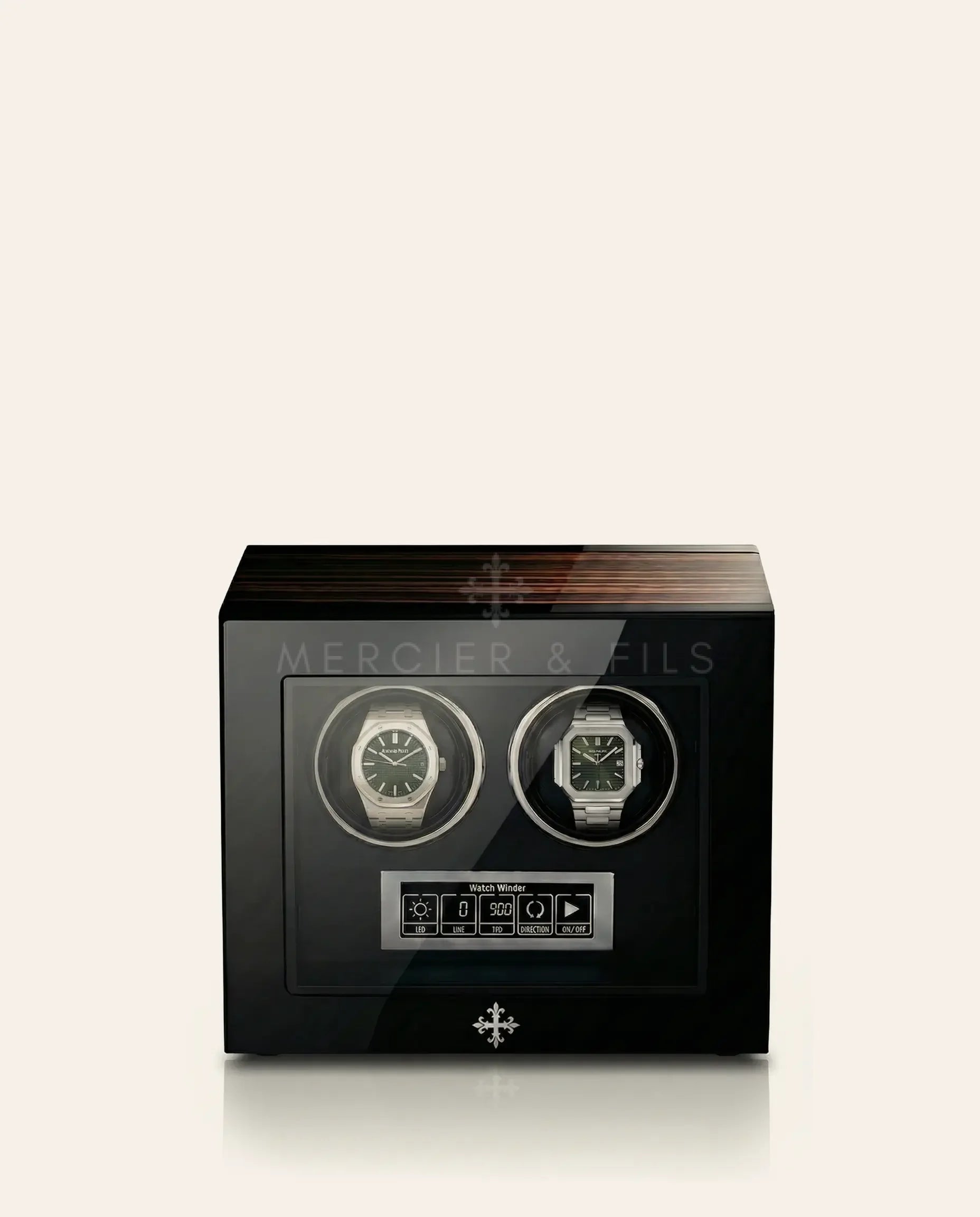
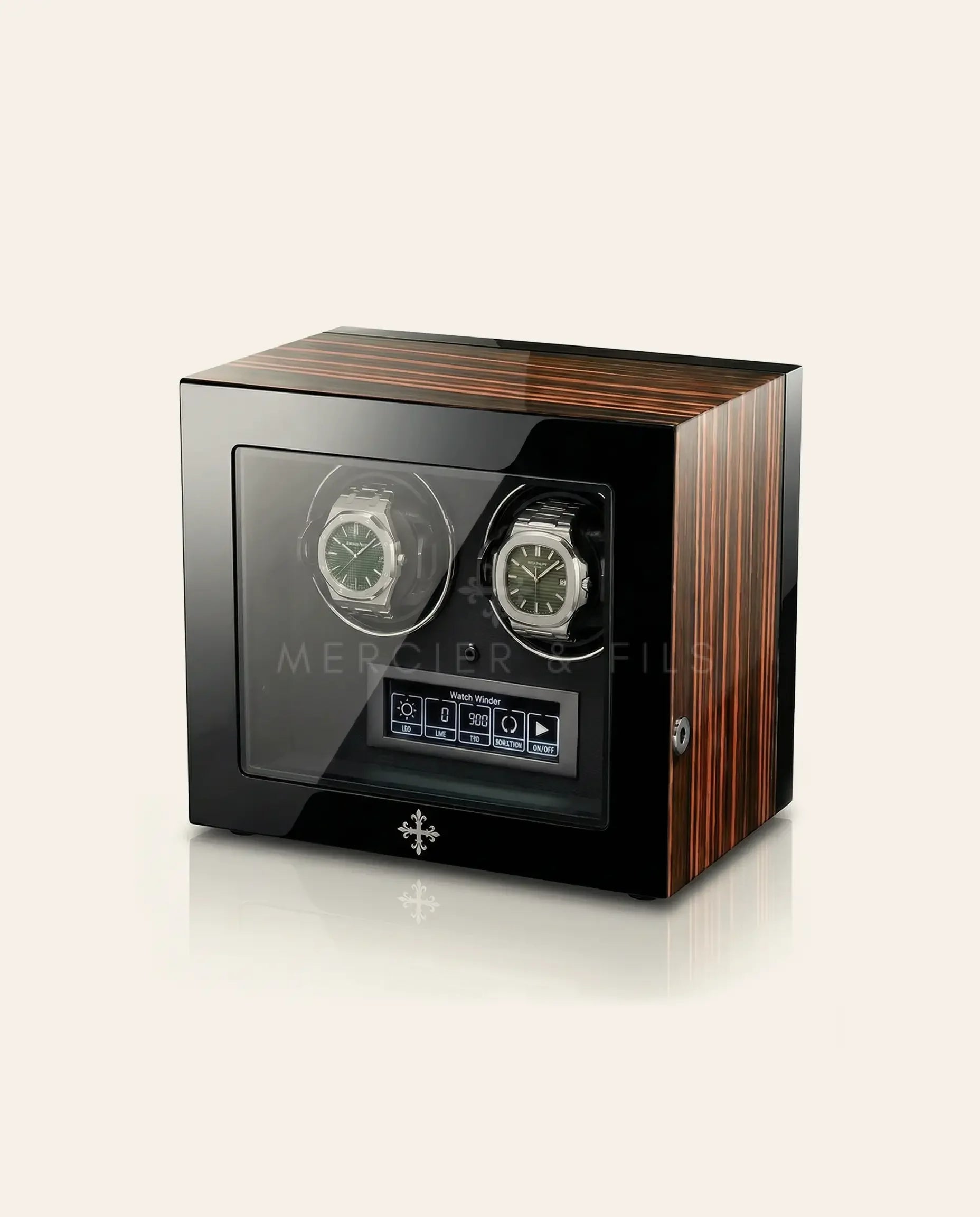
Mazarin and Rivoli provide per-module settings. Also consider cabinet dimensions, bracelet fit and how many watches you actually want to keep running.
Explore our watch winders by capacity: 2 watches · 6 watches · 12 watches · 24 watches.
FAQ
What TPD suits an automatic watch in general?
There is no number to apply without checking the calibre and the winder’s counting convention.
650 or 900 TPD for a Rolex?
Do not choose solely between those figures. Identify the calibre and have the programme and device counting confirmed.
Can power reserve determine TPD?
Not on its own. Advertised reserve duration does not directly describe winding efficiency on a rotating holder.
Why do setting databases disagree?
References, generations, devices, counting conventions and sources may differ. Compare them before selecting a number.
How can actual turns be checked?
Observe or record a complete programme, including pauses and any start delay. Extrapolating from a short count may be misleading.
Should a winder rotate continuously?
Follow the device programme and watch-specific advice. Continuous power does not mean rotation without pauses.
Is a winder essential?
No. It can help keep certain automatic watches ready to wear, but does not replace winding instructions or servicing.
Choosing a suitable winder
To compare models and capacities, explore our automatic watch winder collection. This guide addresses settings, not a single prescription for every watch.
Cet article fait partie du Journal Mercier & Fils, guide de référence sur la conservation et le remontage des montres automatiques de collection. Pour toute question technique sur un calibre spécifique non documenté ici, l'équipe Mercier & Fils peut être contactée pour une vérification personnalisée.
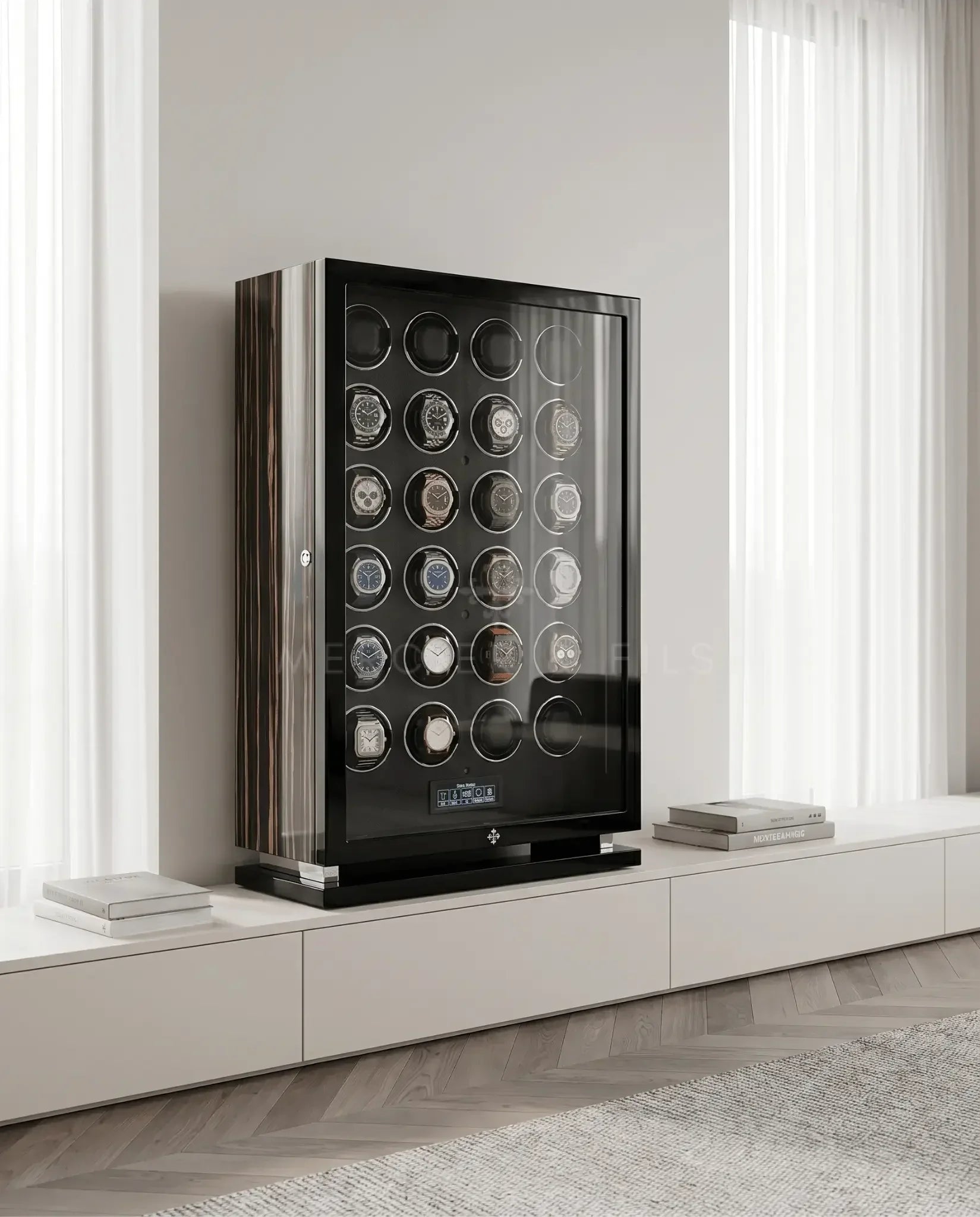
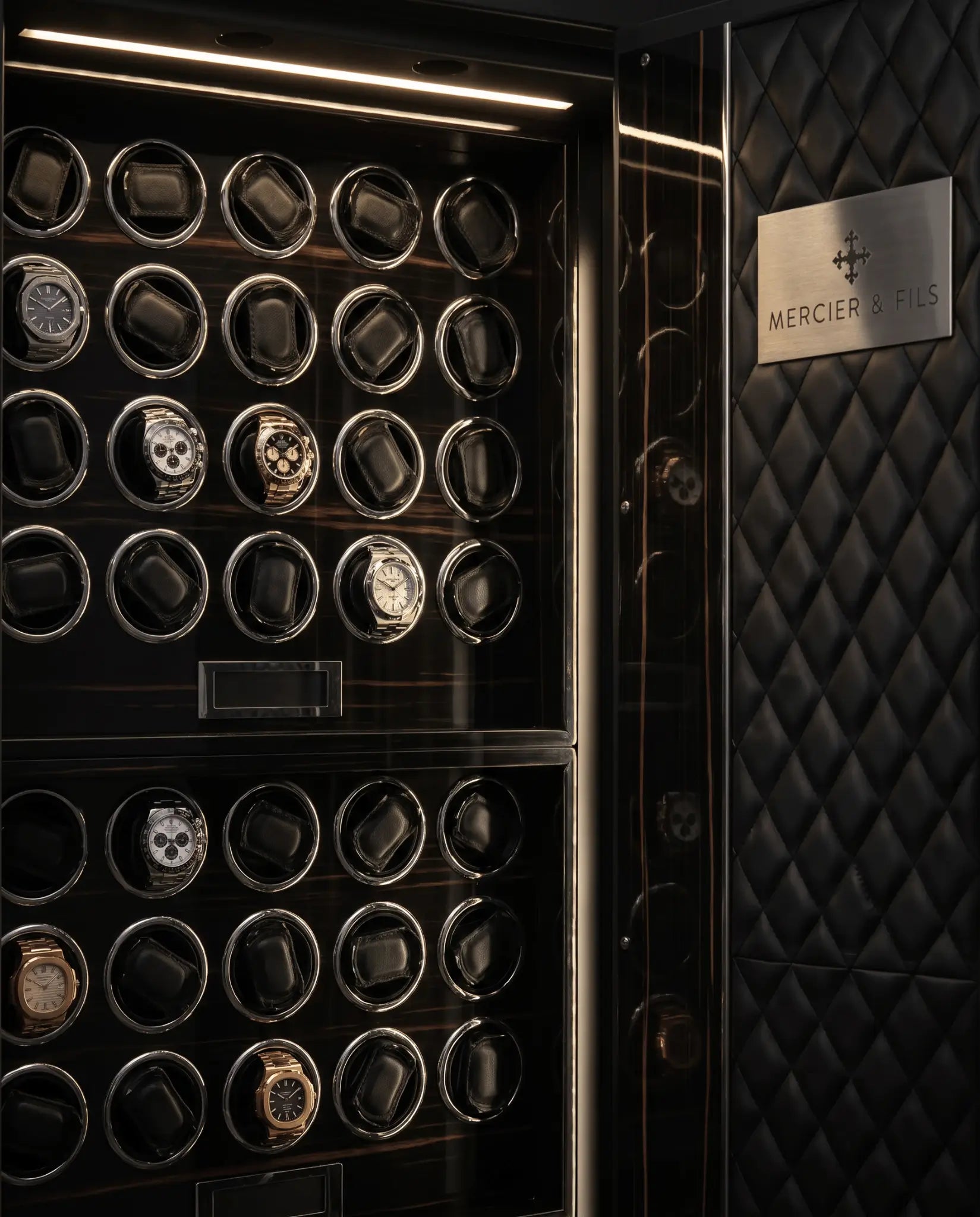
Read more
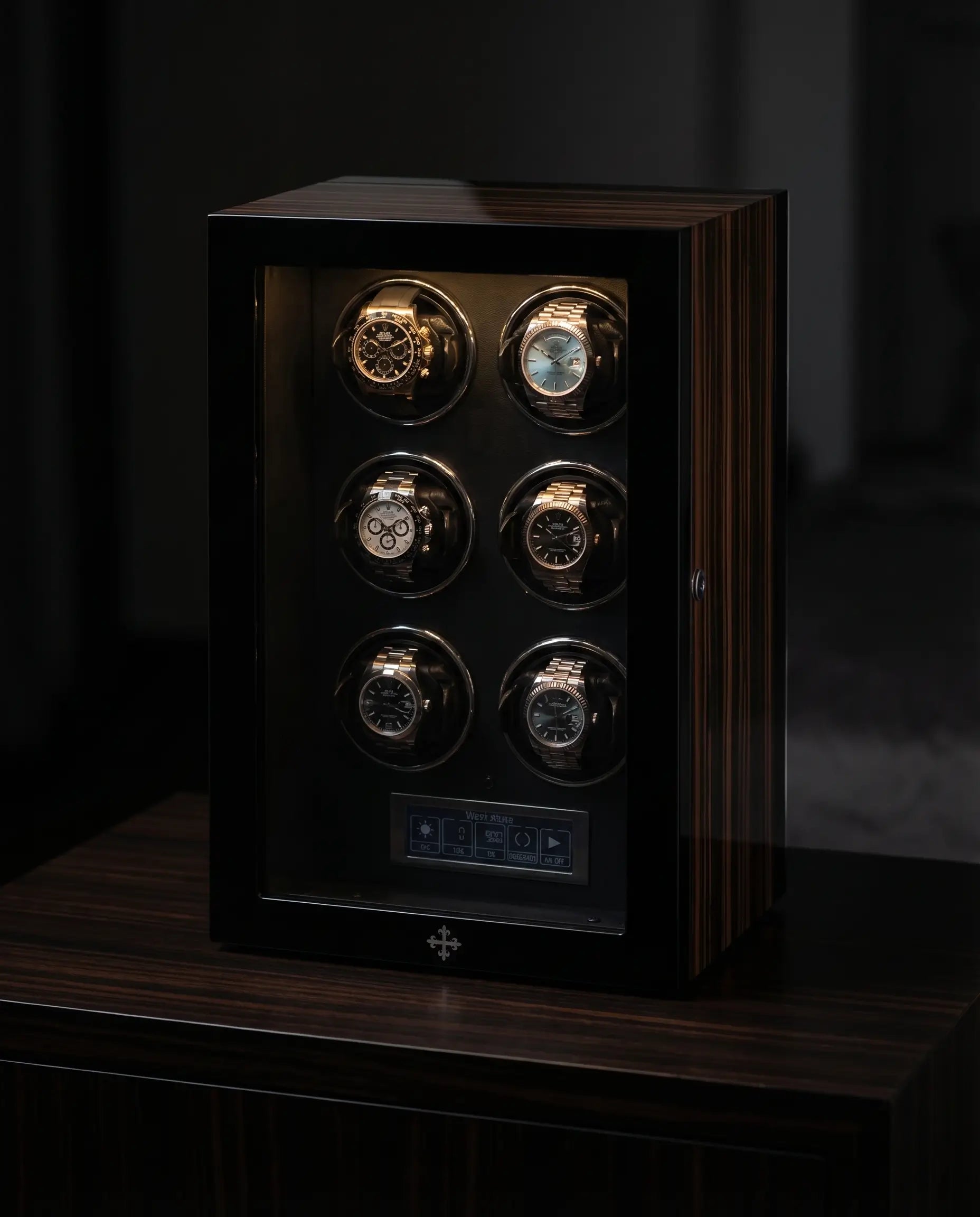
The watch winder turns. In the background, in the office or on the nightstand. And after a few days, the noise settles in — that continuous hum that eventually becomes a presence. This is not inevi...

Choosing an automatic watch winder starts with calibre requirements, capacity and installation. This guide presents our 2026 selection: four Mazarin and four Rivoli models. It is a selection from o...
Leave a comment
All comments are moderated before being published.
This site is protected by hCaptcha and the hCaptcha Privacy Policy and Terms of Service apply.