


Watch Winder for Luxury Watches
A Mercier & Fils automatic watch winder is not an accessory to be hidden away in a drawer. It is an e…
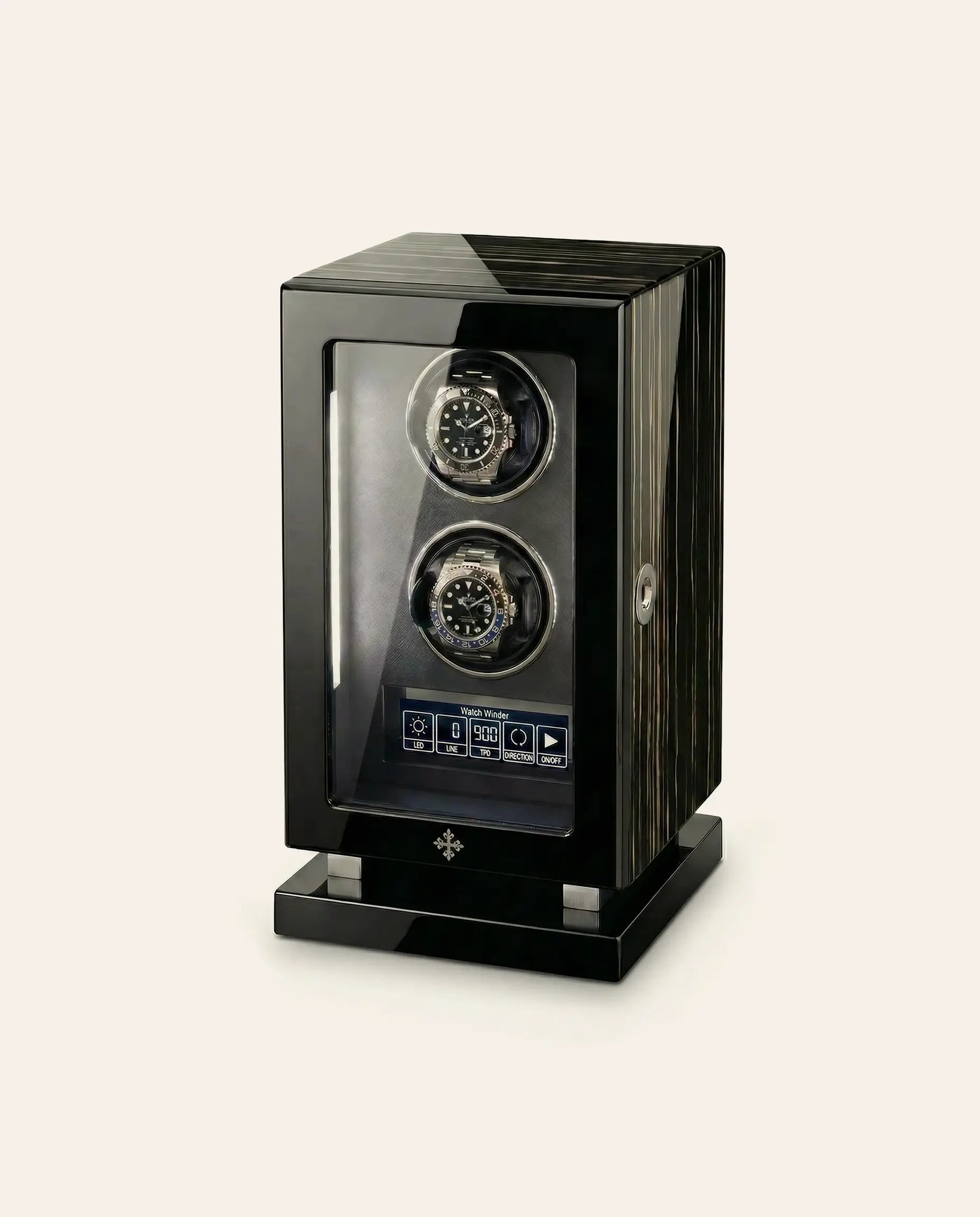
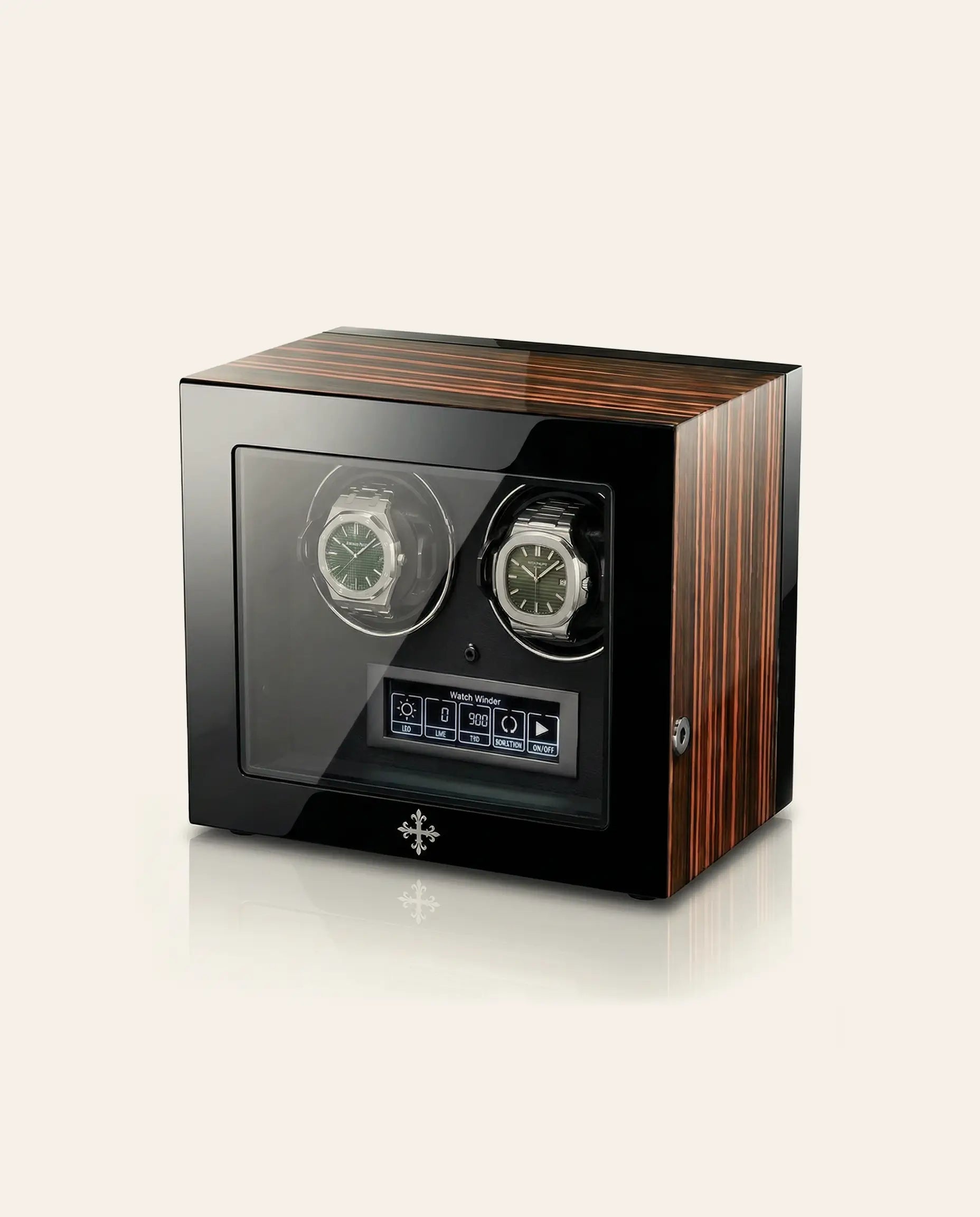
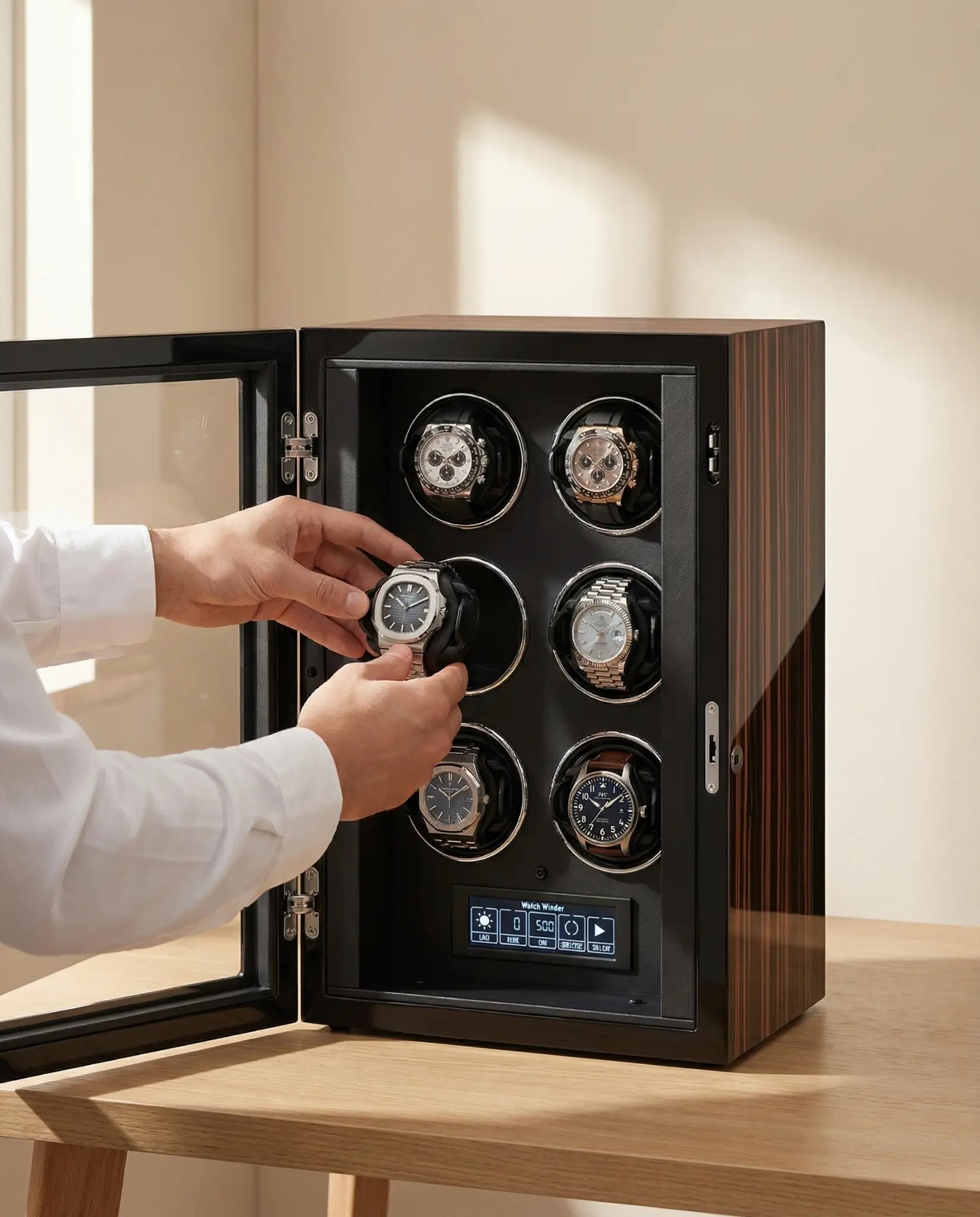
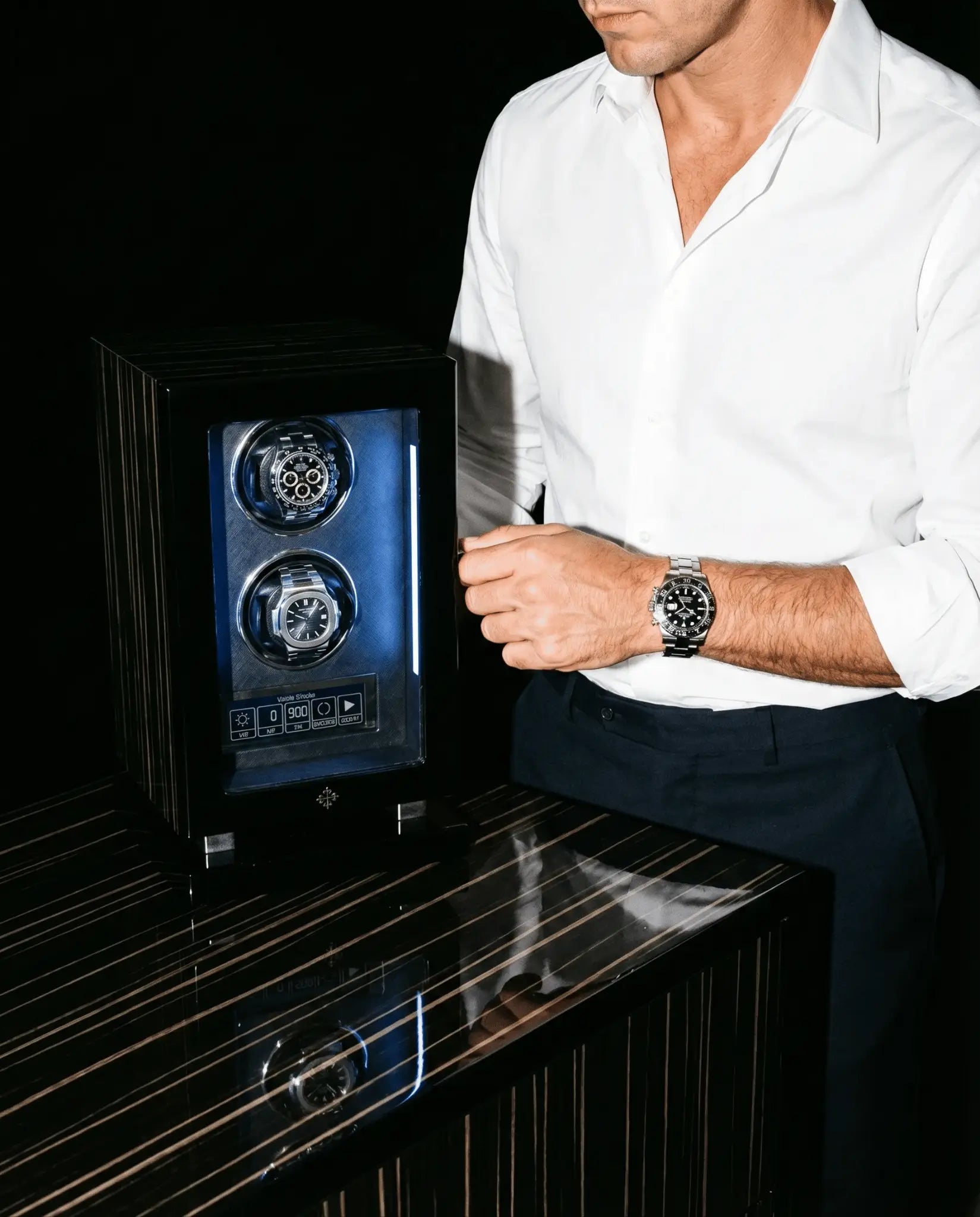
A Mercier & Fils automatic watch winder is not an accessory to be hidden away in a drawer. It is an exceptional piece of furniture, designed to display a moving collection with the same demanding standards as your timepieces. Carbon fiber, glossy ebony, Macassar, full-grain leather: each finish is chosen to integrate seamlessly into a dressing room, an office, or a library, without ever betraying its technical function.
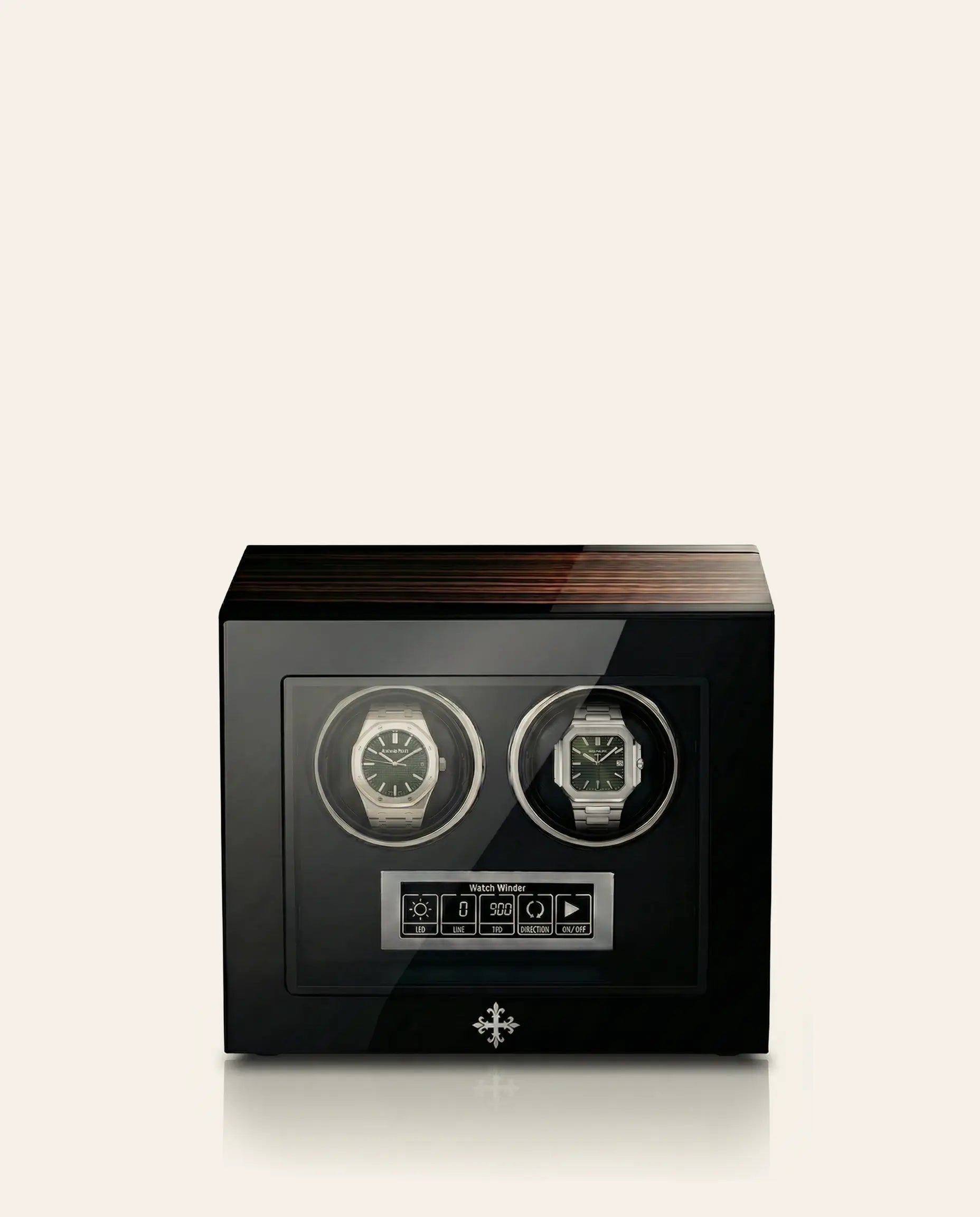
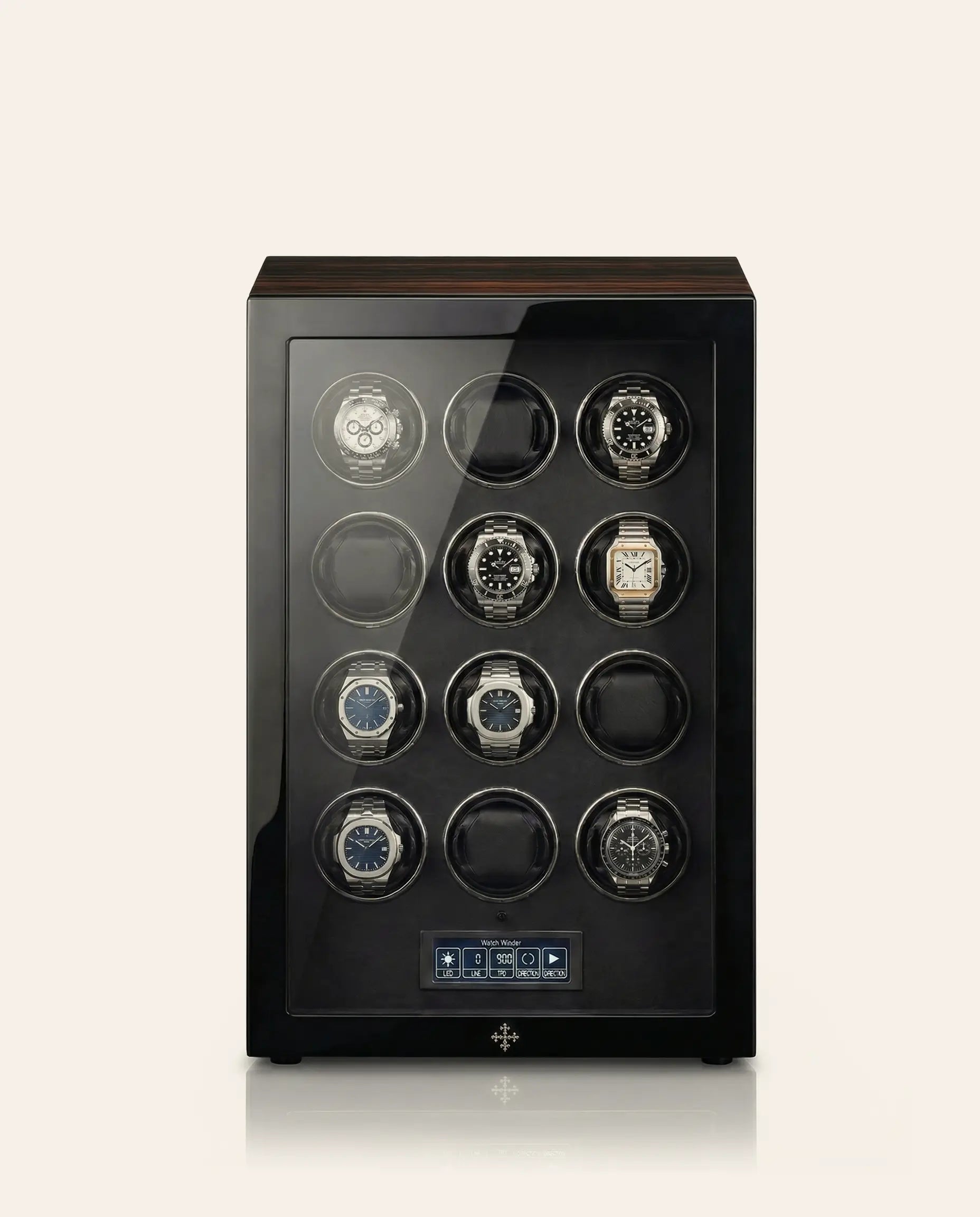
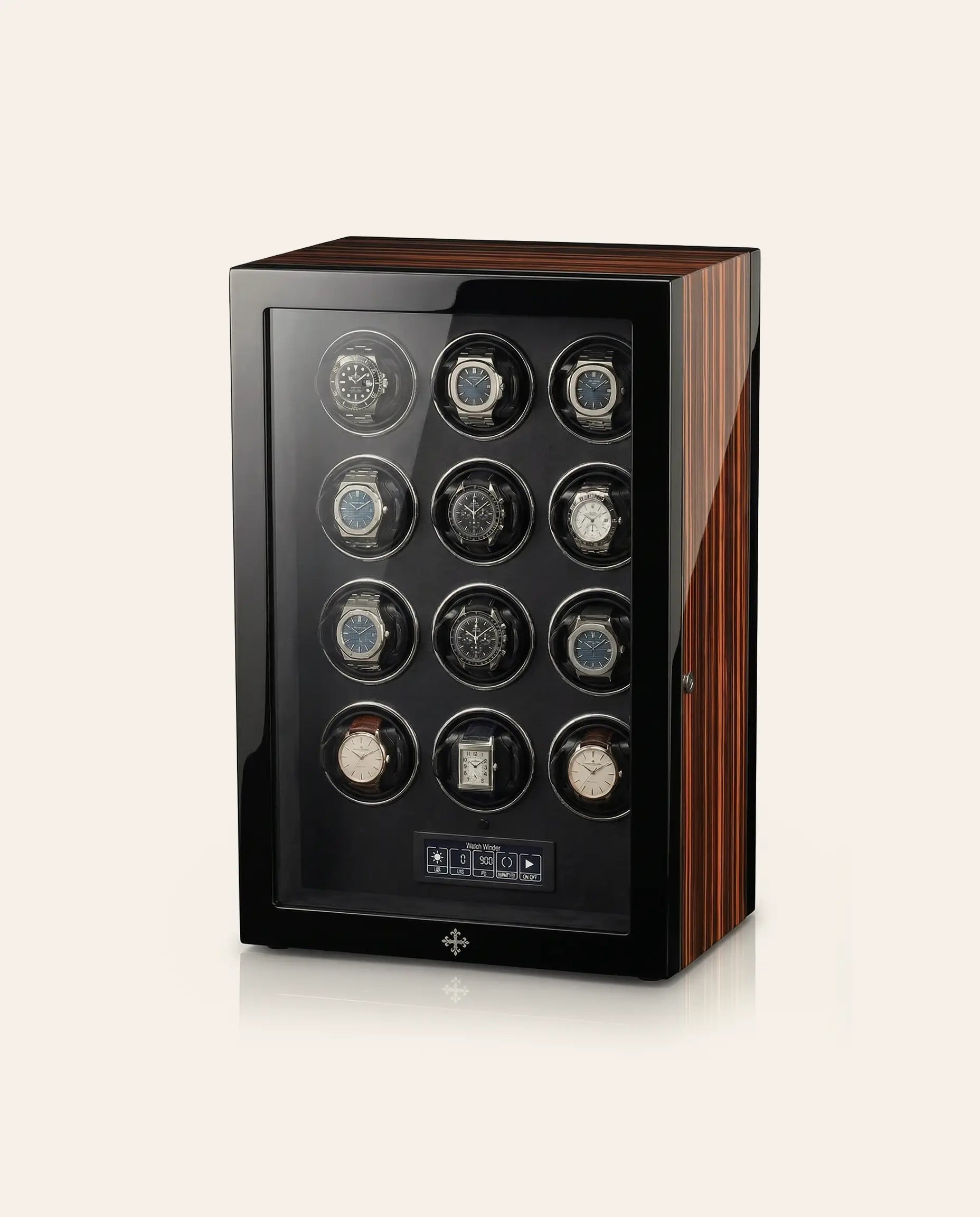
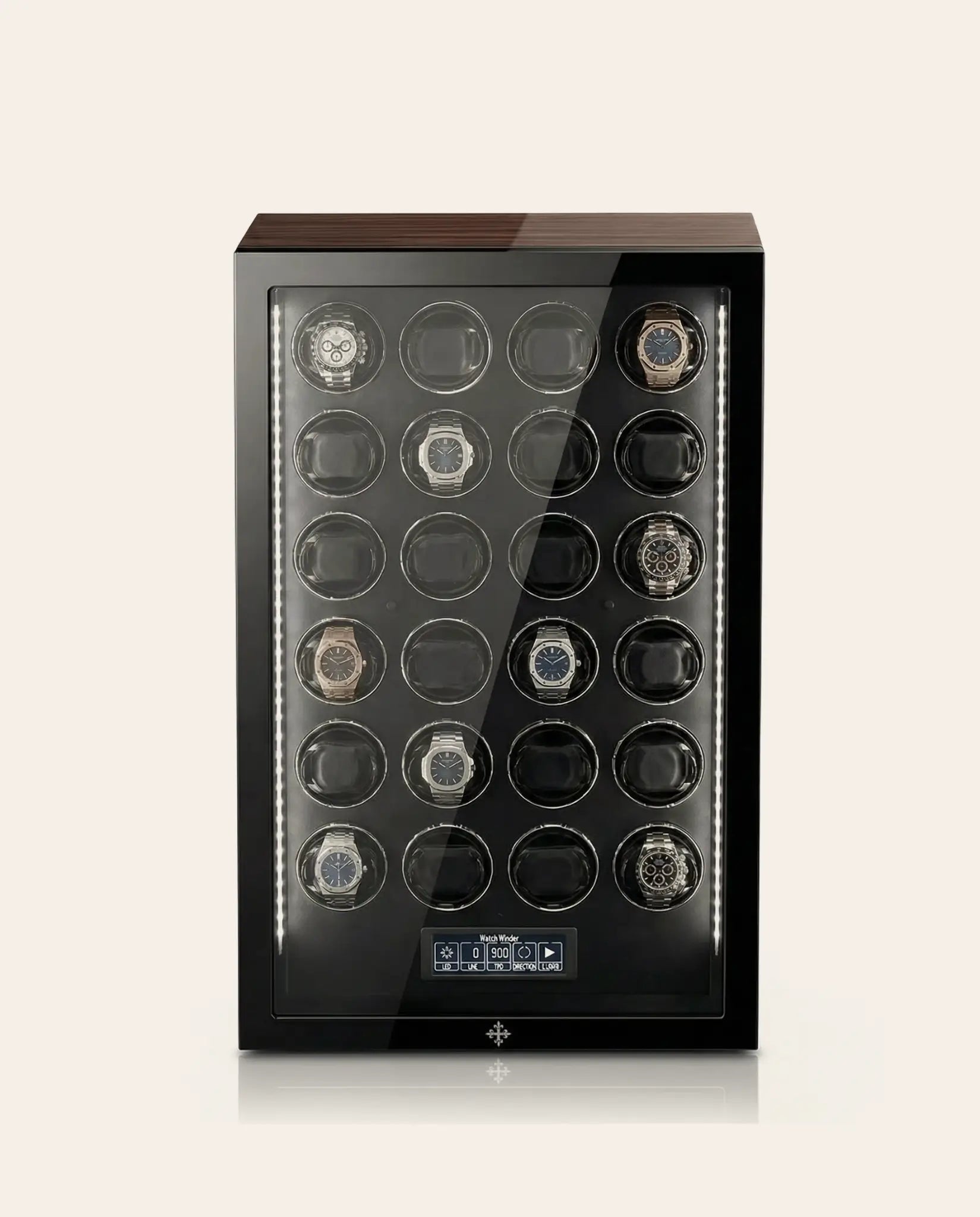
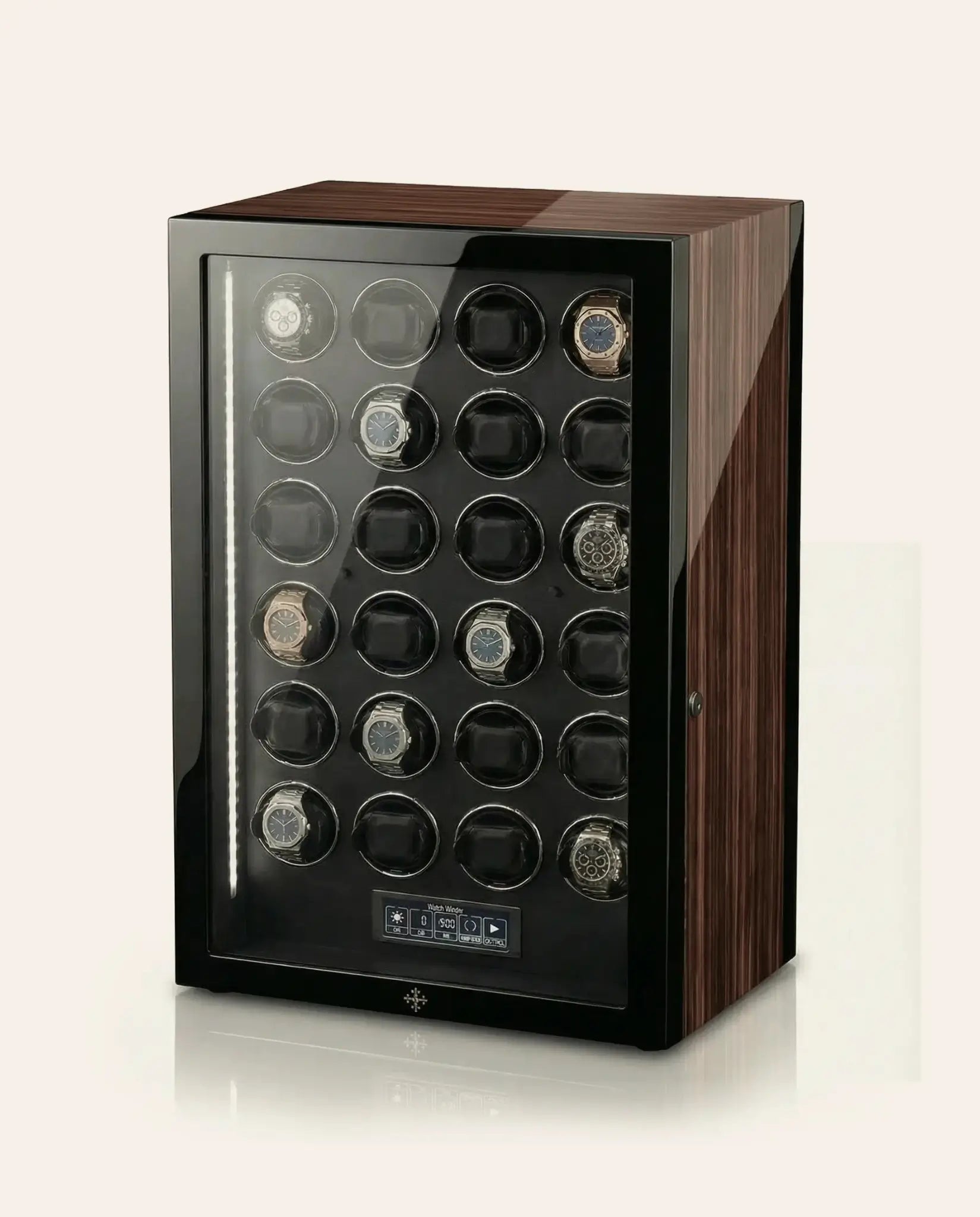
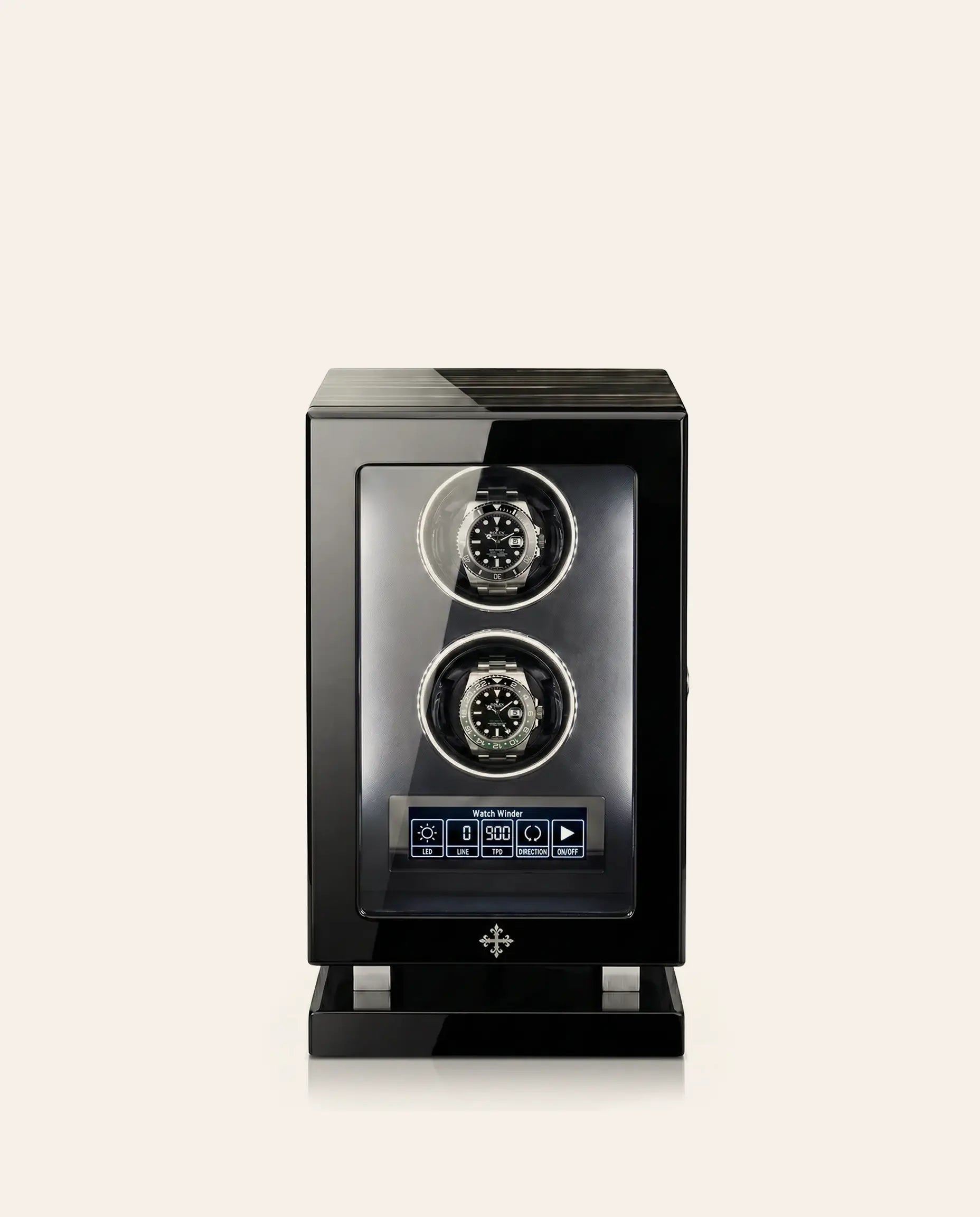
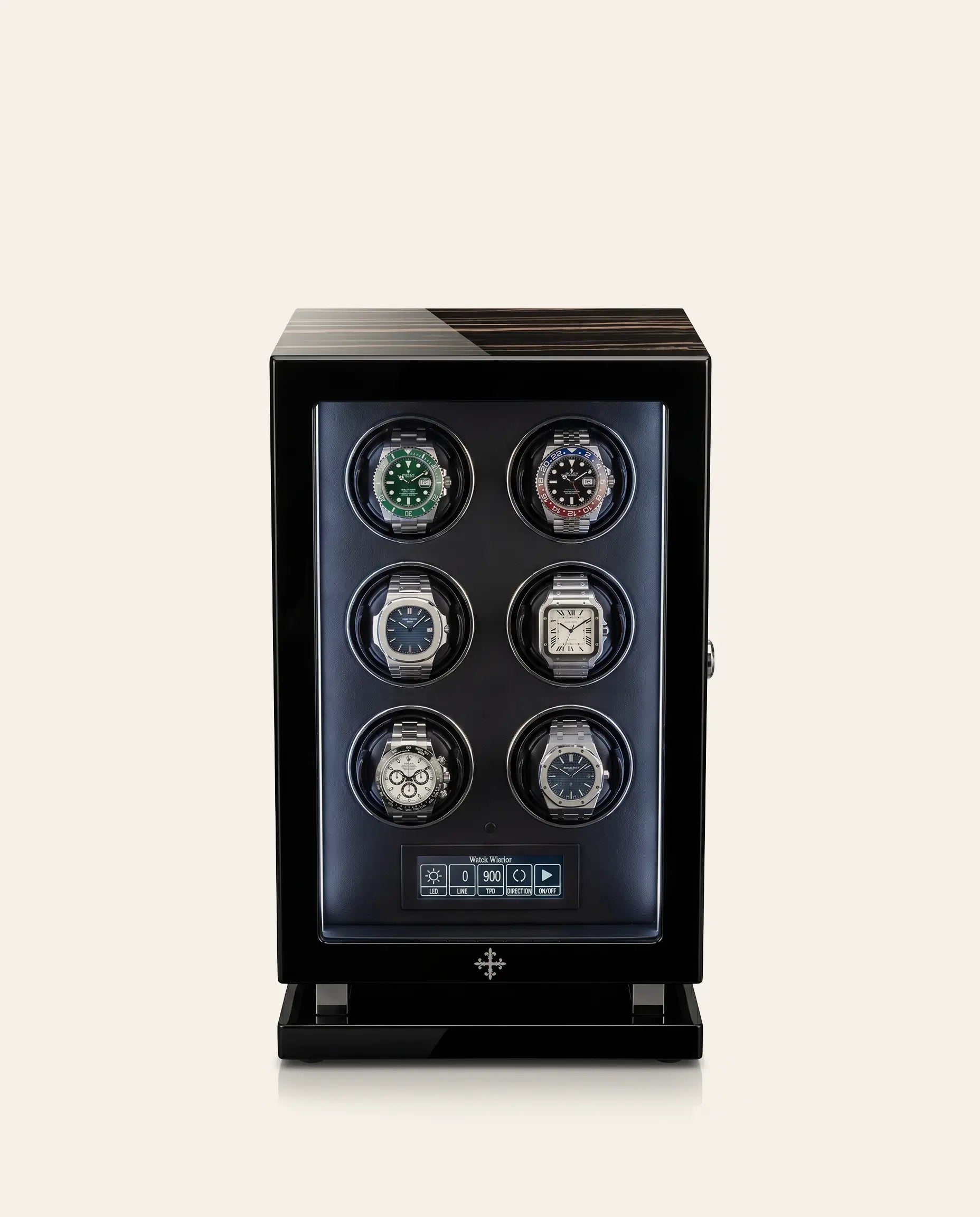
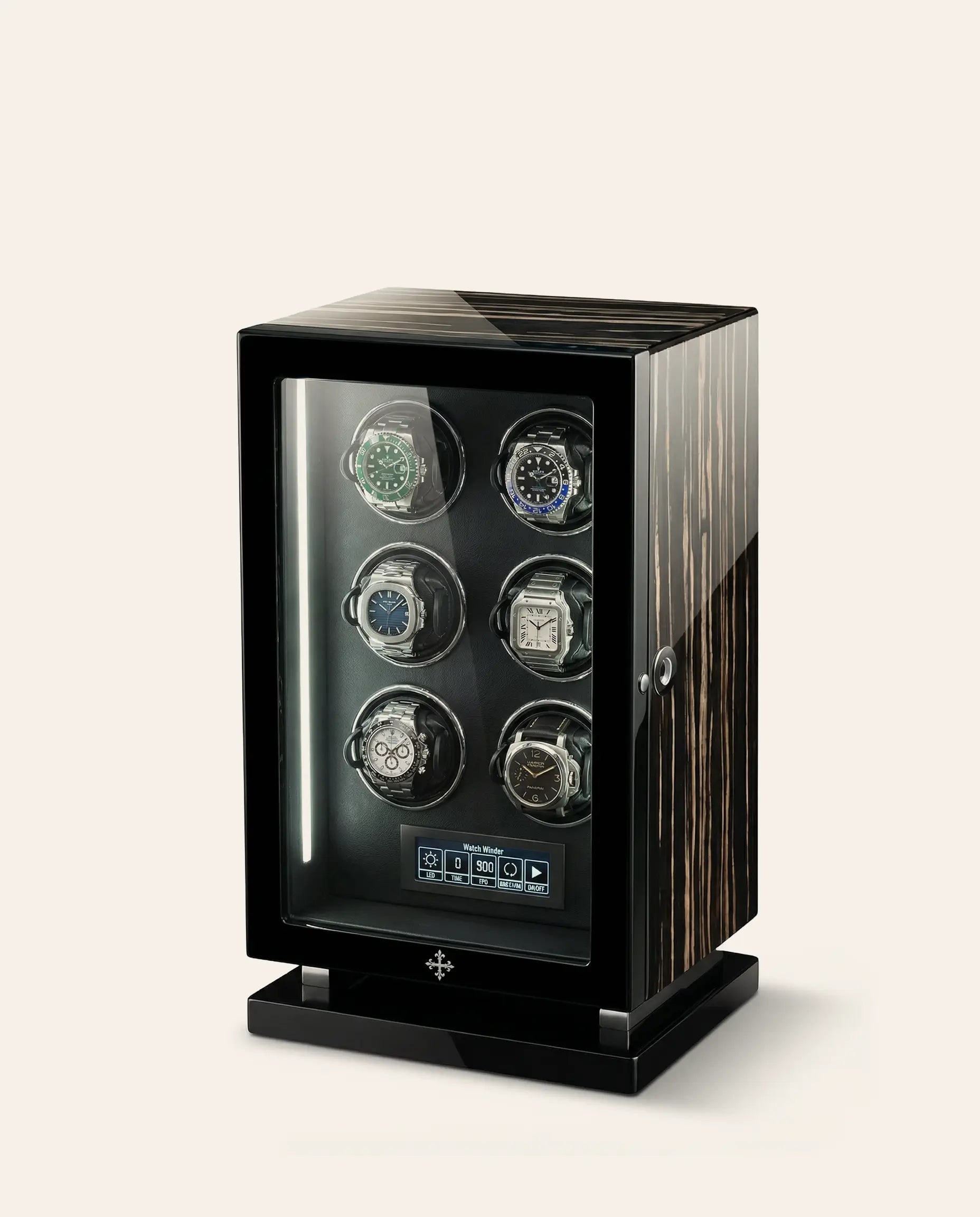
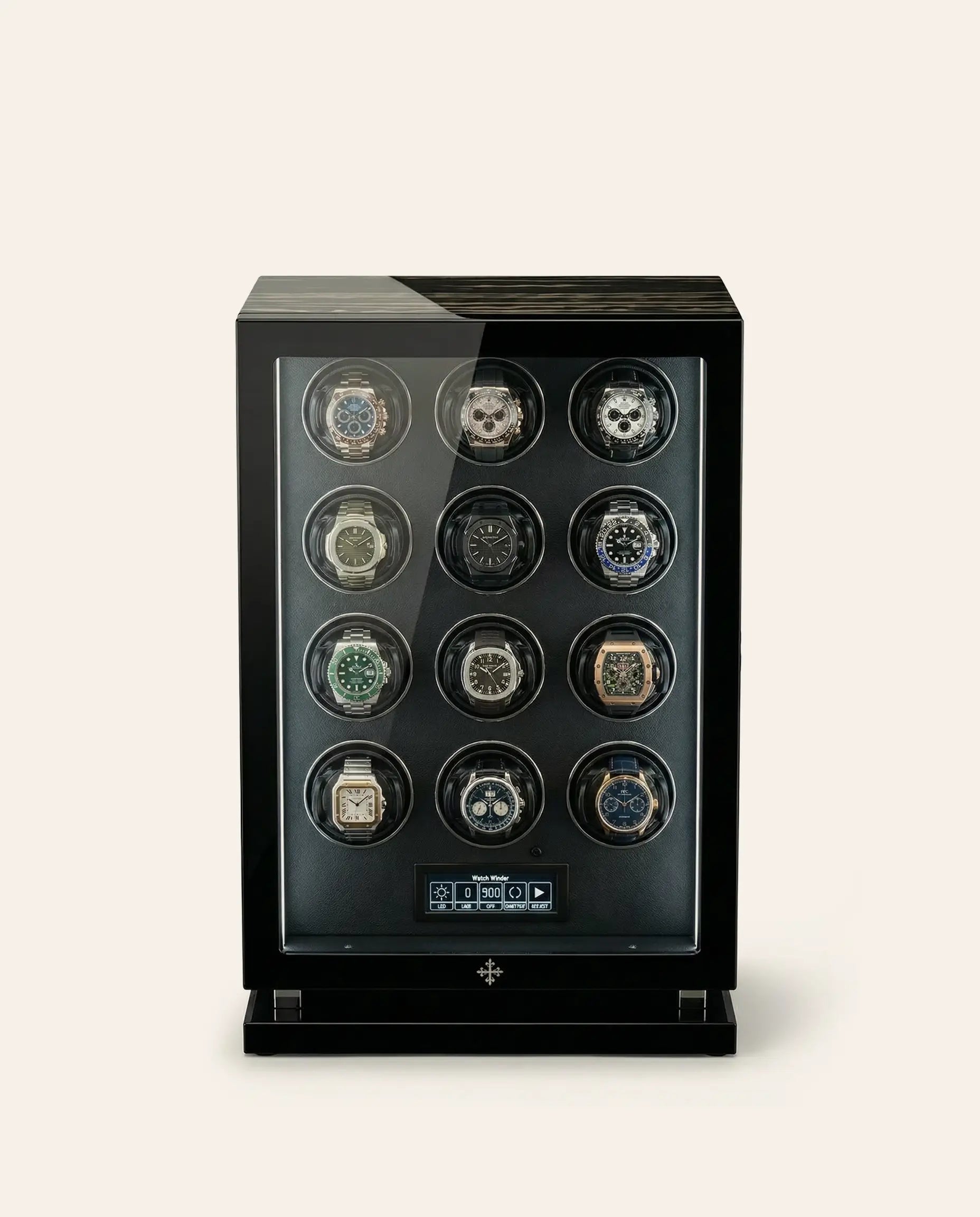
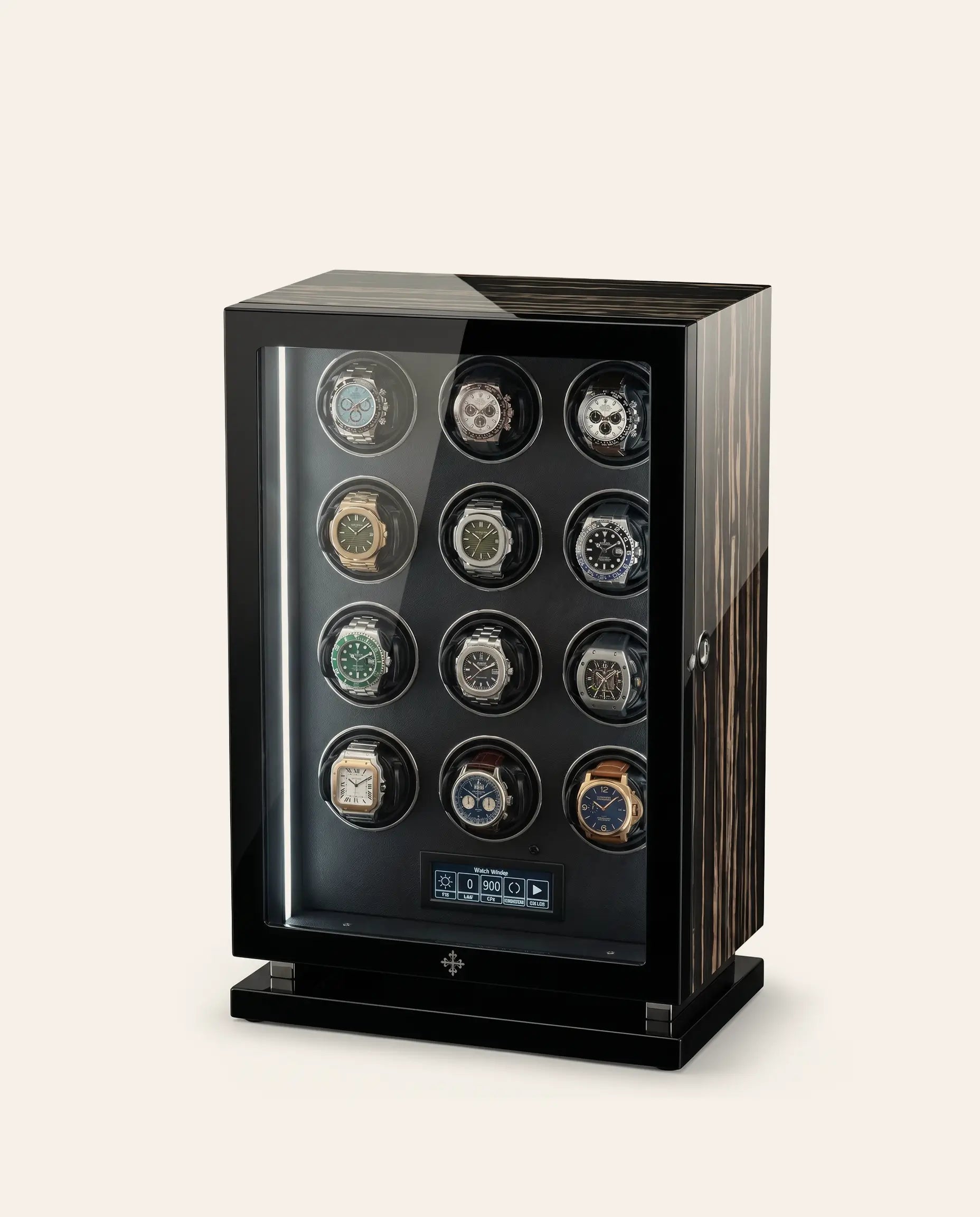
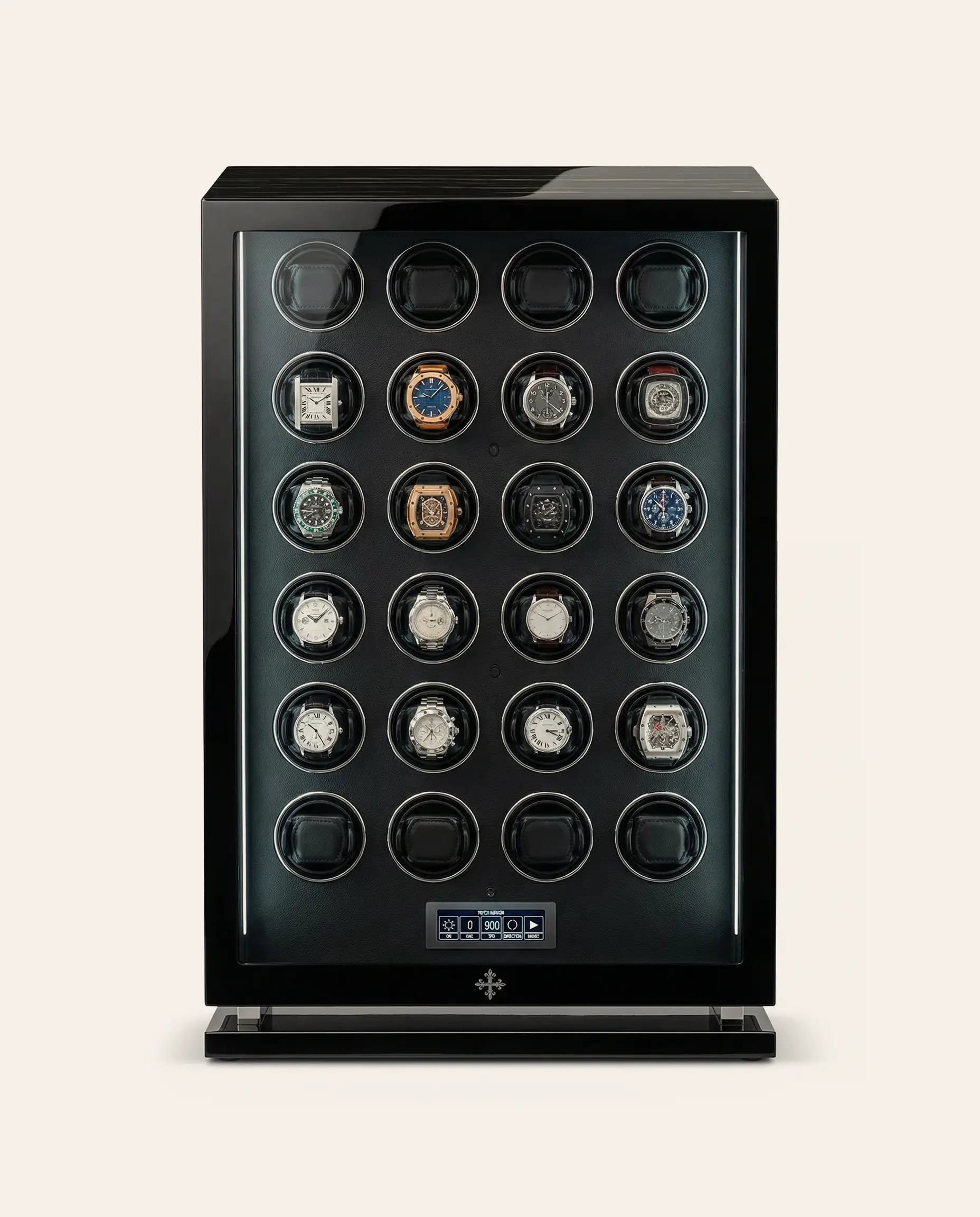
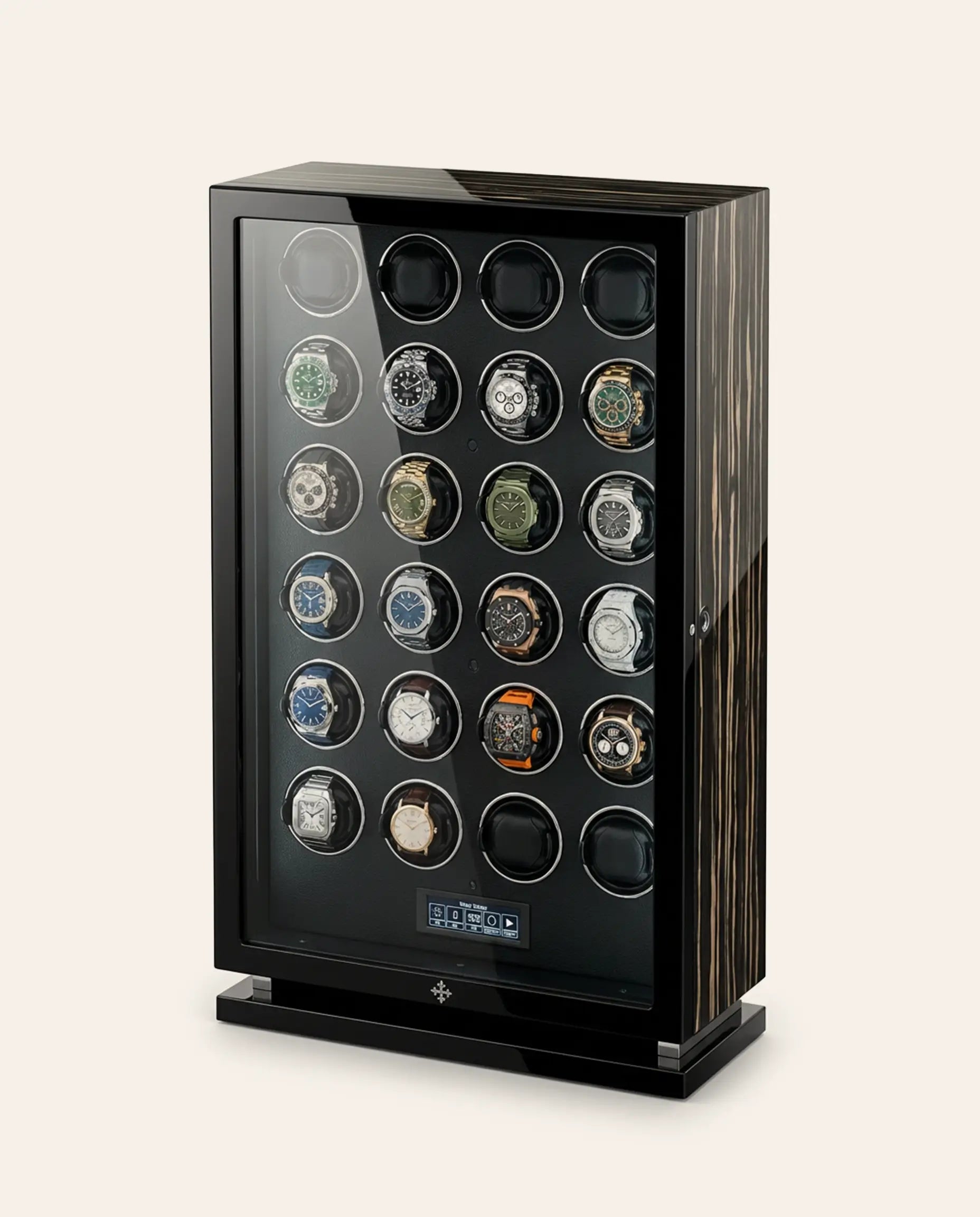
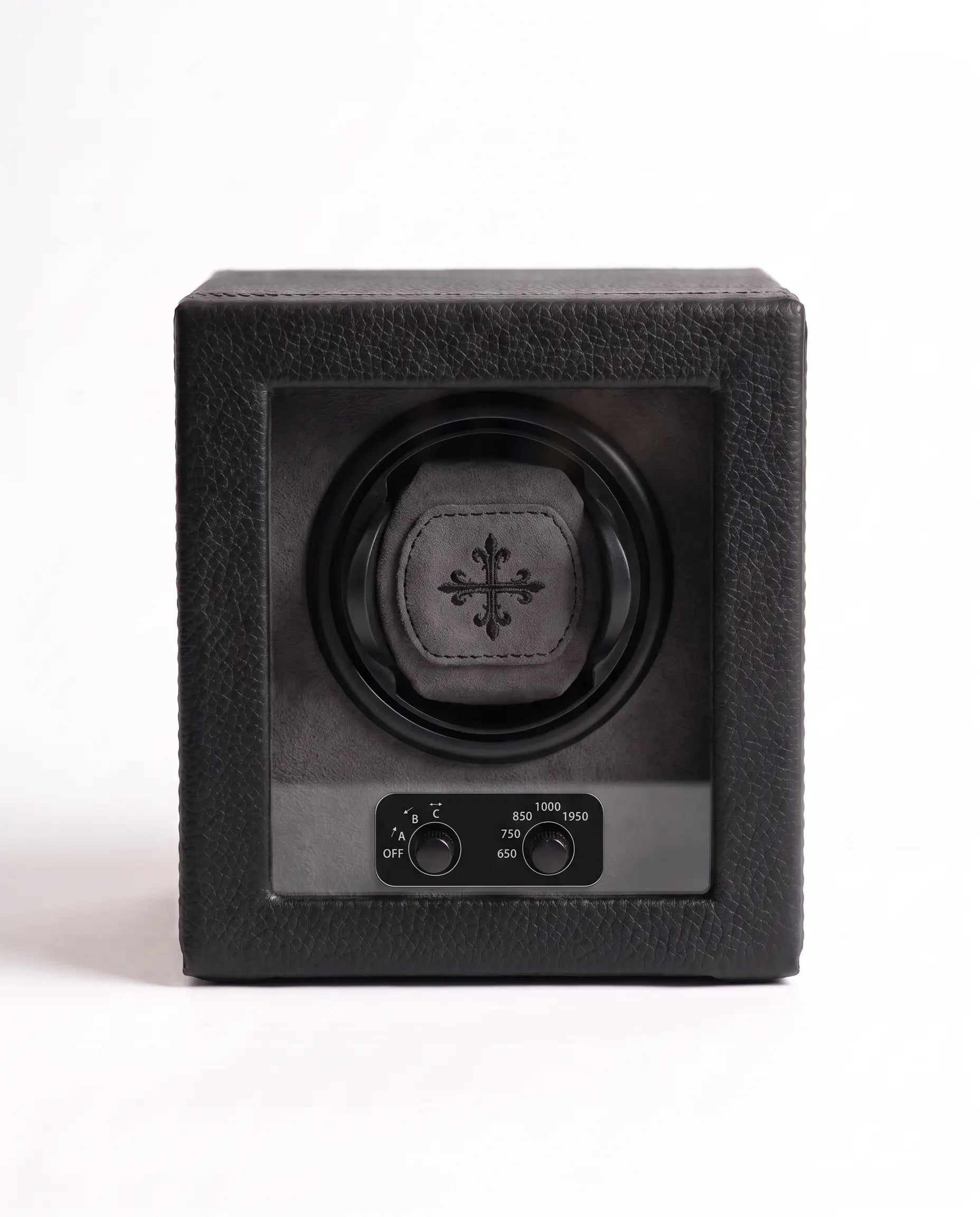
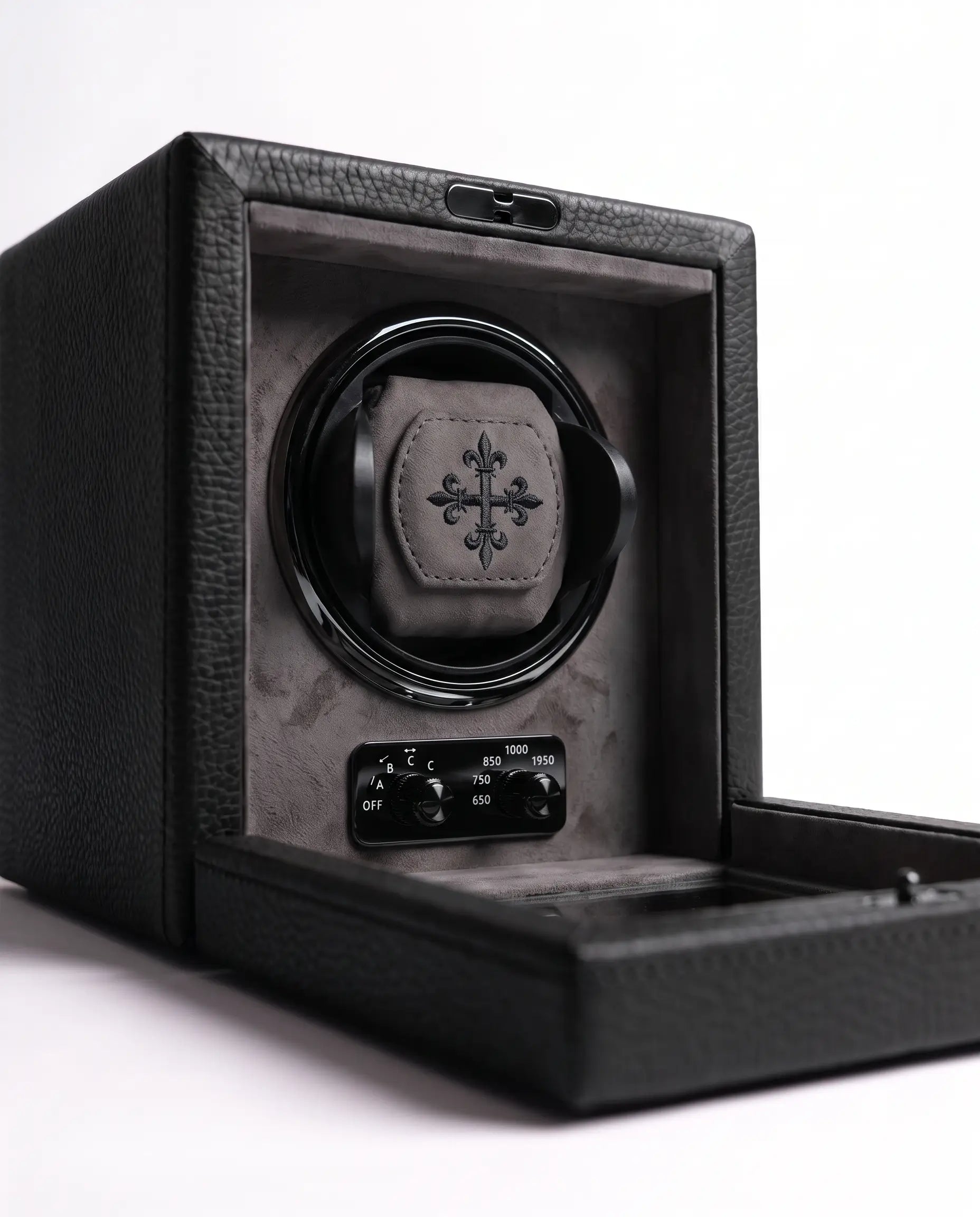
From Mazarin II, designed for a nascent collection, to Rivoli XXIV, crafted for twenty-four watches, each Mercier & Fils winder combines individual TPD programming per slot, multi-directional rotation, and silent operation. This is the very definition of a luxury automatic watch winder: the mechanical precision of an instrument, the presence of a piece of furniture.
MAZARIN
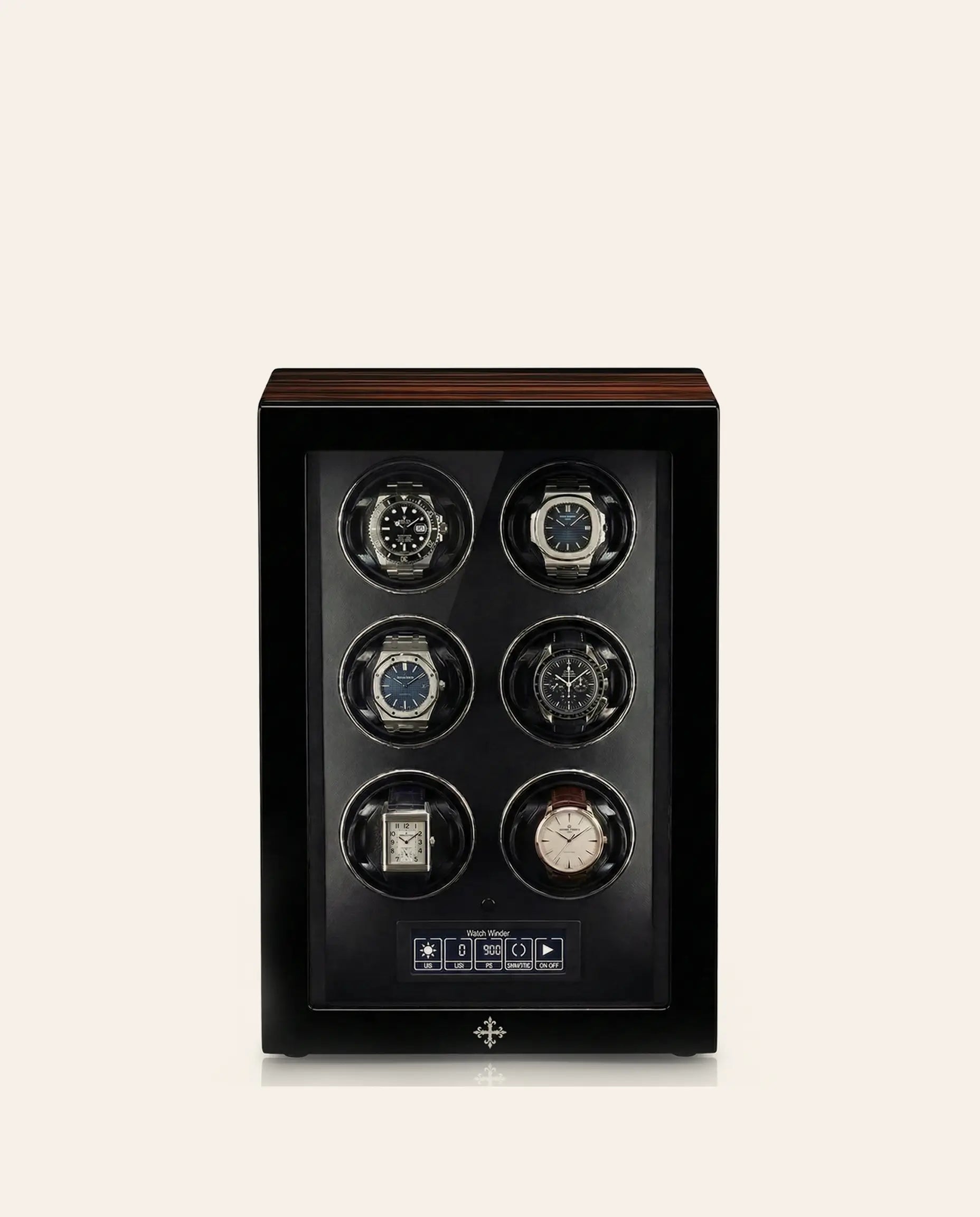
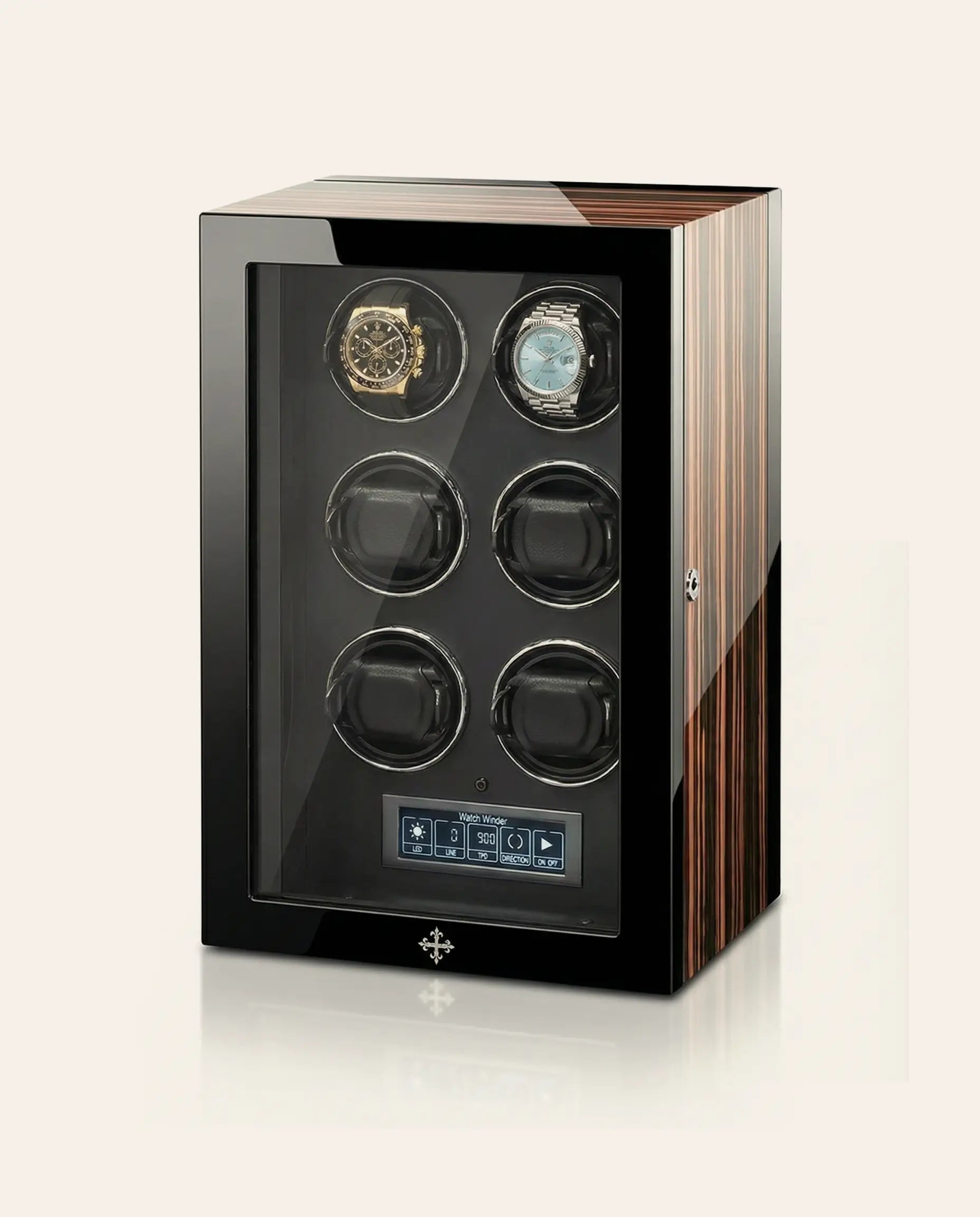
RIVOLI
Filters
What is an automatic watch winder?
An automatic watch draws its energy from wrist movement. Its rotor, an oscillating weight housed within the movement, charges with every gesture and winds the mainspring in the barrel. When not worn for 38 to 72 hours—depending on its power reserve—it stops. Watch oils thicken, complications become misaligned, and each manual time setting unnecessarily stresses the crown and its gaskets.
An automatic watch winder precisely replicates this wrist movement. It rotates your timepiece according to a rotation program adapted to its caliber—number of turns per day, clockwise, counter-clockwise, or bidirectional—to keep the mainspring under constant tension. Your watch remains accurate and ready to wear, without manual intervention.
Why use a winder for your collection?
Preserving the mechanism long-term
An immobile movement is a movement that wears out. Watch lubricants, when not circulating, gradually resinify—leading to increased friction, loss of accuracy, and, ultimately, premature overhauls. A winder keeps these oils in constant motion, under the conditions for which they were formulated. It's the same logic as a classic car engine that's regularly run: immobility is the enemy.
Protecting complicated watches
For a simple three-hand watch, stopping is benign. For a Patek Philippe perpetual calendar, an Audemars Piguet moon phase, or a flying tourbillon, it's a different story. Restarting these complex mechanisms requires delicate handling—sometimes reserved for a watchmaker. An automatic watch winder eliminates this risk by keeping these calibers continuously active, regardless of how often they are worn.
An exceptional object in your home
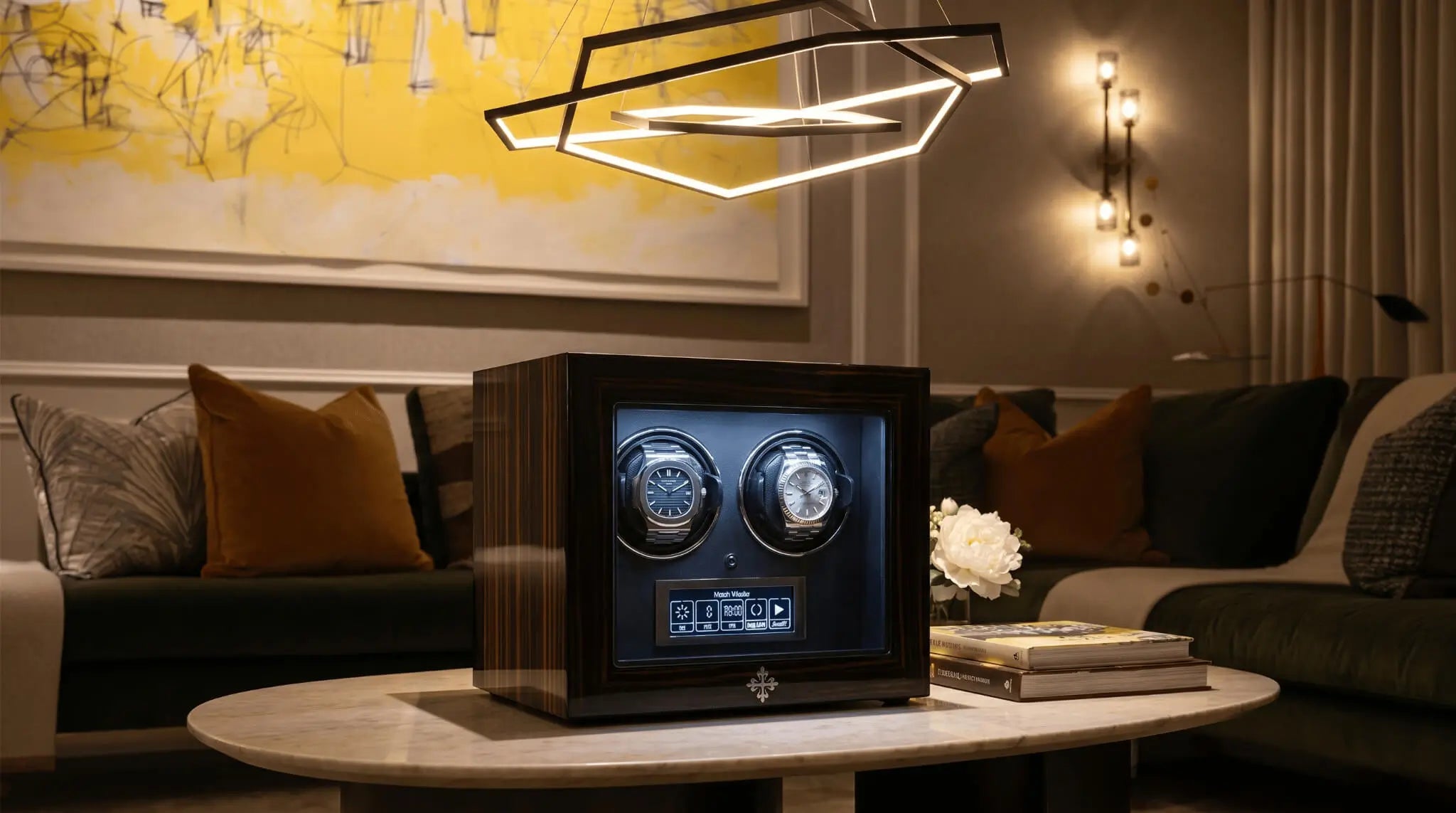
Mercier & Fils winders are not meant to be hidden. Placed on a desk, integrated into a dressing room, or displayed in a library, they showcase your watches in motion—the most elegant way to highlight a watch collection. Carbon fiber, full-grain leather, Alcantara, Tiphaine finish: each case is designed as a signature piece of furniture, not just a technical accessory. This aesthetic requirement is precisely what distinguishes a luxury winder from a simple motorized box: the material, assembly, and discretion of the mechanism are as important as the precision of the rotation.
How to choose your automatic watch winder?
Capacity: from 2 to 24 watches
The Mercier & Fils range covers the entire spectrum, from compact winders for two timepieces to multi-position cabinets designed for twenty-four watches. The right choice anticipates tomorrow's collection as much as it meets today's needs. Several winders can also be combined to create a coherent and expandable storage system.
TPD setting: adapting rotation to each caliber
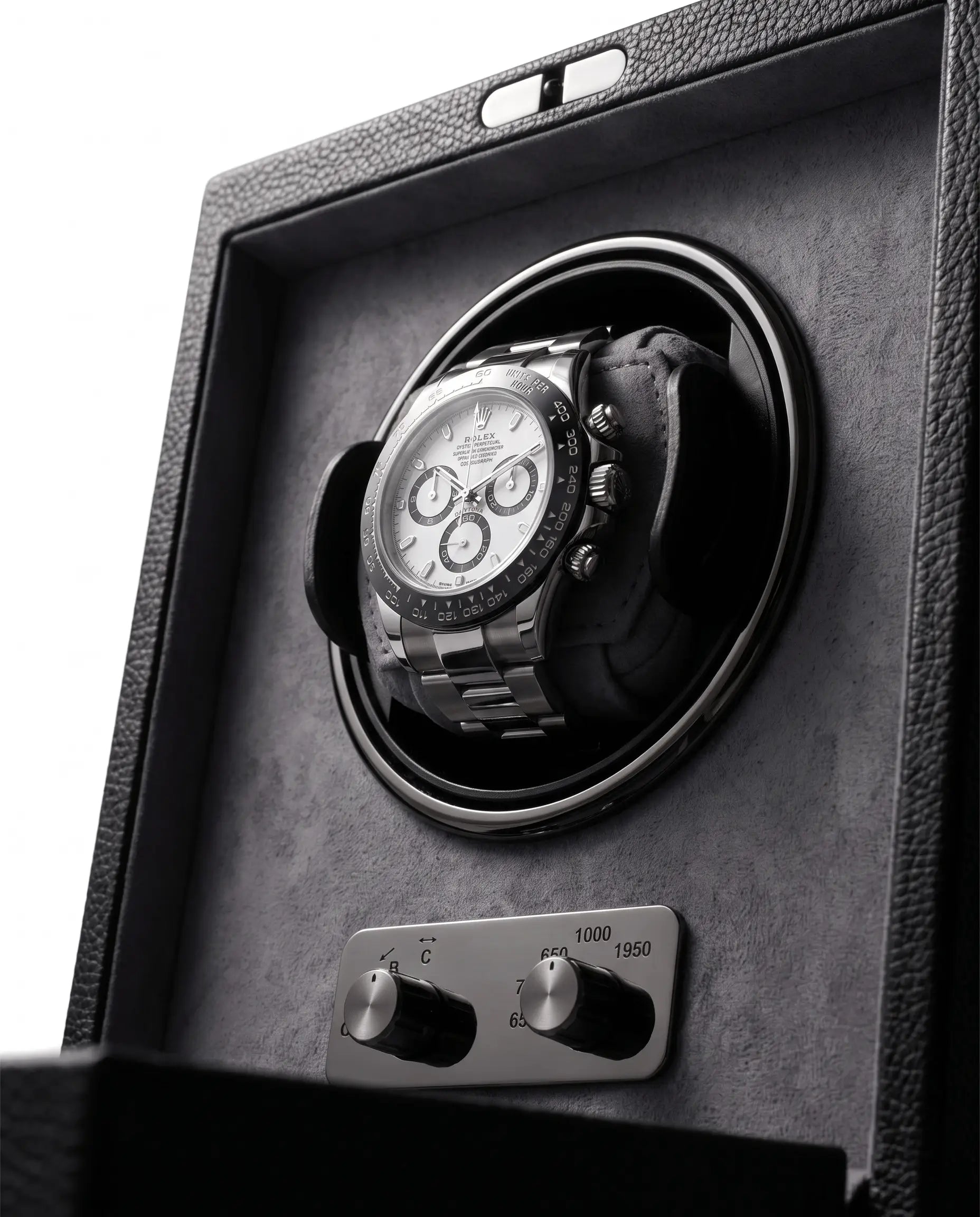
TPD—turns per day—is the central parameter for automatic winding. Each manufacturer has its recommendations: a Rolex Submariner operates optimally starting at 650 TPD in bidirectional rotation, an Omega Seamaster around 800 TPD, a Patek Philippe Grand Complication according to specifications specific to each caliber. Our winders offer adjustable and individual settings per slot—each watch receives exactly the program it deserves.
Direction of rotation
Some calibers wind only clockwise, others counter-clockwise, most accept both. A quality winder offers all three options, independently configurable for each position. This is a non-negotiable criterion for collectors who mix manufacturers and generations of calibers.
The motor: silence and longevity
A winder that hums in an office or bedroom immediately loses its legitimacy. Mercier & Fils winders incorporate precision motors operating below 15 decibels—inaudible under normal use conditions. Long-term mechanical reliability is our only standard.
For which watches is a winder essential?
Every automatic watch benefits from a winder. But some have an absolute necessity: watches with grand complications (minute repeaters, tourbillons, equations of time), perpetual calendars, moon phases, integrated collection chronographs. These timepieces—signed Patek Philippe, Audemars Piguet, A. Lange & Söhne, Jaeger-LeCoultre, Vacheron Constantin, Rolex, or Breguet—deserve attention that only a quality winder can guarantee daily.
Winder, box, or safe: which to choose?
These three solutions address different needs and complement each other rather than oppose.
A storage box passively protects your watches from dust and shocks, but does not wind them: a watch stored in it stops as if it remained at the bottom of a drawer. A winder is active—its motor keeps the movement constantly charged, ready to be worn at any time, without ever requiring manual time setting.
A winder safe combines both logics: it maintains your watches while physically protecting them, with a lock and reinforced walls. This is the natural solution for a collection whose value justifies additional security, complementing or replacing a display winder.
For a collection you wish to display daily, the winder remains the benchmark. For a collection you also wish to secure, discover our range of watch safes, which combines winding and safe features.
Compatibility by brand and TPD setting
Each manufacturer defines its own winding recommendations, depending on the power reserve and rotor construction. Our winders offer individual settings per slot, in TPD and direction of rotation, to meet the specifications of each caliber.
| Brand | Recommended TPD | Rotation Direction |
|---|---|---|
| Rolex | 650 – 950 | Bidirectional |
| Omega | 800 – 1,000 | Bidirectional |
| Patek Philippe | According to caliber | Variable |
| Audemars Piguet | 800 – 900 | Bidirectional |
| Jaeger-LeCoultre | 650 – 800 | Bidirectional |
| Vacheron Constantin | 700 – 800 | Bidirectional |
| IWC | 800 – 1,000 | Bidirectional |
| Breitling | 800 – 1,350 | Bidirectional |
| Cartier | 800 – 1,000 | Bidirectional |
| Tudor | 650 – 950 | Bidirectional |
| A. Lange & Söhne | According to caliber | Variable |
| Breguet | 650 – 800 | Bidirectional |
If you are unsure about your movement's recommendations, a bidirectional setting of 800 TPD is suitable for the vast majority of modern automatic calibers—our team remains available to assist you with specific calibers or grand complications.
Frequently Asked Questions
Can a winder damage my watch?
No. Modern automatic watches incorporate a clutch mechanism that activates as soon as the mainspring is fully wound. The winder continues to turn, but no additional energy is transmitted to the barrel: over-winding is mechanically impossible.
How many TPD does my watch need?
The vast majority of automatic watches operate optimally between 650 and 1,000 TPD in bidirectional rotation. For specific calibers or grand complications, our teams provide free advice on optimal settings.
Is a Mercier & Fils winder silent?
Yes. Our motors are selected for quiet operation, < 10 dB, designed never to be intrusive in an office, dressing room, or bedroom.
Can the winder motor magnetize my watch?
This is a real risk with entry-level models lacking adequate protection. All our motors are designed to preserve the integrity of the balance spring, even on calibers most sensitive to magnetic fields.
How many watches can I wind simultaneously?
Our range extends from two watches with Mazarin II or Rivoli II to twenty-four watches with Rivoli XXIV, with each slot individually programmable. Multiple winders can also be combined to accommodate the evolution of your collection.
Can watches be left permanently in a winder?
Yes, this is precisely the purpose for which these devices are designed. The rotation cycles include rest phases that replicate the natural rhythm of the wrist, without ever excessively stressing the movement.
What is the difference between a winder and a winder safe?
A winder maintains and displays your watch. A winder safe adds physical protection against theft and shocks. For valuable collections, the two ranges complement each other—discover our Richelieu range.
What distinguishes a luxury winder from a standard winder?
Beyond rotational precision, common to any quality winder, luxury is determined by three points: materials (ebony, macassar, full-grain leather rather than plastic or veneered wood), programming sophistication (individual setting per slot rather than a single mode for all rotors), and the discretion of the motor, which should never make its presence known in a living area.
Do I need a winder if I wear my watch every day?
If you wear your watch daily, it naturally winds through wrist movement. A winder becomes useful when you own several watches in rotation, or for periods when not worn—travel, reserve watch, occasional collector's piece.